8000m Expedition
When climbers mention the word “mountain”, Nepal immediately springs to mind. It is a climber’s heaven, with the Himalayas (meaning home of the snow) being home to most of the world’s highest peaks. The word expedition refers to a group of people with a common purpose. Climbing 8000m plus peaks is the ultimate expedition that tests the skills and endurance of the dedicated mountain climber. They most likely climbed trees as a kid and were the ones who climbed to the uppermost limbs of the tree. Today they have graduated from cliffs, hills and to 6000m and 7000m peaks. Today they see their ultimate challenge is to reach the summit of the highest peaks in the world. There are 14 mountains in the world over 8000m/(26,247ft) that these high altitudes and ultimate thrill-seekers can challenge. It is ‘man’ against ‘mountain’.
It is a combination of danger and desire that lures climbers to attempt these climbs. Reinhold Messner, the first man to climb all 14 8000m peaks had this to say: "Mountains are not fair or unfair; they are just dangerous." "Without the possibility of death, adventure is not possible."
Eight of the 14 peaks over 8000m are located in Nepal: Mt. Everest (8848m), Kanchenjunga (8586m), Lhotse (8516m), Makalu ((8463m), Cho Oyu (8201m), Dhaulagiri 1 (8167m), Manaslu (8156m) and Annapurna 1 (8091m). The only peak over 8000m not in Nepal is K2 (8614m) at number two in the world. Most of those deemed to be in Nepal span the borders of either India or China, with only Dhaulagiri and Manaslu considered to be wholly within the border of Nepal.
The first person to summit all 14 eight-thousanders was an Italian climber Reinhold Messner in 1986 and even more amazing without using oxygen. This amazing climber, Edurne Pasaban made history by being the first woman to climb all 14 8000m peaks in 2010. She used oxygen – but so what! Not long after, the female Austrian climber Gerlinde Kaltenbrunner did the same, but with the use of oxygen. The last 8000m peak was climbed in 1964. All these giants have been climbed in winter – except K2. Sometimes the challenge exceeds merely reaching the summit. On 29 October 2019, a Nepalese climber Nirmal Purja set a new speed record by climbing the 14 eight-thousanders in 6 months and 6 days. Cho Oyu is considered the easiest 8000m to climb – but only when compared with the remainder. None of them are considered to be without a level of danger or can be considered easy. The degree of difficulty is always relative!
The fact that there are so many of the world’s highest peak in Nepal makes it a paradise for climbers, irrespective of whether they wish to climb the highest peaks or some of the lower peaks. The geography of Nepal makes it easier to choose any one of these peaks to climb. Some, despite being slightly lower, are more challenging and difficult to climb. According to NASA's Earth Observatory, Annapurna I — the 10th-highest mountain — is the most dangerous to climb, with a fatality rate of 32% as of 2012. K2, the world’s second-highest peak, is almost as dangerous, with a fatality rate of 29%. Everest, by contrast, has a 4% fatality rate. K2, Kanchenjunga, Lhotse, Makalu, Dhaulagiri, Nanga Parbat, and Gasherbrum I are said to be more difficult to climb than Everest, with the most difficult being K2 and Annapurna closely followed by Kanchenjunga and Nanga Parbat. The height certainly is a contributing factor when considering the dangers of high altitude climbing, but it is more the technical challenges on these mountains, sheer rock faces, and extreme weather that contribute to their reputation for being dangerous.
The Himalayas stretch across the northeastern portion of India. They cover approximately 1,500 mi (2,400 km) and pass through India, Pakistan, Afghanistan, China, Bhutan, and Nepal. The Nepal Himalayas has most of the highest peaks and extends 800km/500miles from the Kali River in the west of Nepal on the Indian border to the Teesta River in the east that flows through India to eventually flow into the Bay of Bengal.
All expeditions require a license from the Nepal Ministry of Culture, Tourism and Civil Aviation. There is a deposit that has to be paid that ensures all rubbish is removed from the mountain.
Sherpa Expedition and Trekking take care of all logistical matters and permits for any of these expeditions. With over 40 years in the trekking and climbing expeditions, they have attained a reputation for excellence. Nothing is left to chance, hence their high success rate of climbers reaching the summit. All their staff is licensed and competent climbers with years of experience arranging and leading these expeditions.
“it is not the mountain we conquer but ourselves,” said, Hillary.
Packages
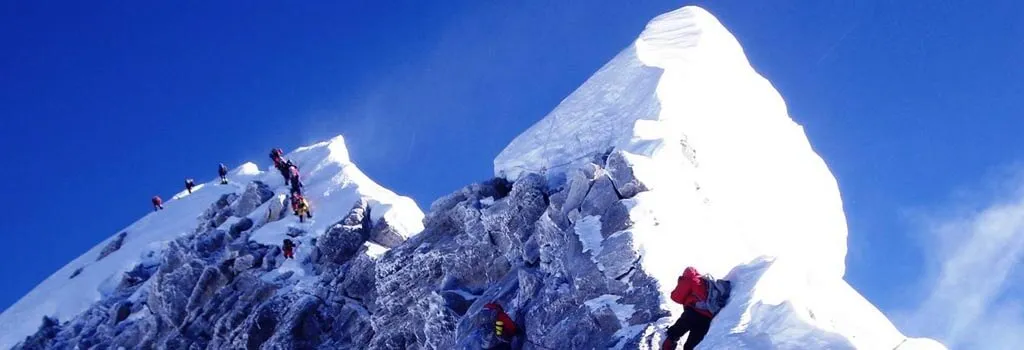
EVEREST EXPEDITION (SOUTH)
At number one on a climber’s bucket list: “I climbed the highest mountain in the world (8848m/29,028ft)”. Edmund Hillary said, “It is not the mountain we conquer but ourselves”. The Everest Expedition...
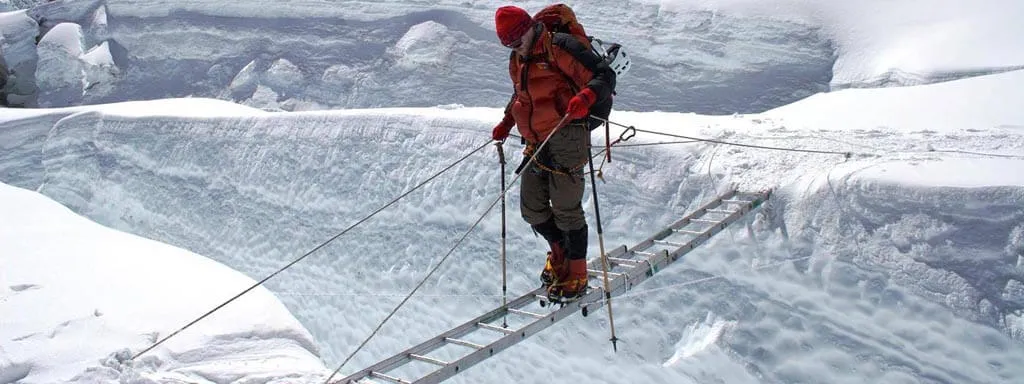
EVEREST EXPEDITION ( NORTH)
Do you have nerves of steel?This is a once in a lifetime opportunity to scale the world’s highest mountain (8848m/ 29,028ft) via the North Face. Everest tops the list of all serious high altitude clim...

KANCHENJUNGA EXPEDITION
A sacred quest and expedition for hidden treasures to the aptly named Mt. Kanchenjunga (8586m/ 28,170ft) – meaning "The Five Treasures of the Great Snows", located in the Kanchenjunga Himal bordered b...

LHOTSE EXPEDITION
Take a detour at the “Yellow Band” and head to Lhotse as you make your way on the route toward Everest’s summit. Lhotse will not disappoint the serious alpine climber. Lhotse, at 8,516m (27,940ft...

MAKALU EXPEDITION
Fascinated by the pyramids! How about an 8485m pyramid covered in snow, ice, and rock? Are you an experienced mountain climber looking for a real challenge? Try Makalu, a four-sided pyramid soari...

CHO OYU EXPEDITION
Not exactly a walk in the park, but Cho Oyu (8188m/18,753ft), the 6th highest mountain in the world is claimed to be the easiest of the 8000m peaks to climb. Cho Oyu means "Turquoise Goddess" in Tibet...

DHAULAGIRI EXPEDITION
Sparkling like a multi-faceted diamond in the sky!You are entitled to boast about it if you have climbed Mt. Dhaulagiri (8167m/26,795ft), the 6th highest mountain in the world. Mt.Dhaulagiri is...
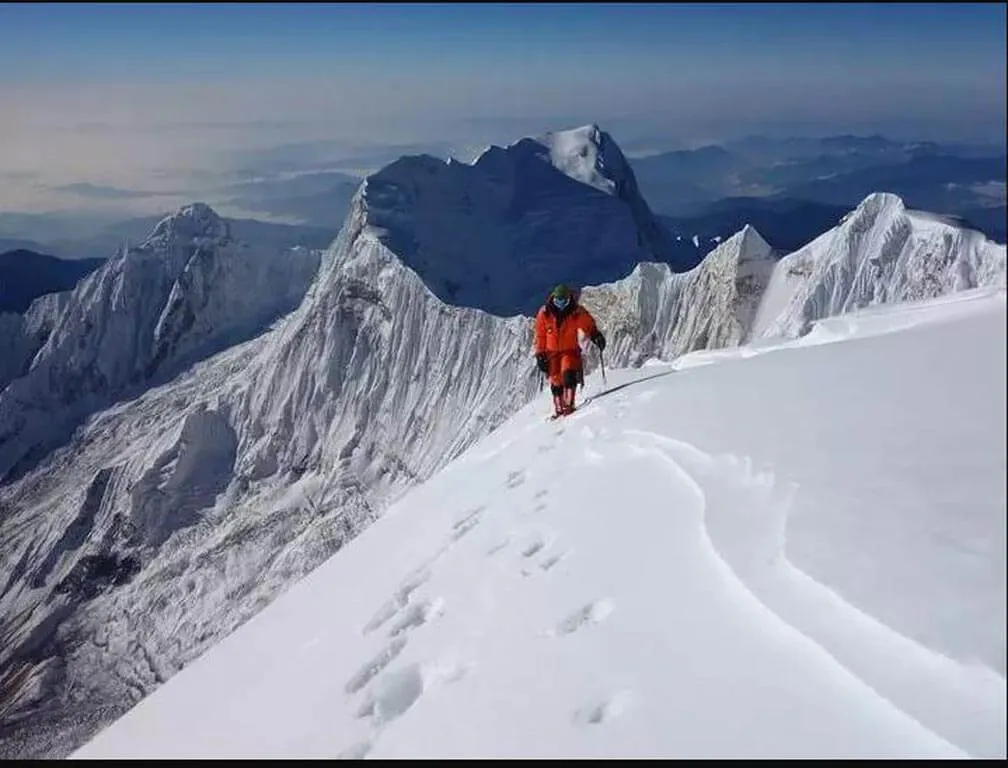
ANNAPURNA 1ST EXPEDITION
The ultimate challenge for any climber! Climbing Annapurna 1 (10th highest in world) will add your name to the history books!Height is not the only factor to consider when climbing a mountain. An...

MANASLU EXPEDITION
“Mountain of the Spirit” The meaning of Manaslu in Sanskrit is enough to tempt the true adventurous spirit in you to climb this magnificent peak. Manaslu is derived from the Sanskrit word manasa...

K2 Expedition (8,611M)
Mount k2 (8611M/28,251ft) lies on the borders of China and Pakistan and is the second highest mountain in the world. K2 is located in the Karakorum Range and...