12 Days Annapurna Circuit Trek
USD 1,290 / Per Person
Trip Overview
The Annapurna Circuit Trek is one of the most celebrated long-distance treks in the world, offering an extraordinary journey through Nepal’s most diverse landscapes and cultures. Curated by Sherpa Expedition Teams, this 12-day adventure circles the Annapurna Massif, taking trekkers from lush river valleys to the dramatic heights of the Himalayas, culminating in the crossing of the legendary Thorong La Pass (5,416 meters).
This classic trekking route is renowned for its constantly changing scenery. The trail begins in green lowlands filled with waterfalls and terraced farms, gradually rising into alpine forests, high mountain deserts, and glacial terrain. Along the way, trekkers encounter traditional Gurung, Thakali, and Manangi villages where ancient customs, monasteries, and prayer flags reflect the deep spiritual heritage of the region.
Sherpa Expedition Teams places strong emphasis on safety, acclimatization, and authentic local experience. With experienced Sherpa guides, carefully planned altitude progression, and quality teahouse accommodations, this trek is ideal for adventurous travelers seeking a complete Himalayan experience. The itinerary includes time for acclimatization in Manang, ensuring a safer and more enjoyable ascent to high altitude.
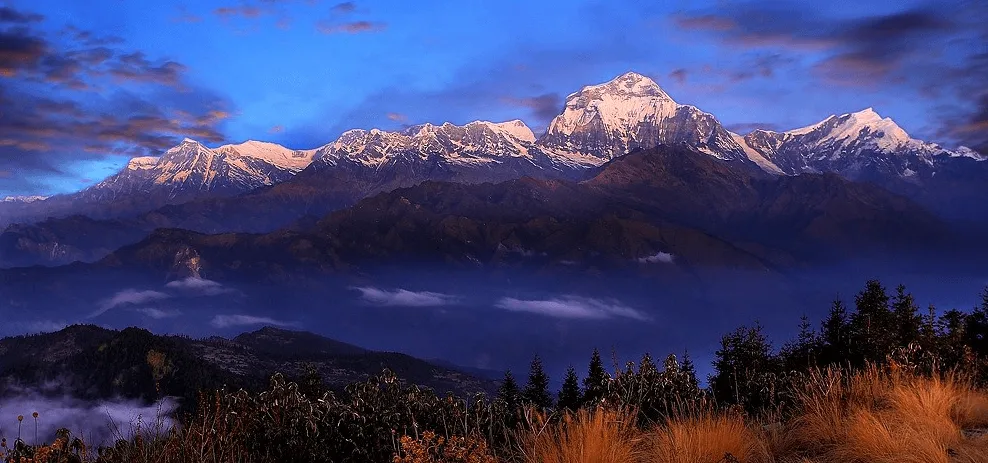
Crossing Thorong La Pass is the highlight of the trek, rewarding trekkers with sweeping views of Annapurna, Dhaulagiri, and surrounding Himalayan peaks. The journey continues into the sacred area of Muktinath, an important pilgrimage site for both Hindus and Buddhists. The trek then transitions into the Kali Gandaki Valley, with time to relax in the natural hot springs of Tatopani and a scenic finale at Poon Hill, famous for its sunrise mountain panorama.
This Annapurna Circuit Trek by Sherpa Expedition Teams is designed for trekkers who want adventure, cultural depth, and unforgettable Himalayan scenery, all delivered with professionalism and care.
12 Days Annapurna Circuit Trek Day-by-day ITINERARY
Upon arrival at Tribhuvan International Airport, a representative from Sherpa Expedition Teams will greet you and assist with your transfer to the hotel. After check-in, you can relax after your journey or explore nearby streets. In the evening, a detailed trek briefing will be conducted, covering route information, safety measures, altitude awareness, and equipment checks.
Today’s journey begins with a scenic drive from Kathmandu through terraced farmland, river valleys, and rural settlements. Following the Marsyangdi River, the road gradually climbs into the Annapurna region. After reaching Besisahar, the drive continues along a rugged mountain road to Chame, offering impressive views of waterfalls, cliffs, and snow-covered peaks.
The trek officially begins with a walk through pine forests and narrow gorges. The trail passes suspension bridges and apple orchards, with dramatic views of Lamjung Himal and Annapurna II. As the valley opens, you arrive at Pisang, a traditional Himalayan village set beneath towering rock formations.
Today’s trek offers some of the most scenic views of the journey. The landscape becomes drier and more alpine as you pass ancient monasteries, prayer wheels, and stone-built villages. The trail gradually ascends to Manang, a culturally rich village surrounded by Annapurna III, Gangapurna, and Tilicho Peak.
This important rest day allows your body to adapt to the higher altitude. You may explore Manang village, visit the Himalayan Rescue Association clinic, or hike to nearby viewpoints and lakes. These short excursions help improve acclimatization while offering spectacular mountain scenery.
Leaving Manang, the trail climbs gradually through open alpine terrain. Vegetation becomes sparse, and expansive mountain views dominate the landscape. Along the way, you may see yaks or blue sheep grazing in the high pastures before reaching Yak Kharka.
The trail continues with a steady ascent, crossing small streams and landslide areas. As you approach Thorong Phedi, the environment becomes stark and rugged. The afternoon is reserved for rest, hydration, and preparation for the high-altitude pass crossing the following morning.
An early morning start is essential for this challenging yet rewarding day. The climb to Thorong La Pass is gradual but demanding due to altitude. From the summit, enjoy breathtaking panoramic views of the Annapurna and Dhaulagiri ranges. The long descent leads to Muktinath, a sacred pilgrimage site revered by both Hindus and Buddhists.
Today’s drive follows the Kali Gandaki Valley, one of the world’s deepest gorges. The scenery changes dramatically as the route descends into warmer climates. Upon arrival in Tatopani, you can relax in the natural hot springs, an ideal way to soothe tired muscles.
The trail climbs steadily through lush forests of rhododendron, oak, and bamboo. Passing small villages and terraced farmland, the route offers a pleasant contrast to the high-altitude terrain. Ghorepani is a lively mountain village known for its excellent viewpoints.
Before dawn, hike to Poon Hill to witness a spectacular sunrise over the Annapurna and Dhaulagiri ranges. After returning to Ghorepani, continue trekking downhill to Ulleri. From there, drive to Pokhara and take a scenic flight back to Kathmandu.
After breakfast, Sherpa Expedition Teams will arrange your transfer to Tribhuvan International Airport for your onward journey, concluding your unforgettable Annapurna Circuit adventure.
12 Days Annapurna Circuit Trek INCLUDES & EXCLUDES
Cost Included In Your Package
- Airport Transfers: Private vehicle pick-up and drop-off services for both International and Domestic flights.
- Kathmandu Accommodation: 2 nights stay in a 3-star category hotel including daily breakfast.
- Regional Transportation: Seamless transfers from Kathmandu to Besisahar via local bus and Besisahar to Chame by shared Jeep.
- Domestic Flight: Scenic flight from Pokhara to Kathmandu.
- Mountain Logistics: Local bus transportation from Muktinath to Tatopani and shared Jeep from Ulleri to Pokhara.
- Trek Meals: Three meals a day (Breakfast, Lunch, and Dinner) throughout the trek.
- Trek Accommodation: Authentic stay in hand-picked, cozy tea houses as per the itinerary.
- Permits & Paperwork: All necessary Annapurna Conservation Area Project (ACAP) permits and Trekkers Information Management System (TIMS) cards.
- Professional Leadership: Highly experienced, government-licensed, and Ministry of Tourism-trained trekking guide (includes salary, insurance, meals, and lodging).
- Support Team: Strong, professional Sherpa porters to assist with luggage (includes salary, insurance, meals, and lodging).
- Assistant Guide: An additional assistant guide is provided for groups consisting of 8 or more travelers.
- Trekking Gear: Complimentary use of high-quality sleeping bags, down jackets, duffel bags, and walking poles (to be returned after the trip).
- Health & Safety: Comprehensive first-aid medical kit and daily health monitoring using an American Medical Association-approved Oximeter to track pulse and oxygen saturation for AMS prevention.
- Emergency Coordination: Rapid arrangement of emergency helicopter services (coordinated with your travel insurance provider).
- Souvenirs & Recognition: Exclusive Sherpa Expedition and Trekking T-shirt and a Trip Achievement Certificate upon successful completion.
Costs Exclude
- City Meals: Lunch and dinner during your stay in Kathmandu and Pokhara.
- Nepal Entry Visa: Fees payable upon arrival at Kathmandu Airport ($30 for 15 days, $50 for 30 days, or $125 for 90 days).
- Insurance: Comprehensive personal travel and medical insurance (mandatory).
- International Airfare: Flights to and from your home country.
- Personal Expenses: Any costs of a personal nature not specifically mentioned in the itinerary.
- Beverages: All alcoholic and non-alcoholic drinks, including bottled water, specialty teas, coffee, hot chocolate, and soup.
- Snacks & Confectionery: All desserts and sweets such as chocolates, cakes, pies, and puddings.
- Lodge Services: Fees for hot showers and electronic device charging at mountain tea houses.
- Gratuity: Tips for trekking guides, porters, and drivers (tipping is a standard practice and expected).
- Early Departure Policy: If you return early due to illness or personal reasons, all pre-paid costs for flights, accommodation, and meals are non-refundable. Any additional expenses for hotels and food in Kathmandu during that time will be at the traveler's own expense
12 Days Annapurna Circuit Trek PACKING LIST
The following information will give you some idea about what you need to bring for the trek. It is important you do not forget the essential items, as this will determine your comfort and safety on the trek. Equally important is that you do not burden yourself with unnecessary equipment on the trek.
- Sleeping Bag (Sherpa Teams will provide but need to return after completing the trip)
- Duffel Bag (Sherpa Teams will provide but need to return after completing the trip)
- Fleece jacket or pullover
- Waterproof windbreaker or windcheater
- Thermal underclothes
- Rain poncho
- Down jacket (Sherpa Teams will provide but need to return after completing the trip)
- Fleece or wool trousers
- Sun hat or scarf
- Trekking pants (two pairs)
- Mittens or woolen gloves
- Hiking socks (several pairs)
- Moisture-wicking shirts, including t-shirts
- Trekking shoes or boots with spare laces
- Flip-flops or sandals for relaxing in the evenings
- Underwear (several pairs)
- Swimsuit or swimming costume
- Sunglasses
- Headlamp or flashlight/torch
- Sleeping bag (Sherpa Teams can provide this for you)
- Trekking poles (if desired)
- Hiking backpack with a capacity of at least 40 liters
- Small lock for your backpack
- Reusable water bottles (at least two liters)
- Water purification tablets or filtration device
- Wash towel
- Basic first aid kit
Toiletries (tissues, toilet paper, moisturizer, lip balm, sunscreen, sanitary pads, hand sanitizer, nail clippers, a small mirror, toothbrush, toothpaste, glasses, contacts, etc.)
GOOD TO KNOW ABOUT 12 Days Annapurna Circuit Trek
Accommodation
You will be accommodated in 3-star hotels in Kathmandu. During the trek, we will be staying at lodges/ teahouses. You may find comfort and better quality teahouses - having attached bathroom at lower levels- until you reach higher elevations, where the accommodation is more basic with bare necessities.
Meals during the trek
In Kathmandu, your hotel includes breakfast, whereas all meals (breakfast, lunch, and dinner) will be provided during the trek. A staple food of the Manang & Mustang regions is potatoes, oats, buckwheat, Sherpa stew, and Tibetan bread. Sherpa’s’ started farming potatoes when the first seeds were introduced to the region in the early 90s. There is a limited choice of food at higher elevations and except many potato dishes. Potatoes are high in carbohydrates – an excellent source of energy needed at high altitudes.
Transportation
We use a private car for sightseeing and for the airport to hotel pick and drop off. We use public transportation or local buses during the trek.
Physical fitness
This can be a challenging trek where you often have to walk 6-7 hours a day. You need past experience of hiking or trekking but if you have done any kind of trekking activities then it is always a plus! We have met people from all walks of life, shapes, and sizes who have completed the trek. The only difficult part is when altitude sickness strikes and the effect that it can have on your body. Before leaving for Nepal it is good if you can prepare yourself physically by increasing your stamina and oxygen intake.
Remember – The better prepared – the more enjoyable your trek!
ROUTE MAP OF 12 Days Annapurna Circuit Trek
Gallery of 12 Days Annapurna Circuit Trek


12 Days Annapurna Circuit Trek Departures
Every departure listed below is 100% Guaranteed — once you book, your trip will run as scheduled regardless of group size.
Select a departure month
Fill out the form below and a Travel Expert will reach out to create your perfect tour.
FAQS Related to 12 Days Annapurna Circuit Trek
Others
Yes, you can. No matter who you are, as long as you are reasonably fit, can walk for 5-6 hours a day and trek/hike a few uphill, Sherpa Expedition and Trekking team will support you to the fullest to transform your dream of standing at Annapurna Circuit into reality.
The pre-monsoon (February, March, April and May) and post monsoon (late September, October, November and December) are considered the best for the Annapurna Circuit trek as the weather conditions become favorable during this time, providing you with good visibility and a suitable atmosphere for Annapurna Circuit Trekking.
No, there is no age limit for the trek to Annapurna Circuit but, you need to be in good physical shape and have a positive attitude. We also suggest you to prior to the excursion though we suggest you to please see your doctor and obtain necessary permission and advice, as well as medications for traveling in extreme altitude prior to the excursion.
During trekking, you will be served meals in the teahouses. Typical meals are noodles, rice, pasta or potato dishes along with vegetables and egg/chicken/meat dishes. Other items mostly served as breakfasts include egg, pancake, bread, porridge, muesli, and toasts with peanut butter and honey.
A teahouse trekking accommodation will be made for you for the Annapurna Circuit Trekking whereby you will be able to stay at tea house (Local lodge) and have wholesome food and neat and clean comfortable bed throughout your trekking journey. This form of arrangement also allows you to carry less baggage; you can trek at your own pace and enjoy the Annapurna panorama on your own schedule. It is also an eco-friendly way of trekking whereby trekkers can have more contact with the local people.
Most of the teahouses on the Annapurna Circuit trail have squat toilet facilities but recently built lodges have western-style toilets as well. Nowadays, flush toilets are also being introduced with number of increasing foreign mountaineers each year. It is highly recommended to carry your own toilet paper and other required toiletries. Hot shower facilities are available. The most common type is a bucket shower, usual buckets with tap filled with hot water and placed in a shower room. Hot shower costs from US$ 2 to 5 per use and the price increases along with the elevation. Attached bathrooms and toilets are not available unless you book for a luxury lodge during the Annapurna Circuit trek.
What you want to wear depends on you but we suggest you wear warm clothes during the Annapurna Circuit Trekking. A down jacket, thermal longs and top, comfortable trekking trousers, t-shirts, fleece, windproof jacket, hat, scarf, and gloves might be useful. There are numerous trekking shops in the Thamel area of Kathmandu where you can get all of these items in both local and branded stores alike. Sherpa Expedition and Trekking may also accompany and assist you if required.
During the Annapurna Circuit Trekking, you will be on a long journey for which you will need two bags to keep your belongings. A rucksack/duffle bag and a day bag for personal items. Sherpa Expedition and Trekking will provide you with a duffle bag (which is need to refund after the trek) that you can use throughout your entire journey and even afterward. These bags are durable and hence perfect for any kind of trekking journey. While the duffle bag will be carried by the potters, you will have to carry a day bag on your own. A day bag is a small backpack that has enough room for everything you will need on a day hike such as lunch, water, extra clothing and perhaps a few personnel items like camera, battery chargers, etc.
If possible, we suggest you bring your own equipment. However, sleeping bags and down jackets will be provided to you by Sherpa Expedition and Trekking. With regards to trekking poles, if you are used to walking with it then take them with you, as you will probably find them useful especially on the way down. They are not essential though and the walk is manageable without them. It is mostly a personal preference. If you prefer to take the trekking poles with you on the trekking then you can either bring your own pole or buy it from numerous options available in Kathmandu itself.
Yes, if you have a bag of extra clothing for when you return from the trekking, you will be able to store it safely in Kathmandu Sherpa Expedition and Trekking office. The storage facility is provided by most hotels and lodges in Kathmandu or you can also store it in our office for the duration of the trekking.
Our itinerary has been specially tailored to prevent any kind of AMS (Acute Mountain Sickness) while moving up to higher altitudes. Normally, altitude sickness starts from 3,600 meters and above. You will be trekking at a relatively slow and gradual pace as part of the acclimatization process. Cut off caffeinated, alcoholic and smoking items. Drink at least 4 liters of water a day. Trek slow. Don't skip the acclimatization days. Better to continue with Diamox (if any symptoms show up). Drink Garlic Soup. In the higher elevation, there is less oxygen in the air and this is more so while crossing high passes. Our expert guides will advise you on how to avoid AMS and treat it when/ if required.
Make sure to have both medical and evacuation insurance before coming to Nepal for Annapurna Circuit Trekking. You should be careful in choosing a policy while traveling to a Himalayan country like Nepal as some insurance companies may make special exceptions for adventure travel. If you are confused about the insurance, please inform us and we will help you. It is usually better to arrange your insurance in your country before travel.
The trekking will be 5-7 hours a day depending upon the landscape and destination.
It takes 4 to 11 days to reach Base Camp depending upon the mode of transportation and packages of Sherpa Expedition and Trekking offers.
We at Sherpa Expedition and Trekking Team always have the safety, comfort, and satisfaction of our valued customers as our foremost priority at all times, and we assure you a wonderful and unforgettable time with us in our beautiful country. Sherpa team members of Sherpa Expedition and Trekking will be carrying all the necessary gear, equipment, and first aid kits and they have extensive first aid training. If a trekker falls sick on high altitude, the leader will decide whether to continue the trek. In case of emergency, Sherpa Expedition and Trekking have a rescue helicopter to bring you back from the higher elevation. Moreover, Sherpa Expedition and Trekking also provides oximeter to monitor the oxygen level at high altitude and offers regular health check-up facilities.
You can either trek on foot or by a flight. Sherpa Expedition and Trekking offer exciting and reasonable flight to Pokhara for 4 days and 10 days. Sherpa Expedition and Trekking can also customize your tour as per your necessity.
The flights are usually regular between September and May. But due to high altitude, bad weather and unforeseen technical issues, you may experience a delay or cancellation of the flight. On the occurrence of such events, Sherpa Expedition and Trekking tourist bus will be arranged.
Sherpa Expedition and Trekking will provide one porter for two trekkers to carry 20 kgs of luggage (maximum 10 kg for each trekker). Please be sure your porters are not overloaded because they do not carry only your equipment but also lift your spirit to reach new heights, and your love, affection, and generosity can be the reason for them to work hard to take you to your destination. However, the weight limit on flights to the Annapurna region, basically to Pokhara is a total of 20 kgs including hand bag and you need to pay an extra amount per kg for the excess baggage. Sherpa Expedition and Trekking pays up to 5 kgs of extra baggage making your total to 20 kgs with your hand bag.
Garlic soup is a must while trekking. Sherpa Expedition and Trekking recommend trekkers to drink green tea, lemon tea, hot lemon ginger tea and drink at least 2-4 liters of water a day. However, it is better to avoid alcohol and alcoholic beverages, caffeinated items, and hot-chocolates at high altitude.
Sherpa Expedition and Trekking won’t recommend non-veg items because the meat in such places may not hygienic and healthy. Sherpa Expedition and Trekking also encourage to avoid dairy and cheesy items and strongly suggest not to consume them during the trek. So, our packages are suitable for both vegan and vegetarians.
Your guide and porters are a big reason why you got a chance to feel something very few can have. Apart from guiding and carrying your necessities and being mindful of your safety, they want to see you happily succeeded more than anyone like family and help you successfully complete the trek safely. So, your tips reflect gratitude towards them. So, tipping is a recommended culture for porters and guide in Nepal as a gesture of thankfulness.
Sherpa Expedition and Trekking will introduce dozens of shops selling knock-off gear in Kathmandu. You can also barter those gears at the knock-off places but be sure you keep the receipt safely. Moreover, you can rent the needed gears if you do not want to buy them.
Yes, most guesthouses offer Wi-Fi, for a small charge. it cost USD$5 per day.
ATM services are available only in Pokhara & Jomsom. However, the services might not work or run out of cash. Therefore, we suggest you carry a small amount of money to buy snacks, etc during the trekking.
Most of the tea houses/ lodges have electricity whereby you will be able to charge your iPod or camera batteries. Please note that lodges/tea houses will charge you some extra money for the services. The fee may vary from 1 USD to 5 USD per hour.
RELATED PACKAGES




Latest Traveller’s Reviews
Travel experiences of our clients who recently returned from their trips.
100%
Based On 75 Reviews
Sann Stephen
United States
August 7, 2024
Unmatched Expertise and Support
Kevin Schroeder
Australia
July 30, 2024
Professional and Attentive Team
Oliver Wilde
Norway
July 10, 2024
Remarkable Trekking Journey

Write Your Review
Average Customer Ratings
How The Travellers Have Rated This Package
74
1
0
0
0