Annapurna Circuit And Base Camp Trek


Trip Overview
The Annapurna circuit is the most popular trekking destination in Nepal. This 25-day trek will take you to Annapurna Base Camp (4130m) and to a host of other interesting places along the Annapurna trail. The trail begins at lower altitudes and passes through sub-tropical forests of bamboo, and rhododendron. The region has over 1226 flowering plants species, 102 mammals, 474 birds, 33 reptiles, and 22 amphibians. There are some of the best views on the trail of many well-known Himalayan peaks: Mt. Dhaulagiri (8167m), Mt. Annapurna I (8091m) Mt. Manaslu (8163 m), Mt. Annapurna II (7937 m.), Mt. Annapurna III (7555m), Mt. Annapurna IV (7525m), Mt. Annapurna south (7219m), Mt. Nilgiri (7041m), Mt. Machapuchare (6998m), Mt. Hiunchuli (6441m), Mt. Lamjung Himal (6986m) and Tukuche Peak (6920m). At ABC you can see the mountains of Tharpu Chuli (5663m), Singu Chuli (6501m), Hiunchuli (6441m) and South Annapurna (7219m).
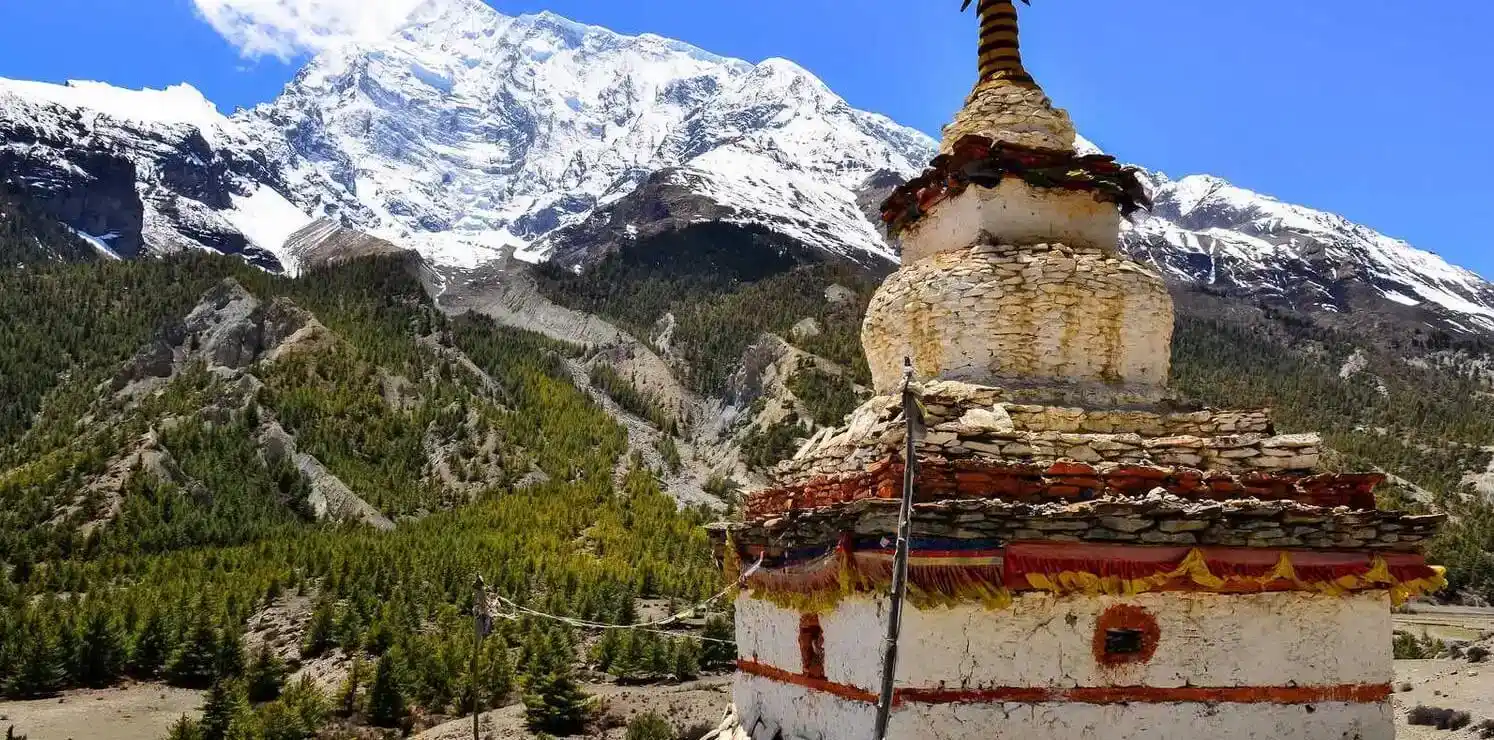
The Manang region is home to the Gurung and Thakali people whose Buddhist faith is reflected in their unique stone houses, monasteries (Gompas), Mani stones (stones inscribed in Sanskrit mantras), chortens (lama shrines/monuments), colorful dress and the mult -colored Tibetan prayer flags fluttering in the breeze.
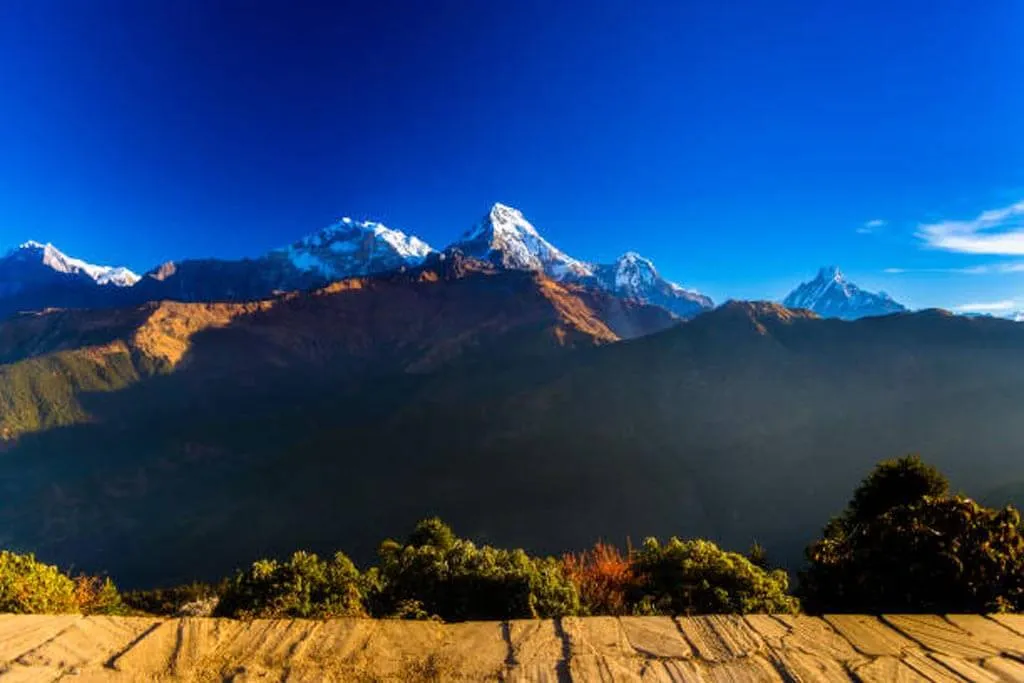
The trail takes you to Poon Hill (3210m), a well known lookout point from where you have some of the finest mountain views in Nepal. In the early morning from Poon Hill you can watch the sunrise and the changing colors as light reflects off the snow clad peaks. You will follow trails through lush green forests, cross rivers on suspension bridges, walk through terraced farmland, and observe yak grazing on alpine pastures, cross moraines and glaciers. You can also take a dip in the hot springs at Jhinu Danda and Tatopani that will relax the muscles. We will first come to Machapuchare Base Camp before heading to Annapurna Base Camp (4130m), the highest point on the trek.
All trekking permits, meals and accommodation on the trek will be taken care of by Sherpa Expedition & Trekking. We have an excellent reputation with more than 40 years in the trekking and climbing business (Est. 1977).
Annapurna Circuit And Base Camp Trek Day-by-day ITINERARY
Day 1 : Arrive at Kathmandu and transfer to Hotel.
A representative from Sherpa Expedition & Trekking staff will greet you at the airport and take you to your hotel. This is followed by a briefing covering all aspects of the trek. With some spare time in the afternoon you can explore the tourist hub of Thamel until the evening.
Day 2 : Guided Sightseeing in the Kathmandu Valley.
Today we will spend sightseeing in Kathmandu Valley with our guide. We will visit Pashupatinath, regarded as the holiest Hindu temple in Nepal and a place where pilgrims worship Lord Shiva (on the banks of the holy Bagmati River), Bouddhanath, a Buddhist temple known as ‘Little Tibet’ and then on to Swayambhunath known as the Monkey Temple. From Swayambhunath we will drive to Kathmandu’s famous Durbar Square, a UNESCO World Heritage-listed site, and located in front of the old royal palace. Back at your hotel, you will have time to do some last-minute shopping around Thamel – the tourist hub of Kathmandu. Your guide will be available to help you prepare for the trek and answer any questions.
Day 3 : Drive from Kathmandu to Syange (1,140m) via Beshishar (823m) Duration: 8-9 hours.
A long drive today will take us to where our trekking begins. This is an excellent time to sit back, relax, and take in the sights of the changing countryside; rivers, terraced farmlands, and views of the stunning Himalayas. Tonight we will stay at a guesthouse.
Day 4 : Trek to Dharapani (1,860m) Duration: 5-6 hours.
Just before reaching Manang, at Tal, we cross a bridge and then follow the trail through terraced farmlands, by waterfalls and on to Koto Village before arriving at Dharapani, one of the largest villages in the Manang Valley. We will stay here overnight in a guesthouse.
Day 5 : Trek to Chame (2,715m) Duration: 5-6 hours.
Today is a much harder day on the trail as we ascend along some treed ridges on our way to Chame. Instead of always looking down, we should look up to where we will see some massive snowy peaks: Lamjung Himal, Annapurna II, and Annapurna IV (7,525m). There is also a therapeutic natural spring on the trail where we can stop, sit back and relax our tired muscles. Tonight we will stay at a guesthouse.
Day 6 : Trek to Pisang (3,200m) Duration: 4-5 hours.
Today we walk through a steep narrow valley where we have our first view of Paungda Danda, an enormous curved rock face soaring 1500m up from the river bed. From here we can see Annapurna II and Pisang Peak. We will then descend to Manang Valley through a beautiful landscape. Tonight we will stay at a guesthouse in Pisang.
Day 7 : Trek to Manang (3,540m) Duration: 5-6 hours.
The trail heads higher today to Ghyaru Village. Along the trail, you will have some lovely views of Annapurna II and other snow-clad peaks, as well as the glacier of Annapurna IV – that is clearly visible from Ghyaru. We will stop for a lunch break at Ghyaru and then continue on to Ngawal. Once more we must remember to look skyward where you will see the impressive Pisang and Annapurna peaks. You will know Ngawal village is close once you reach the Mani wall and the fluttering Tibetan prayer flags. At Ngawal we can gaze down to Humde Village. We then head down to the villages of Bhakra and Braga before coming to Manang where we will stay in a guesthouse overnight.
Day 8 : Exploration and acclimatization day at Manang.
It is strongly recommended by health experts to stay active when spending time acclimatizing. We will take a short trek to Bhojo Gumba – a monastery or to Gangapurna Lake. We can also trek to Vraga Village where we can pay a visit to the Himalayan Rescue Association who can enlighten us about the condition of Acute Mountain Sickness (AMS). Tonight we will stay at a guesthouse in Manang.
Day 9 : Trek to Yak Kharka (4,050m) Duration: 4-5 hours.
This morning we leave Manang and then cross the river before coming to Tenki Village, then head up the Marsyangdi Valley passing several small villages, such as Ghunsa, through some scrubby terrain while heading higher. We will also observe yak and mountain horses grazing on the high alpine pastures before reaching Yak Kharka where we will stay overnight at a guesthouse.
Day 10 : Trek to Thorong high camp (4,925m) Duration: 4-5 hours.
After passing the last settlement, Lear, the trail heads higher and we have some great views of Annapurna II, Gangapurna, Cloche, and a close up view of Chuli Peak. The terrain becomes more rugged and devoid of vegetation as we head higher. We continue past Thorong Phedi after a lunch break. The zigzag trail takes us to Upper Phedi or High Camp where there are several teahouses and a lodge. We will stay here overnight.
Day 11 : Trek to Muktinath (3,800m) via Thorong la (5,416m) Duration: 8-9 hours.
Today is one of the highlights of this trek as we cross one of the highest passes in the world, Thorong La Pass. We cross from east to west, from Manang to Muktinath, which is a safer and easier route than crossing from the other direction. In order to reach the pass early in the day, and avoid the high winds, we have to get up around 3 a.m. Once at the pass the effort will be well worth it as you will have some really stunning views over the nearby mountains. After a photo session, we will then descend to the valley floor and head down to Muktinath for the night.
Day 12 : Trek to Marpha (2,670m) Duration: 6-7 hours.
Today we descend 1,200 meters to the Kaligandaki River valley floor, with a short break at the tiny settlement of Ekle Bhatti - meaning a lonely teahouse. The valley gets very windy in the afternoons as we head to Jomsom and then on to Marpha, a quaint village with whitewashed houses, paved streets and many well kept lodges. Here you will have time to try the local apple products like cider, brandy, and juice that this area from Kagbeni to Larjung is famous for. We will stay overnight at Marpha.
Day 13 : Trek to Lete (2,480m) Duration: 4-5 hours.
This morning we follow along the banks of the Kaligandaki River downstream until we arrive at Tukuche Village situated beneath the lofty Tukuche, Dhaulagiri and Nilgiri’s glacier that heads down from Dhaulagiri east face. We next come to Larjung Village and cross the river before heading back up to the tree-line where we trek through pine, oak and rhododendron forests. The trail then heads back to the river near Kalopani Village. We cross a suspension bridge over the roaring Kali Gandaki River near Kalopani. Kalopani offers excellent views of Mt.Annapurna I, Nilgiri and Dhaulagiri high above the surrounding forests. We then have a short downhill trek to Lete Village where we will stay overnight.
Day 14 : Trek to Tatopani (1,190m) Duration: 5-6 hours.
Today we descend from the more rugged arid alpine regions through pine and other conifer forests as we head down the valley between the massive Dhaulagiri and Annapurna ranges. The trail takes us through Ghasa Village with breathtaking views of the snowy peaks and into a cooler climate. Just down from Ghasa is the southernmost tip of the region inhabited by the Thakali people. The trail then heads down from the hillsides heading into the sub-tropical regions before reaching Tatopani (meaning hot water in Nepali). On the trail we can see the cascading Rupsi waterfalls. The hot springs at Tatopani are on the banks of the Kali Gandaki River. We will stay here overnight.
Day 15 : Trek to Ghorepani (2,750m) Duration: 7-8 hours.
Today we climb 1670 meters, quite hard going, and pass through more cultivated farmland and their terraced fields. We head up through magnolia and rhododendron forests (most spectacular in spring time) and on the trail have some beautiful panoramic view of the mountains. Tonight we stay at Ghorepani that also boasts of some very special views of the Annapurna Ranges and Machapuchare (fish tail) - one of the few unclimbed peaks in Nepal due to its religious status as home to Lord Shiva.
Day 16 : Hike up to Poon Hill (3,210m) and trek to Tadapani (2,630 m) Duration: 6-7 hours.
This morning we are up before sunrise so as to reach Poon Hill as the sun comes up over the mountains. It is about an hour trek to reach Poon Hill (3,210m) where the views are out of this world! The mountains are radiant in the pristine light of the morning, reflecting various changing colors of the snow-white peaks. After madly snapping photos we will head back down to Ghorepani (2960m) for breakfast. Leaving Ghorepani we ascend along mountain ridges, through rhododendron and pine forests before arriving at Deurali (2,960m). We then descend further and come to a cross-road at Banthanti and then head to Tadapani. We will stay the night here at a guesthouse.
Day 17 : Trek to Chomrong (2,170m) Duration: 6-7 hours.
The trail today heads down a steep hill through rhododendron forests before reaching a mostly Gurung village not far from Chomrong Village (2,140m) where we will stay overnight at a guesthouse.
Day 18 : Trek to Dovan (2,600 m) Duration: 5-6 hours.
This morning we head down to Chomrong Khola (river) and then climb up to Khuldighar (2,380m) that was previously an Annapurna Conservation Area check point. A little further from here we descend a steep rocky trail through bamboo near the bottom of the gorge while remaining on the west side of the river. Once again we head through bamboo and rhododendron forests until we reach Dovan. We will stay overnight at a guesthouse.
Day 19 : Trek to Deurali (3,200 m) Duration: 3-4 hours.
Today we head up through the rhododendron forest alongside the Modi Khola (river) to Himalaya Hotel (2,920m). After a lunch break on the way, we head to Hinku Cave which used to be a landmark for the earlier Annapurna I expeditions when it was used as a camp and a supply depot. We then ascend through the jungle trail to reach Deurali (3,200m) where we will stay overnight.
Day 20 : Trek to Annapurna Base Camp (4,130m) Duration: 5-6 hours.
Today we head up to ABC and on the way, we pass Hinko Cave, Deurali, and Machapuchare Base Camp before arriving at Annapurna Base Camp (ABC) (4,130m). At this altitude, you will have stunning clear, and unobstructed views over the surrounding peaks. This is definitely another opportunity to get your camera out! We will stay here at a guesthouse overnight.
Day 21 : Trek down to Bamboo (2,525m) Duration: 5-6 hours.
This morning we take the same route we took getting to ABC, and descend an incredible 1,700 meters down to the banks of the Modi Khola (river) and on to Bamboo (2,345m) where we will stay at a guesthouse for the night.
Day 22 : Trek to Jhinu Danda (1,760m) Duration: 6-7 hours.
Once again we backtrack and take the trail back to Chomrong, first passing Khuldighar and then on through rhododendron and bamboo forests. There is a very steep descent to Chomrong and to Jhinu Danda where after arriving we can sit in the hot springs and relax. We will stay here overnight at a guesthouse.
Day 23 : Trek from Jhinu Danda to Nayapul and drive to Pokhara (827m) Duration: 6-7 hours.
From Jhinu Danda we follow along the banks of the Modi Khola for around 4.5 hours until we arrive at Birethanti. The trek today is considered to be the most relaxing and enjoyable of the entire trek. It is more like a gentle walk than what we have previously experienced. From Nayapul we will drive back to Pokhara. Once we have checked in at our hotel in Pokhara we plan to take a boat trip to Barahi Temple, located on a small island in the middle of Phewa Tal (lake).
Day 24 : Drive back to Kathmandu (1,350m) Duration: 6-7 hours.
This morning we head back to Kathmandu and are on arrival taken to our hotels in Thamel. You can spend the remainder of the day exploring Kathmandu or just wander around Thamel and sit in a café or bar and celebrate the successful completion of your adventure in the Annapurna Conservation Area.
Day 25 : Transfer to the International Airport for your final Departure.
Today your trip to this mountainous country ends. A Sherpa Expedition and Trekking representative will take you to the airport at least three hours prior to your departure. On your flight home, you may be thinking and planning another great adventure into the mountains of Nepal.
Annapurna Circuit And Base Camp Trek INCLUDES & EXCLUDES
Cost Included In Your Package
- Airport pick up and drop services on a private vehicle.
- Three night’s hotel accommodation in Kathmandu with breakfast
- Kathmandu - Syange transfers on a local bus, Pokhara - Kathmandu transportation on a Tourist bus
- Nayapul To Pokhara transportation on a Private car.
- Kathmandu Valley sightseeing on a private car
- One night hotel accommodation in Pokhara with breakfast
- Three meals a day [Breakfast, Lunch, and Dinner] during the trek
- Accommodation on beautiful cozy tea houses as per the itinerary
- Annapurna Conservation Area Project (ACAP) entry permits and Trekkers Information Management System (TIMS) cards
- Experienced English speaking, government licensed and ministry of tourism trained trekking guide with meals, accommodation, salary and insurance
- Assistant trekking guide for groups over 8 people with meals, accommodation, salary, and insurance
- Down jacket, four seasonal sleeping bag, duffel bag and trekking map (down jacket and sleeping bag are to be returned after trip completion)
- Necessary paper works, all government, and local taxes, company service charges
- Trip achievement certificate after successful trip completion.
- Sherpa Expedition and Trekking T-shirt
- Oxygen meter to check your pulse and oxygen saturation and heart rate twice daily (Very useful to check Altitude Mountain Sickness(AMS) symptoms) which will ensure your health during the trek.
Cost Excludes
- Meals whilst you are in Kathmandu Lunch and Dinner.
- Strong experienced Sherpa helpers [porters] with meals, accommodation, salary, and insurance If required we will provide but the price will be Extra usd 18 per day.
- Meals in Pokhara.
- Nepal entry visa fee (easy to obtain the visa on arrival at Tribhuvan International Airport – Kathmandu). $30 USD for 15-day, $50 USD for 30 Days, and $125 USD for 90 Days visa.
- Your Travel and medical rescue insurance(recommended).
- International airfare.
- Your personal expenses like; Laundry, Battery charging, telephone, and shopping, etc.
- All the alcoholic and nonalcoholic, soup, tea, coffee, hot chocolate, cocoa, mineral water, extra food, cold and hot drinks on trek ( i.e. those you choose to purchase along the way and during evenings in the tea houses)
- Desserts Sweet things like chocolate, cake, pie, pudding.
- Tips for the guide, porter, and driver (tipping is expected).
- Kathmandu sightseeing monument entrance fees.
Annapurna Circuit And Base Camp Trek PACKING LIST
The following information will give you some idea about what you need to bring for the trek. It is important you do not forget the essential items, as this will determine your comfort and safety on the trek. Equally important is that you do not burden yourself with unnecessary equipment on the trek.
General
- All season sleeping bag and down Jacket (we can provide if you need it, but has to be returned after the trek)
- Duffle bag ( Sherpa Expedition & Trekking provide duffle bag during the trek but has to be returned after the trek)
- A wind and waterproof thin layered jacket (a must-have for morning and evenings above 3,000m)
- Daypack
Upper Body- Head / Ears / Eyewear
- A pair of half gloves
- A warmer hat that covers the ears
- Sunglasses
- Neckwarmer
- Sunscreen (35 to 60 SPF)
- Headlamp and an extra set of batteries
Hands
- A pair of half gloves for walking poles(if you prefer)
- Warmer shell gloves and liner
Upper Body
- long sleeve t-shirts
- Thermal tops
- wool jacket or pullover
- Sports bras for women and girls
- Water and windproof shell jacket
Lower Body
- Thermal underwear (especially trousers)
- windproof and waterproof trousers
- warmer trousers
- Comfortable trekking pants
- Extra casual sport pants
Footwear
- A pair of good waterproof trekking boots
- Pair of sandals
- 4-5 pairs of woolen socks
- Sock liners
- Light shoes and sneakers
- First Aid Kits and Medicines
- Assorted adhesive bandages (fabric preferred)
- Blister treatment cream or similar
- Insect / anti-itch ointment
- Ibuprofen or other pain-relief medication
- Diamox (125mg to 250mg tablets for altitude sickness)
- Warps, splints, and wound coverings butterfly bandage
- Water purifying pills
(Note our company guide will carry the medicines and first aid kits during the trek. However, we recommend you bring your personal first-aid kit as well)
Miscellaneous - but must useful on the trek
- 4 passport size photos with original passport
- Water bottle & filter
- Flight details (please make a copy and leave one pic at our office in KTM because in case you want to change your flight date)
- Bathroom kit (conform, should be included toilet paper, plastic bags, hand wipes, towel, and soap, etc.)
Extra things
- Comfortable trekking poles
- Quality energy dry foods (up to you)
- Power bank and music players
- Camera (memory card, chargers, and extra batteries)
GOOD TO KNOW ABOUT Annapurna Circuit And Base Camp Trek
Accommodation
You will be accommodated in 3-star hotels in Kathmandu. During the trek, we will be staying at lodges/ teahouses. You may find comfort and better quality teahouses - having attached bathroom at lower levels- until you reach higher elevations, where the accommodation is more basic with bare necessities.
Meals during the trek
In Kathmandu, your hotel includes breakfast, whereas all meals (breakfast, lunch, and dinner) will be provided during the trek. A staple food of these regions is potatoes, oats, buckwheat, Sherpa stew and Tibetan bread. Sherpa’s’ started farming potatoes when the first seeds were introduced to the region in the early 90s. There is a limited choice of food at higher elevations and except many potato dishes. Potatoes are high in carbohydrates – an excellent source of energy needed at high altitudes.
Transportation
We use a private car for sightseeing and for the airport to hotel pick and drop off. We use public transportation or local buses during the trek.
Physical fitness
This can be a challenging trek where you often have to walk 6-7 hours a day. You don’t need past experience of hiking or trekking but if you have done any kind of trekking activities then it is always a plus! We have met people from all walks of life, shapes and sizes who have completed the trek. The only difficult part is when altitude sickness strikes and the effect that it can have on your body. Before leaving for Nepal it is good if you can prepare yourself physically by increasing your stamina and oxygen intake.
Remember – The better prepared – the more enjoyable your trek!
ROUTE MAP OF Annapurna Circuit And Base Camp Trek
Gallery of Annapurna Circuit And Base Camp Trek

Annapurna Circuit And Base Camp Trek Departures
Every departure listed below is 100% Guaranteed — once you book, your trip will run as scheduled regardless of group size.
Select a departure month
Fill out the form below and a Travel Expert will reach out to create your perfect tour.
FAQS Related to Annapurna Circuit And Base Camp Trek
What is the Annapurna Circuit Trek?
The Annapurna Circuit Trek is a popular trekking route in the Annapurna region of Nepal. It is known for its diverse landscapes, stunning views of the Annapurna mountain range, and a unique cultural experience as you pass through various villages inhabited by different ethnic groups.
How long does the Annapurna Circuit Trek take?
The duration of the Annapurna Circuit Trek can vary depending on the specific route and your pace. Generally, it takes around 15-20 days to complete the full circuit trek, including acclimatization days. However, shorter versions of the trek are also available.
What is the difficulty level of the Annapurna Circuit Trek?
The Annapurna Circuit Trek is considered a moderately challenging trek. It involves long days of walking, steep ascents and descents, and high altitude. Prior trekking experience and a good level of fitness are recommended.
What permits do I need for the Annapurna Circuit Trek?
To trek in the Annapurna region, you will need two permits: the Annapurna Conservation Area Permit (ACAP) and the Trekkers' Information Management System (TIMS) card. These permits can be obtained in Kathmandu or Pokhara before starting your trek.
What is the Annapurna Base Camp Trek?
The Annapurna Base Camp Trek is another popular trekking route in the Annapurna region. It takes you to the base camp of Mount Annapurna, offering breathtaking views of the surrounding mountains and glaciers.
How long does the Annapurna Base Camp Trek take?
The duration of the Annapurna Base Camp Trek is usually around 8-12 days, depending on the specific route and your pace. This includes acclimatization days and allows for a gradual ascent to minimize the risk of altitude sickness.
What is the difficulty level of the Annapurna Base Camp Trek?
The Annapurna Base Camp Trek is considered a moderately challenging trek. It involves steep ascents and descents, as well as high altitude. Some prior trekking experience and a reasonable level of fitness are recommended.
What permits do I need for the Annapurna Base Camp Trek?
For the Annapurna Base Camp Trek, you will need the Annapurna Conservation Area Permit (ACAP) and the Trekkers' Information Management System (TIMS) card, similar to the Annapurna Circuit Trek. These permits can be obtained in Kathmandu or Pokhara.
Can I combine the Annapurna Circuit and Base Camp Treks in one trip?
Yes, it is possible to combine the Annapurna Circuit and Base Camp Treks in one trip. This allows you to experience the best of both routes and explore the diverse landscapes and cultures of the Annapurna region. However, it will require more time and physical endurance.
Is it necessary to book a guided tour for the Annapurna Circuit and Base Camp Treks?
While it is not mandatory to book a guided tour for these treks, it is highly recommended, especially if you are not familiar with the region or do not have prior trekking experience. A guide can provide valuable assistance, ensure your safety, and enhance your overall experience.


Latest Traveller’s Reviews
Travel experiences of our clients who recently returned from their trips.
100%
Based On 10 Reviews
Sabine Sauer
Germany
October 17, 2023
Unforgettable Sunrises and Sunsets
Facundo Alvarez
Australia
October 4, 2023
Photographer's Paradise
Darcy Darcy
Austria
September 12, 2023
Opportunity for Wildlife Spotting

Write Your Review
Average Customer Ratings
How The Travellers Have Rated This Package
10
0
0
0
0
People Considering This Package Right Now Check availability