12 Days Manaslu Circuit Trek
USD 1,190 / Per Person
Trip Overview
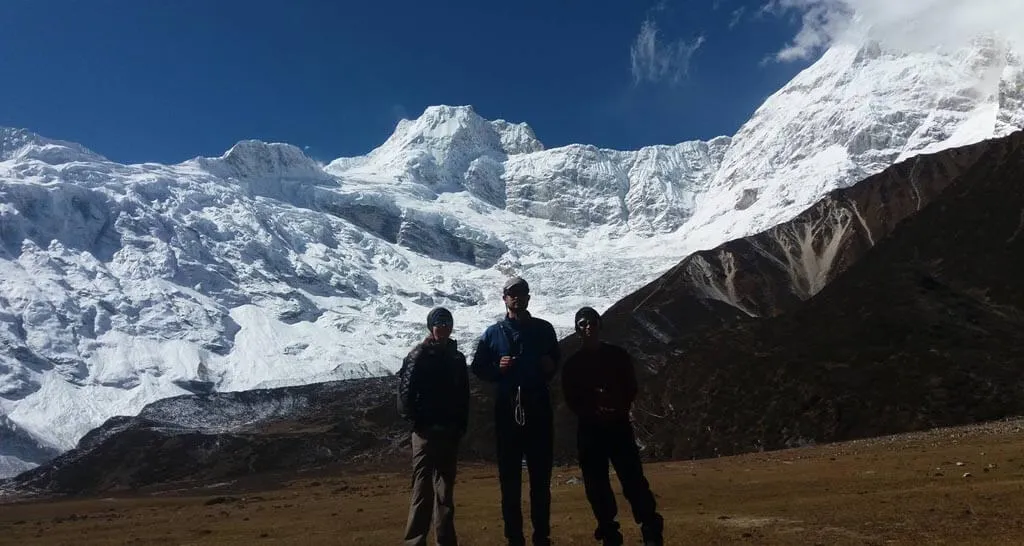
The Manaslu Circuit Trek 12 Days is a truly immersive Himalayan journey that takes you deep into the Manaslu Conservation Area, offering solitude, breathtaking scenery, and rich cultural encounters. Circumnavigating Mount Manaslu (8,163 m)—the eighth-highest peak in the world—this trek delivers panoramic vistas, traditional communities, and one of Nepal’s finest off‑the‑beaten‑path trekking experiences.
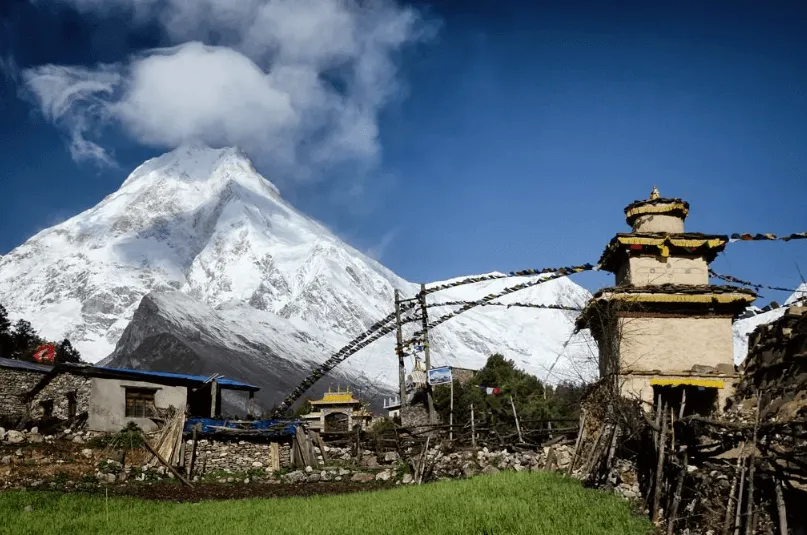
The route guides trekkers through serene valleys and verdant subtropical forests along the Budhi Gandaki River, leading to elevated settlements such as Jagat, Dharapani, Namrung, and Samagaon, each revealing the region’s unique Tibetan-Buddhist heritage. Prayer flags, chortens, and tea-house hospitality enrich the journey with spiritual warmth and comfort.
At the heart of the trek lies the demanding Larkya La Pass (5,106 m)—a high mountain crossing famed for its unrivaled views of Manaslu, Himalchuli, Ganesh Himal, and surrounding peaks. The ascent may test your endurance, but the sweeping alpine panoramas will reward every step.
Descending past Bhimthang’s alpine meadows, the trail transitions through pine forests and winding ridgelines before reaching Tilje, where trekking culminates and the return journey begins.
The 12-day itinerary allows for proper acclimatization, time in cultural villages, and added side-trip flexibility—creating a holistic trekking experience. A Manaslu Restricted Area Permit, Manaslu Conservation Area Permit (MCAP), and ACAP are mandatory, along with a registered guide, ensuring safety and compliance.
With trekking services responsible for permits, lodging, meals, and logistics, you can fully soak in the striking landscapes, vibrant traditions, and profound serenity of the Manaslu region.
12 Days Manaslu Circuit Trek Day-by-day ITINERARY
As your plane touches down at Tribhuvan International Airport, you’re embraced by the warm Himalayan atmosphere. A representative greets you and escorts you through the bustling streets to your hotel. After settling in, the rest of the day is yours—explore the ancient temples, visit local cafés, or stroll through vibrant Thamel. In the evening, your trek leader meets you for a detailed briefing about the route, safety, conservation rules, and what to expect in the days ahead.
Your overland journey begins early as you leave Kathmandu’s urban chaos and head toward the green middle hills. The road follows the Trishuli River, eventually meeting the trail of the Budhi Gandaki. Charming hillside villages, terraced fields, and traditional Nepali life unfold along the way. After a full day of scenic travel, you arrive at Machha Khola, a peaceful riverside settlement surrounded by forested ridges.
Today’s walk introduces you to the dramatic terrain of the Manaslu region. The path clings to the cliffs above the roaring river as you cross suspension bridges and pass through tropical vegetation. You’ll pass Tatopani, known for its natural hot springs, before continuing through narrow canyons and carved rock pathways. Your day ends in Jagat, a picturesque stone village that marks the start of the official restricted trekking zone.
Leaving Jagat, you follow a scenic trail lined with traditional houses, terraced farms, and Buddhist shrines. The landscape grows more dramatic as the valley narrows between towering cliffs. Passing Philim, one of the region’s most culturally rich villages, you continue through dense forests and waterfalls. By afternoon, you reach Deng, a small settlement where Tibetan influence becomes more visible in architecture, clothing, and lifestyle.
Today is a steady climb through shaded forests and across wooden bridges decorated with prayer flags. As you gain altitude, the sound of the river fades and crisp mountain air surrounds you. You walk past long mani walls carved with Buddhist mantras and vibrant prayer stones before reaching Namrung, a beautiful village with sweeping views of Himal Chuli and the surrounding peaks. Evening in Namrung is serene, with monks chanting in distant monasteries.
One of the most visually spectacular days. The route passes through Lihi, Lho, and Shyala, each offering broad Himalayan panoramas. Monasteries, golden-roofed chortens, and wide yak pastures decorate the trail. The landscape opens into the high valley of Samagaun, one of the region’s largest villages, offering close-up views of Mt. Manaslu. Traditional stone houses and waving prayer flags create a peaceful high-altitude atmosphere.
A crucial rest day for your body to adapt to altitude. You may choose from two rewarding hikes:
Pungen Gompa: A spiritual monastery perched below Manaslu’s breathtaking glacier face.
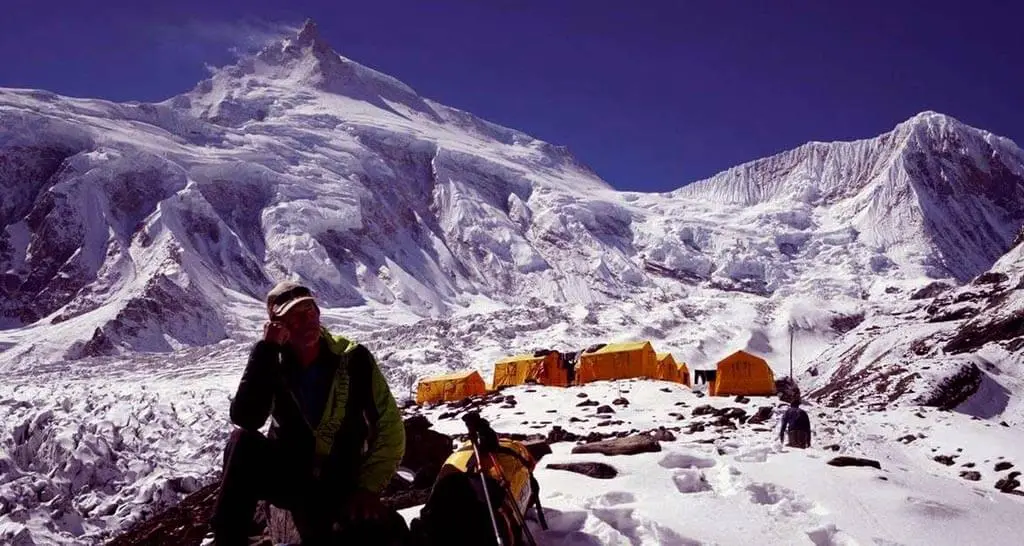
Manaslu Base Camp: A challenging climb offering extraordinary views of ice walls, crevasses, and the upper Himalayan world.
Return to Samagaun to enjoy the traditional Tibetan culture and peaceful alpine surroundings.
A gradual ascent leads you through windswept plains, grazing yaks, and rugged glacial landscapes. The air thins as you approach Dharamsala, also called Larke Phedi, the final overnight stop before tackling the high pass. This dramatic high-altitude camp sits beneath towering mountain ridges, offering early sunset views and a sense of anticipation for the next day’s challenge.
This is the highlight of the entire trek—a long, rewarding day filled with Himalayan magic. Starting before sunrise, you climb across icy slopes and glacial basins toward Larkya La Pass. From the top, panoramic views stretch across Himlung, Cheo Himal, Kang Guru, and the distant Annapurna peaks.
After celebrating at the pass, you begin a long descent along glacial moraine and rocky trails, eventually reaching the serene valley of Bimthang, surrounded by snow-capped mountains and wide green meadows.
A dramatic change in scenery awaits. Descending through forests of fir, rhododendron, and oak, you reenter the lush lower valleys. Crystal-clear streams, wooden bridges, and small villages create a peaceful and refreshing atmosphere. Passing through Goa and Tilije, you eventually reach Dharapani, a vibrant trekking junction where Manaslu meets the Annapurna Circuit.
A scenic jeep ride along the Marsyangdi River brings you to Besisahar, where you switch vehicles for the final drive to Kathmandu. As the hills give way to the bustling capital, you feel the satisfying accomplishment of completing one of Nepal’s finest trekking circuits.
Your unforgettable Himalayan adventure comes to an end. A representative will escort you to the airport for your international departure, ensuring a smooth and comfortable farewell. You leave Nepal with cherished memories, new friendships, and the deep satisfaction of having completed the Manaslu Circuit Trek.
12 Days Manaslu Circuit Trek INCLUDES & EXCLUDES
Cost Included in Your Package
- Airport Transfers: Convenient pick-up and drop-off by private car or jeep upon arrival and departure, ensuring a smooth start and end to your journey.
- Kathmandu Accommodation: Two nights in a comfortable hotel with daily breakfast, allowing you to rest and prepare for the trek.
- Ground Transportation: Travel from Kathmandu to Machha Khola by public bus, from Dharapani to Besisahar by shared jeep, and from Besisahar back to Kathmandu by public bus.
- Meals During Trek: Three freshly prepared meals a day (breakfast, lunch, and dinner – main course only) served at the best possible teahouses and lodges along the trail.
- Trekking Accommodation: Clean and cozy teahouses/lodges with twin-share rooms throughout the trek for optimal comfort.
- Professional Trekking Staff: An experienced, government-licensed English-speaking trek leader from Sherpa Expedition & Trekking. Groups of 8 or more receive an assistant guide, and a dedicated porter assists with your luggage.
- Sherpa Porters: Strong, reliable Sherpa porters equipped with proper safety and walking gear. Their salary, meals, insurance, accommodation, and equipment are included (one porter for every two trekkers).
- Full Staff Coverage: Complete coverage for all guides and porters, including meals, insurance, lodging, transportation, and essential trekking equipment.
- Permits and Fees: All required permits are included: Manaslu Restricted Area Permit, Manaslu Conservation Area Permit (MCAP), and Annapurna Conservation Area Permit (ACAP).
- Government Taxes and Charges: All local taxes, government fees, and official expenses are fully covered.
- Trekking Gear on Loan: Use of sleeping bag, down jacket, duffel bag, and walking poles if you do not have your own (to be returned after the trek).
- Emergency Assistance: Help in arranging rescue operations in case of health complications, supported by travel insurance.
- Souvenir: A complimentary Sherpa Expedition & Trekking T-shirt as a memorable keepsake.
- Certificate of Completion: Receive a certificate of achievement upon successfully completing the trek.
- Health Monitoring: Daily use of an oxygen meter to check your pulse, oxygen saturation, and heart rate, which is essential for monitoring Altitude Mountain Sickness (AMS) and ensuring your safety throughout the trek.
Cost Excludes
- International Flight Airfare: Your airfare to and from Nepal is not included.
- Nepal Entry Visa Fee: The visa is easily obtained on arrival at Tribhuvan International Airport, Kathmandu. Fees are: $30 USD for 15 days, $50 USD for 30 days, and $125 USD for 90 days.
- Accommodation and Meals in Kathmandu: All hotel stays and meals in Kathmandu before and after the trek, including lunch and dinner, are not included.
- Extra Night Accommodation: Any additional nights in Kathmandu due to early arrival, late departure, or early return from the trek.
- Personal Expenses: Costs for shopping, snacks, bottled water, tea, coffee, hot water, soup, desserts (pie, pudding, chocolate), hot and cold drinks, alcohol, Wi-Fi, telephone calls, battery charging fees, or hiring extra porters.
- Personal Clothing and Gear: Any personal trekking clothing, footwear, or specialized gear not provided in the package.
- Travel Insurance: Mandatory insurance covering emergency high-altitude rescue and evacuation.
- Tips for Guides and Porters: Gratuities are customary and recommended as a gesture of appreciation.
- Additional Costs or Delays: Expenses caused by factors beyond control, such as landslides, severe weather, itinerary changes for safety, illness, government policy changes, strikes, or other emergencies.
- Other Exclusions: Any costs not explicitly mentioned in the “Cost Includes” section are considered excluded.
Important Note:
If you return early from the trek due to illness or any personal reason, the costs paid for trekking permits, accommodations, meals, flights, and other services are non-refundable. Any additional expenses in Kathmandu—such as meals, hotels, or transportation—must be paid by the traveler.
12 Days Manaslu Circuit Trek PACKING LIST
The following information will give you some idea about what you need to bring for the trek. It is important you do not forget the essential items, as this will determine your comfort and safety on the trek. Equally important is that you do not burden yourself with unnecessary equipment on the trek.
- Sleeping Bag (Sherpa Teams will provide but need to return after completing the trip)
- Duffel Bag (Sherpa Teams will provide but need to return after completing the trip)
- Fleece jacket or pullover
- Waterproof windbreaker or windcheater
- Thermal underclothes
- Rain poncho
- Down jacket (Sherpa Teams will provide but need to return after completing the trip)
- Fleece or wool trousers
- Sun hat or scarf
- Trekking pants (two pairs)
- Crampons
- Mittens or woolen gloves
- Hiking socks (several pairs)
- Moisture-wicking shirts, including t-shirts
- Trekking shoes or boots with spare laces
- Flip-flops or sandals for relaxing in the evenings
- Underwear (several pairs)
- Swimsuit or swimming costume
- Sunglasses
- Headlamp or flashlight/torch
- Sleeping bag (Sherpa Teams can provide this for you)
- Trekking poles (if desired)
- Hiking backpack with a capacity of at least 40 liters
- Small lock for your backpack
- Reusable water bottles (at least two liters)
- Water purification tablets or filtration device
- Wash towel
- Basic first aid kit
Toiletries (tissues, toilet paper, moisturizer, lip balm, sunscreen, sanitary pads, hand sanitizer, nail clippers, a small mirror, toothbrush, toothpaste, glasses, contacts, etc.)
GOOD TO KNOW ABOUT 12 Days Manaslu Circuit Trek
Accommodation
You will be accommodated in 3-star hotels in Kathmandu. During the trek, we will be staying at lodges/ teahouses. You may find comfortable and better quality teahouses at lower altitudes. It should be noted that at higher elevations the quality of accommodation may not be as good, with more basic rooms with the bare necessities.
Meals during the trek
In Kathmandu, your hotel includes breakfast, whereas all meals (breakfast, lunch, and dinner) will be provided during the trek. A staple food in the mountainous regions is potatoes, oats, buckwheat, Sherpa stew and Tibetan bread. Sherpa’s’ started farming potatoes when the first seeds were introduced to the region in the early 90s. There is a limited choice of food at higher elevations and except many potato dishes. Potatoes are high in carbohydrates – an excellent source of energy needed at high altitudes.
Transportation
We use a private car for sightseeing and for the airport to hotel pick and drop off. We take the bus from Besisahar to Kathmandu. In the past Arughat used to be the starting point of the trek but nowadays, due to better road conditions we can travel by bus direct to the Soti Khola. We will travel along secondary (rough) roads all the way to Soti Khola by local bus and from Dharapani to Besisahar we will be traveling by private jeep
Guide and Porter on the trek
We provide you trained & certified trekking guides and porters who will take care of all logistics and a porter for every two trekkers who will each carry about 20 kg (10 kg for each trekker). An experienced guide and porter will be the difference between success and failure. They will also save you from taking unnecessary risks during poor weather conditions.
Physical fitness
Some days can be challenging where you often have to walk 6-8 hours a day. You don’t need past experience of hiking or trekking but if you have done any kind of trekking activities then it is always a plus! We have met people from all walks of life, shapes, and sizes who have completed the trek. The only difficult part is when altitude sickness strikes and the effect that it can have on your body. Before leaving for Nepal it is good if you can prepare yourself physically by increasing your stamina and oxygen intake.
Best season to travel
The Manaslu Circuit Trek is usually done in autumn (Sept. to November) and spring (March to May) when you are much more likely to get to have crystal clear views of the mountains and can also enjoy the lush vegetation in the lower regions of the trail - particularly during spring..
Remember – The better prepared – the more enjoyable your trek!
ROUTE MAP OF 12 Days Manaslu Circuit Trek
Gallery of 12 Days Manaslu Circuit Trek

12 Days Manaslu Circuit Trek Departures
Every departure listed below is 100% Guaranteed — once you book, your trip will run as scheduled regardless of group size.
Select a departure month
Fill out the form below and a Travel Expert will reach out to create your perfect tour.
FAQS Related to 12 Days Manaslu Circuit Trek
Others
Yes, you can. No matter who you are, as long as you are reasonably fit, can walk for 5-6 hours a day and trek/hike a few uphills, Sherpa Expedition and Trekking team will support you to the fullest to transform your dream into reality.
Spring and autumn are the best season for Manaslu Circuit trek. Spring (March, April and May) and Autumn (September, October and November) are the best months for trekking as weather will be clear and calm. Also you can get opportunity to view High mountains including Manaslu with the full of Snow.
The permit cost depends on the month and number of days you will spend in the Manaslu region. You will need three kinds of permits issued by the Government of Nepal. Manaslu Restricted Permit Manaslu trek permit costs USD 100.00 for the first seven days and USD 15.00 each additional day during September to November Manaslu trek permit costs USD 75.00 for first 7 days and USD 10.00 each extra day from December to August. Manaslu Conservation Area Permit (MCAP) Entry fee for SAARC Nationals is Nepali Currency 200 per person and for other Nationals is Nepali Currency 3,000 per person. Annapurna Conservation Area Permit (ACAP) Entry fee for SAARC Nationals is Nepali Currency 200 per person and for other Nationals is Nepali Currency 3,000 per person. Tsum Valley Restricted Permit (Optional: if you want to go to the Tsum Valley) If you choose the Tsum Valley trek, it costs USD 40 for each person per week.
No, there is no age limit for the trek to Manaslu Trekking but, you need to be in good physical shape and have a positive attitude. We also suggest you to prior to the excursion though we suggest you to please see your doctor and obtain necessary permission and advice, as well as medications for traveling in extreme altitude prior to the excursion.
During trekking, you will be served meals in the teahouses. Typical meals are noodles, rice, pasta or potato dishes along with vegetables and egg/chicken/meat dishes. Other items mostly served as breakfasts include egg, pancake, bread, porridge, muesli, and toasts with peanut butter and honey.
Accommodation is not an issue in Manaslu Trek as trails are usually less crowded and new and improved tea houses are opening up all the time. The tea houses and lodges are ready to serve trekkers.
Most of the teahouses on the Manaslu Trekking trail have squat toilet facilities but recently built lodges have western-style toilets as well. Nowadays, flush toilets are also being introduced with number of increasing trekkers each year. It is highly recommended to carry your own toilet paper and other required toiletries. Do not expect full bath or daily showers while on the Manaslu trek. If you insist on taking a hot shower daily, spare a lot of money for that. For hot water showers in the trek, you have to pay a few dollars at a time.
What you want to wear depends on you but we suggest you wear warm clothes during the Manaslu trekking. A down jacket, thermal longs and top, comfortable trekking trousers, t-shirts, fleece, windproof jacket, hat, scarf, and gloves might be useful. There are numerous trekking shops in the Thamel area of Kathmandu where you can get all of these items in both local and branded stores alike. Sherpa Expedition and Trekking may also accompany and assist you if required.
During the Manaslu trekking, you will be on a long journey for which you will need two bags to keep your belongings. A rucksack/duffle bag and a day bag for personal items. Sherpa Expedition and Trekking will provide you with a duffle bag (which is need to refund after the trek) that you can use throughout your entire journey and even afterward. These bags are durable and hence perfect for any kind of trekking journey. While the duffle bag will be carried by the potters, you will have to carry a day bag on your own. A day bag is a small backpack that has enough room for everything you will need on a day hike such as lunch, water, extra clothing and perhaps a few personnel items like camera, battery chargers, etc.
If possible, we suggest you bring your own equipment. However, sleeping bags and down jackets will be provided to you by Sherpa Expedition and Trekking. With regards to trekking poles, if you are used to walking with it then take them with you, as you will probably find them useful especially on the way down. They are not essential though and the walk is manageable without them. It is mostly a personal preference. If you prefer to take the trekking poles with you on the trekking then you can either bring your own pole or buy it from numerous options available in Kathmandu itself.
Yes, if you have a bag of extra clothing for when you return from the trekking, you will be able to store it safely in Kathmandu at Sherpa Expedition and Trekking office. Also, the storage facility is provided by most hotels and lodges in Kathmandu or you can also store it in our office for the duration of the trekking.
Our itinerary has been specially tailored to prevent any kind of AMS (Acute Mountain Sickness) while moving up to higher altitudes. Normally, altitude sickness starts from 3,600 meters and above. You will be trekking at a relatively slow and gradual pace as part of the acclimatization process. Cut off caffeinated, alcoholic and smoking items. Drink at least 4 liters of water a day. Trek slow. Don't skip the acclimatization days. Better to continue with Diamox (if any symptoms show up). Drink Garlic Soup. In the higher elevation, there is less oxygen in the air and this is more so while crossing high passes. Our expert guides will advise you on how to avoid AMS and treat it when/ if required.
Make sure to have both medical and evacuation insurance before coming to Nepal for Manaslu trekking. You should be careful in choosing a policy while traveling to a Himalayan country like Nepal as some insurance companies may make special exceptions for adventure travel. If you are confused about the insurance, please inform us and we will help you. It is usually better to arrange your insurance in your country before travel.
The trekking will be 5-7 hours a day depending upon the landscape and destination.
It takes 6 to 21 days to complete Manaslu Trek depending upon the mode of transportation and packages of Sherpa Expedition and Trekking offers.
We at Sherpa Expedition and Trekking Team always have the safety, comfort, and satisfaction of our valued customers as our foremost priority at all times, and we assure you a wonderful and unforgettable time with us in our beautiful country. Sherpa team members of Sherpa Expedition and Trekking will be carrying all the necessary gear, equipment, and first aid kits and they have extensive first aid training. If a trekker falls sick on high altitude, the leader will decide whether to continue the trek. In case of emergency, Sherpa Expedition and Trekking have a rescue helicopter to bring you back from the higher elevation. Moreover, Sherpa Expedition and Trekking also provides oximeter to monitor the oxygen level at high altitude and offers regular health check-up facilities.
As Manaslu has recently gained popularity among trekkers, not many facilities are available on the trails. Due to its isolation and off-road trails, the region is not yet connected to the outer world via proper roads. So, you will need to take local buses or hire a private jeep to reach the starting point of the trek to Arughat or Sotikhola. A local bus would cost around US $10 per person whereas a jeep would cost between $150 and $200 each way but is worth the convenience than the packed buses. If you are traveling in a group, the cost can be shared by all and would be around $30 per person. The same rate would apply to your return trip from Tal or Besisahar to Kathmandu.
Sherpa Expedition and Trekking will provide one porter for two trekkers to carry 20 kgs of luggage (maximum 10 kg for each trekker). Please be sure your porters are not overloaded because they do not carry only your equipment but also lift your spirit to reach new heights, and your love, affection, and generosity can be the reason for them to work hard to take you to your destination.
Garlic soup is a must while trekking. Sherpa Expedition and Trekking recommend trekkers to drink green tea, lemon tea, hot lemon ginger tea and drink at least 2-4 liters of water a day. However, it is better to avoid alcohol and alcoholic beverages, caffeinated items, and hot-chocolates at high altitude.
Sherpa Expedition and Trekking also encourage to avoid dairy and cheesy items and strongly suggest not to consume them during the trek. Our packages are suitable for both vegan and vegetarians.
Your guide and porters are a big reason why you got a chance to feel something very few can have. Apart from guiding and carrying your necessities and being mindful of your safety, they want to see you happily succeeded more than anyone like family and help you successfully complete the trek safely. So, your tips reflect gratitude towards them. So, tipping is a recommended culture for porters and guide in Nepal as a gesture of thankfulness.
Sherpa Expedition and Trekking will introduce dozens of shops selling knock-off gear in Kathmandu. You can also barter those gears at the knock-off places but be sure you keep the receipt safely. Moreover, you can rent the needed gears if you do not want to buy them.
You can have WiFi few places such as Namrung, Lho, Samagaun, Bhimthang, Dharapni etc.
ATM services are not available only during the trekking. SO be sure you carry enough cash with you.
Most of the tea houses/ lodges have electricity whereby you will be able to charge your iPod or camera batteries. Please note that lodges/tea houses will charge you some extra money for the services. The fee may vary from 1 USD to 3 USD per hour.
RELATED PACKAGES
Latest Traveller’s Reviews
Travel experiences of our clients who recently returned from their trips.
100%
Based On 33 Reviews
Gabriela Nastase
United Kingdom
September 11, 2024
Reliable and Professional
Oliver John
Australia
August 28, 2024
Top-Notch Team and Service
Koko Lorenzo
United States
August 7, 2024
Outstanding Service from Sherpa Expedition

Write Your Review
Average Customer Ratings
How The Travellers Have Rated This Package
33
0
0
0
0