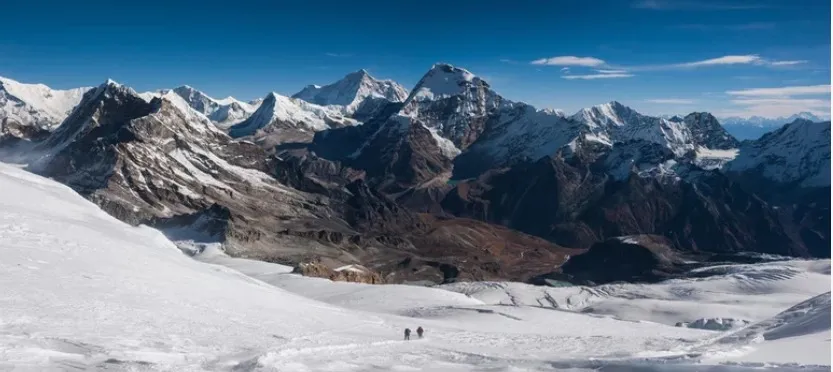
In September, Mera Peak, towering at 6,476 meters (21,247 feet), presents an exhilarating challenge for mountaineers seeking a taste of Himalayan adventure. Located in the remote Hinku Valley of Nepal, Mera Peak offers a blend of trekking and technical climbing, making it an ideal choice for those looking to elevate their mountaineering skills.
The journey typically begins with a scenic flight from Kathmandu to the mountain airstrip at Lukla, followed by a trek through lush forests and picturesque Sherpa villages. As September unfolds, the monsoon rains have subsided, leaving behind clear skies and crisp mountain air, perfect for the ascent.
Climbers gradually ascend through stunning alpine landscapes, passing through High Camp where they acclimatize and prepare for the final push. From here, the route becomes more challenging, requiring the use of crampons, ice axes, and ropes to navigate crevassed glaciers and steep snow slopes.
Mera Peak is one of the most popular trekking peaks in Nepal, standing tall at 6,476 meters above sea level. The peak is located in the Khumbu region of Nepal and offers stunning views of some of the...
Reaching Mera Peak's summit is a breathtaking experience, offering panoramic views of five of the world's highest mountains: Everest, Lhotse, Cho Oyu, Makalu, and Kanchenjunga. The sense of achievement is palpable as climbers stand atop this majestic peak, surrounded by a sea of Himalayan peaks stretching as far as the eye can see.
Descending back through the valley, trekkers can savor the tranquility of the region, encountering diverse flora and fauna unique to this high-altitude environment. Nights are spent in cozy teahouses, sharing stories with fellow adventurers and reflecting on the challenges and triumphs of the expedition.
Mera Peak climbing in September is not just a physical journey but a spiritual one, offering a profound connection with nature and oneself. It's a testament to human perseverance and the allure of the world's highest mountains, drawing adventurers from around the globe to test their limits and experience the magic of the Himalayas.
Why Mera Peak Climbing in September
Choosing to climb Mera Peak in September offers mountaineers a perfect balance of favorable weather conditions and stunning natural beauty. September marks the tail end of the monsoon season in Nepal, meaning the heavy rains have subsided, leaving behind clearer skies and more stable weather patterns. This transitional period ensures that climbers can enjoy relatively dry conditions, making the ascent safer and more enjoyable.
Moreover, September sees fewer crowds compared to the peak trekking season in October and November, allowing for a more intimate experience with the mountain and its surroundings. The trails are less congested, and accommodation options along the route are more readily available.
For those interested in flora and fauna, September offers a unique opportunity to witness the lush greenery of the lower altitudes contrasted with the snow-capped peaks of the Himalayas. The scenery is breathtaking, with vibrant rhododendron forests and pristine alpine landscapes stretching as far as the eye can see.
In essence, September presents an ideal window for climbing Mera Peak, combining manageable weather conditions, fewer crowds, and unparalleled natural beauty, making it a cherished experience for adventurers seeking a Himalayan challenge.
Mera Peak, standing tall at 6,476 meters, is the highest trekking peak in Nepal and is a popular destination for adventure enthusiasts. The peak is located in the Solu Khumbu region of Nepal, close to...
How is the Weather to Climb Mera Peak In September
September provides a transitional period in the Nepalese Himalayas, marking the end of the monsoon season and the beginning of the post-monsoon period. This makes the weather favorable for climbing Mera Peak, as the heavy rains have usually subsided, resulting in clearer skies and more stable conditions.
During September, climbers can expect generally dry weather with occasional showers, especially in the early part of the month. Temperatures vary significantly with altitude, ranging from mild and pleasant conditions at lower elevations to colder temperatures at higher altitudes.
At Mera Peak Base Camp and above, temperatures can drop below freezing at night, requiring climbers to be well-prepared with suitable clothing and equipment. Days are typically sunny with clear views of the surrounding peaks, providing ideal conditions for both climbing and enjoying the spectacular scenery.
It's important to note that weather in the Himalayas can be unpredictable, and climbers should always be prepared for sudden changes. However, September generally offers a good window for climbing Mera Peak, combining manageable weather conditions with stunning vistas of the Himalayan landscape.
Weather, Climate, and Temperature In Mera Peak
Mera Peak, located in the Khumbu region of Nepal, experiences a diverse range of weather conditions and climates throughout the year. In September, which marks the transition from the monsoon season to the post-monsoon period, the weather begins to stabilize, offering climbers more predictable conditions for their ascent.
At lower altitudes, such as Lukla and the Hinku Valley, September brings mild temperatures during the day and cool evenings. As climbers ascend higher, towards Mera Peak Base Camp and beyond, temperatures drop significantly, especially at night. Daytime temperatures can vary widely depending on weather patterns, but generally remain cool and comfortable for trekking and climbing activities.
Precipitation in September is typically lower compared to the monsoon months of June, July, and August. While occasional rain showers may occur, especially early in the month, climbers can expect more stable weather conditions with clearer skies as September progresses.
The climate around Mera Peak is influenced by its high-altitude location in the Himalayas, characterized by cold winters, cool summers, and significant temperature variations between day and night. Climbers should be prepared for sub-zero temperatures at higher elevations, along with the possibility of snowfall, even in September.
Mera Peak is one of the most popular peaks for mountaineering in Nepal. It is located in the Solu Khumbu region of the country and stands at an elevation of 6,476 meters (21,247 feet). The peak is a p...
How Difficult to Climb Mera Peak In September
Climbing Mera Peak in September presents both challenges and rewards for mountaineers seeking adventure in the Himalayas. While September offers generally stable weather conditions with clear skies and moderate temperatures, climbers must be prepared for the physical and technical demands of ascending a 6,476-meter peak.
The difficulty of climbing Mera Peak in September primarily lies in its altitude and the technical nature of the climb. The ascent involves navigating crevassed glaciers, steep snow slopes, and potentially challenging weather conditions, requiring climbers to have previous trekking and mountaineering experience.
Acclimatization is crucial when climbing Mera Peak, as ascending too quickly can lead to altitude sickness. September allows for a gradual acclimatization process, starting with the trek from Lukla through the beautiful Hinku Valley, where climbers can adjust to the increasing altitude over several days.
The final ascent from High Camp to the summit of Mera Peak is physically demanding, requiring stamina and determination. Climbers often use crampons, ice axes, and ropes to negotiate the more technical sections of the climb, including the final push to the summit ridge.
Despite its challenges, climbing Mera Peak in September rewards adventurers with unparalleled views of the Himalayan giants, including Everest, Lhotse, and Makalu. The sense of achievement upon reaching the summit, combined with the stunning natural beauty of the region, makes the journey worthwhile for those willing to take on this high-altitude challenge.
Mera Peak Expedition is a popular trekking route that offers a challenging climb to the summit of Mera Peak. The peak stands at an elevation of 6,476 meters (21,247 feet) and is located in the Solu Kh...
Lukla Flight in September
The flight from Kathmandu to Lukla in September is an essential and exhilarating part of the journey for climbers heading to Mera Peak and other destinations in the Everest region. Lukla Airport, also known as Tenzing-Hillary Airport, is one of the most renowned mountain airstrips in the world, nestled amidst the Himalayan peaks at an elevation of approximately 2,860 meters (9,383 feet).
In September, the weather conditions for flights to Lukla are generally favorable, with clearer skies and reduced precipitation compared to the monsoon months. However, weather in the mountains can be unpredictable, and flights may be subject to delays or cancellations due to fog, wind, or other factors.
The flight itself offers breathtaking views of the Nepalese countryside and the towering Himalayan peaks. Pilots are highly experienced in navigating the challenging terrain and changing weather conditions, ensuring a safe and memorable journey for passengers.
Upon arrival in Lukla, climbers begin their trek through the picturesque Sherpa villages and stunning landscapes of the Khumbu region. The flight to Lukla marks the beginning of an unforgettable adventure, setting the stage for the challenges and rewards of climbing Mera Peak amidst the awe-inspiring beauty of the Himalayas.
What Should I Pack for Mera Peak Climbing
Packing for Mera Peak climbing requires careful consideration of the challenging terrain and varying weather conditions. Essential items include high-quality trekking gear such as a sturdy backpack, trekking poles, and comfortable, waterproof hiking boots suitable for rugged terrain. Clothing should include layers for warmth, moisture-wicking base layers, insulated jackets, and a good quality down jacket for colder conditions at higher altitudes.
Technical climbing gear such as crampons, ice axes, harnesses, and helmets are essential for the ascent to Mera Peak's summit. Renting or purchasing these items in Kathmandu or Lukla is advisable, ensuring they meet safety standards and are appropriate for Himalayan conditions.
Other essentials include a sleeping bag rated for sub-zero temperatures, a headlamp with extra batteries, sunglasses with UV protection, and a first aid kit equipped for altitude sickness and minor injuries. Additionally, high-energy snacks, water purification tablets, and a refillable water bottle are crucial for maintaining energy and hydration during the trek.
This is a chance to go climbing without the necessary permits that most climbing expeditions require in Nepal. Mera Peak fits the bill perfectly and at (6,476m/21,190ft) you will have spectacular view...
Can I Hire Climbing Equipment from Khare
Khare, a village along the Mera Peak climbing route, offers limited options for renting climbing equipment. Basic gear such as crampons, ice axes, and harnesses may be available for rent from local lodges or expedition operators. However, the selection and quality of rental equipment in Khare are generally more limited compared to what is available in Kathmandu or Lukla.
It's recommended to rent or purchase climbing equipment in Kathmandu or Lukla before starting the trek to ensure you have the necessary gear and that it meets safety standards. Equipment rented in Kathmandu can be checked for quality and suitability for Himalayan conditions, providing peace of mind during the climb.
What is the Success Rate of Mera Peak Climbing
The success rate of Mera Peak climbing varies depending on various factors such as weather conditions, acclimatization, and the experience level of climbers. Generally, the success rate for reaching the summit of Mera Peak is relatively high compared to other Himalayan peaks of similar altitude.
Climbers with prior trekking and mountaineering experience, adequate physical fitness, and proper acclimatization have a higher likelihood of successfully summiting Mera Peak. The ascent involves navigating crevassed glaciers and steep snow slopes, requiring technical climbing skills and the use of appropriate gear such as crampons and ice axes.
Weather conditions play a significant role in the success rate, as clear skies and stable weather patterns are ideal for summit attempts. Climbing during the post-monsoon season, from September to November, generally offers better weather conditions and higher success rates compared to the monsoon months.
Experienced guides and expedition operators can significantly enhance the success rate by providing expert guidance, logistical support, and ensuring climbers are well-prepared for the challenges of Mera Peak climbing.
This is the highest peak in Nepal that does not require a climbing permit (6,476m/21,190ft). From the summit there are spectacular views of several 8000 meter plus peaks, such as Everest, Cho Oyu, Kan...
How Technical is Mera Peak Climbing
Mera Peak climbing requires a moderate level of technical skill and experience in mountaineering. While it is considered one of the easier 6,000-meter peaks in Nepal, climbers should be comfortable with basic mountaineering techniques and have prior experience using climbing equipment such as crampons, ice axes, and ropes.
The ascent involves crossing crevassed glaciers and ascending steep snow slopes, particularly from High Camp to the summit. Climbers may encounter sections requiring fixed ropes and careful navigation around crevasses, especially during the final push to the summit ridge.
Although Mera Peak does not require advanced technical climbing skills, climbers should be prepared for challenging conditions and changing weather patterns typical of high-altitude environments. Proper acclimatization, physical fitness, and the ability to assess and mitigate risks are essential for a successful climb.
Expedition operators and experienced guides can provide valuable support and guidance, ensuring climbers have the necessary skills and confidence to tackle the technical aspects of Mera Peak climbing safely and effectively.
Which Route is Best for Mera Peak Climbing
The standard route for Mera Peak climbing typically starts with a flight from Kathmandu to Lukla, followed by a trek through the Hinku Valley. From Lukla, climbers traverse through lush forests, picturesque Sherpa villages, and gradually ascend towards Mera Peak Base Camp.
From Base Camp, climbers continue to High Camp, where they acclimatize and prepare for the summit push. The ascent to Mera Peak's summit involves navigating crevassed glaciers and steep snow slopes, culminating in a final push to the summit ridge.
Another route option includes climbing via the Mera Glacier, which offers a more direct approach to the summit but involves more technical climbing and navigation through challenging terrain.
The best route for Mera Peak climbing depends on factors such as climbers' experience level, time constraints, and preferences for scenery and technical challenge. Both routes offer stunning views of the Himalayan landscape and rewarding experiences for mountaineers seeking adventure in Nepal's Khumbu region.
This is an excellent opportunity to climb Nepal’s highest peak without having to obtain a permit (6,476m/21,190ft). From the summit, you will have stunning views of several 8000m plus peaks, such as E...
Useful Tips for Mera Peak in September
Climbing Mera Peak in September presents a unique set of challenges and rewards. Here are some useful tips to enhance your experience:
- Weather Awareness: September marks the end of the monsoon season, but occasional showers are still possible. Pack waterproof gear and be prepared for changing weather conditions.
- Acclimatization: Take your time to acclimatize properly. Plan for rest days and gradual altitude gains to minimize the risk of altitude sickness.
- Physical Fitness: Ensure you're in good physical condition. Cardiovascular endurance and strength training will help you cope with the demands of high-altitude trekking and climbing.
- Pack Wisely: Bring layers of clothing suitable for both warm days and cold nights. Include high-altitude gear like crampons and a down jacket for the summit push.
- Hydration and Nutrition: Drink plenty of water and consume high-energy foods to maintain stamina and health throughout the climb.
- Local Culture: Respect local customs and traditions. Learn a few basic phrases in Nepali to interact with locals and enhance your cultural experience.
- Guide and Porter: Consider hiring a reputable guide and porter. They provide valuable local knowledge, assist with logistics, and enhance safety.
- Leave No Trace: Practice responsible trekking and climbing. Carry out all waste and respect natural environments.
Following these tips will help you navigate the challenges and make the most of your Mera Peak adventure in September.
What About the Accommodation?
Accommodation during Mera Peak climbing varies along the route. In Kathmandu and Lukla, you'll find a range of hotels and guesthouses catering to travelers. These accommodations offer basic amenities such as beds, hot showers (where available), and meals.
As you trek towards Mera Peak, accommodation options become more rustic. Lodges and teahouses in villages like Paiya, Pangkongma, and Khare provide simple rooms with shared facilities. Expect basic but comfortable lodging, often with communal dining areas where trekkers can socialize and enjoy hearty meals.
Higher up, closer to Mera Peak Base Camp and High Camp, accommodation is more basic, consisting of tented camps or basic lodges. These accommodations may have limited facilities due to their remote locations, but they offer shelter and warmth amidst the high-altitude conditions.
It's advisable to carry a sleeping bag suitable for cold temperatures and be prepared for rustic conditions during the climb. Accommodation options are limited, especially in peak trekking seasons, so booking in advance or through a reputable trekking agency is recommended.
This is a real mountain climbing adventure that will leave you in awe of the beauty of the Himalayan Mountains. The Lobuche Peak Climbing expedition in the Khumbu region of Nepal has been ranked by Lo...
Mera Peak Climbing Permit
Climbing Mera Peak requires obtaining several permits. These include:
- TIMS Card: The Trekker's Information Management System (TIMS) card is required for all trekkers in Nepal. It helps monitor and ensure safety for trekkers in the Himalayan region.
- Sagarmatha National Park Entry Permit: Mera Peak is located within the Sagarmatha National Park, a UNESCO World Heritage site. An entry permit is required to enter the park, and fees contribute to conservation efforts.
- Makalu Barun National Park Entry Permit: For climbers approaching Mera Peak via the Makalu Barun National Park, an additional entry permit is necessary.
- Peak Climbing Permit: A climbing permit specific to Mera Peak is required. The cost varies depending on the season and the number of climbers in the group. It's advisable to obtain this permit through a registered trekking agency, which handles the paperwork and logistics.
Permits must be carried and shown at checkpoints along the trekking route. Failure to produce valid permits may result in fines or denial of entry into the national parks and climbing routes.
How are the High-Altitude Weather Conditions?
High-altitude weather conditions around Mera Peak are highly variable and can change rapidly. In September, temperatures at lower altitudes are moderate during the day, ranging from mild to warm, but can drop significantly at night.
As climbers ascend towards Mera Peak Base Camp and High Camp, temperatures become colder, especially above 4,000 meters (13,123 feet). Nighttime temperatures often drop below freezing, requiring proper insulation and gear suitable for cold weather.
Weather patterns in September typically feature clear skies and reduced precipitation compared to the monsoon months. However, occasional rain or snow showers are still possible, especially in the early part of the month.
Wind speeds increase with altitude, particularly on exposed ridges and summit approaches. Climbers should be prepared for gusty conditions and potential wind chill effects, which can make temperatures feel colder than they actually are.
Overall, September offers favorable weather conditions for climbing Mera Peak, with clear skies providing stunning views of the Himalayan peaks. Proper preparation, including adequate clothing, gear, and acclimatization, is essential for coping with the high-altitude weather conditions and ensuring a safe and successful climb.
This is a fantastic climbing expedition that takes you to the summit of "Island Peak (6,189m) situated between Amadablam and Lhotse mountains. This exciting adventure is jam-packed full of features an...
Conclusion
Climbing Mera Peak in September is a challenging yet rewarding adventure that offers stunning views of the Himalayas and a chance to experience Nepal's natural beauty and cultural richness. The month marks the transition from the monsoon season to clearer skies, making it an ideal time for climbers seeking favorable weather conditions.
Accommodation along the route ranges from comfortable guesthouses in Kathmandu and Lukla to basic teahouses and tented camps closer to Mera Peak. Proper planning and packing, including essential climbing gear and permits, are crucial for a safe and enjoyable climb.
High-altitude weather conditions in September are generally stable, with moderate temperatures during the day and cold nights at higher elevations. Clear skies offer breathtaking views but also require climbers to be prepared for potential changes in weather and temperature.
By following useful tips, obtaining necessary permits, and respecting local customs, climbers can maximize their chances of success and create lasting memories of their Mera Peak climbing experience in September.
Mera Peak Climbing Packages
Mera Peak Climbing
Mera Peak Climbing 20 Days
Mera Peak Climbing 17 Days
Mera Peak Summit Return By Helicopter
Mera Peak Climbing 10 Days
Mera Peak Expedition 11 Days
Mera Peak Expedition 13 Days
Mera Peak Expedition 14 Days
Mera Peak Expedition 15 Days
This is a must for those adventurers–seekers who are physically fit or have previous climbing experience. This is one adventure that will make your toes curl and give you an adrenalin rush as you clim...