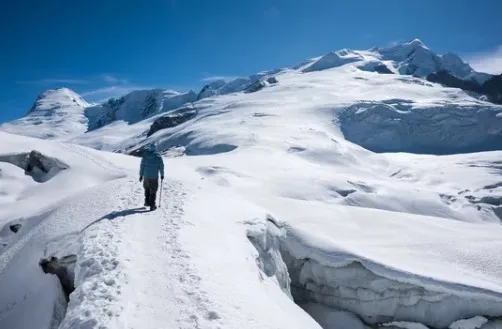
Climbing Mera Peak in March presents a captivating adventure set amidst Nepal's Himalayan splendor. As the winter recedes and spring begins to unfold, March offers climbers a unique blend of favorable weather and mesmerizing landscapes.
The journey typically commences with a scenic flight from Kathmandu to Lukla, where the trekking expedition begins. March marks the end of the winter season, ensuring crisp, clear skies and pleasant daytime temperatures, ideal for trekking through picturesque Sherpa villages and lush rhododendron forests.
Ascending towards Mera Peak Base Camp, climbers traverse rugged trails adorned with blooming rhododendrons and other alpine flora, adding a vibrant touch to the scenery. The gradual ascent allows climbers to acclimatize steadily while soaking in panoramic views of snow-capped peaks like Everest, Lhotse, and Makalu along the route.
This is an excellent opportunity to climb Nepal’s highest peak without having to obtain a permit (6,476m/21,190ft). From the summit, you will have stunning views of several 8000m plus peaks, such as E...
March provides stable weather conditions with minimal precipitation, reducing the risks associated with monsoon remnants or heavy snowfall. This ensures safer glacier crossings and a more secure ascent towards Mera Peak's summit at 6,476 meters (21,247 feet).
Summit day typically begins in the predawn hours, navigating through the final ascent under starlit skies. As the sun rises over the Himalayas, reaching Mera Peak's summit becomes a triumphant moment, rewarded by breathtaking 360-degree views of the Himalayan range stretching into the distance.
Descending from the summit, climbers trace their way back through serene mountain landscapes, reflecting on their achievement amidst the tranquility of the Himalayan wilderness. Encounters with local Sherpa culture and visits to ancient monasteries enrich the journey, offering insights into Nepal's rich cultural tapestry.
Climbing Mera Peak in March isn't just about reaching a summit; it's an immersive Himalayan experience blending natural beauty, cultural exploration, and personal accomplishment against the backdrop of Nepal's majestic peaks and pristine landscapes.
Major Highlights of Climbing Mera Peak in March
Climbing Mera Peak in March offers an array of highlights that make it a memorable and rewarding Himalayan adventure:
- Clear Skies and Views: March brings stable weather with clear skies, providing stunning panoramic views of the surrounding Himalayan peaks like Everest, Lhotse, and Makalu. The visibility is exceptional, making every step towards the summit a visual delight.
- Spring Scenery: The landscape blooms with rhododendrons and other alpine flora, adding vibrant colors to the trekking route. The contrast of blooming flowers against the snowy peaks creates a picturesque setting that enhances the trekking experience.
- Optimal Weather Conditions: March marks the end of winter and the onset of spring, offering mild daytime temperatures ideal for trekking. The weather is generally dry with minimal precipitation, reducing the risks associated with monsoon rains or heavy snowfall.
- Cultural Experience: Along the trekking route, climbers encounter Sherpa villages and monasteries, providing insights into the local culture and way of life. March may coincide with local festivals, allowing climbers to witness traditional celebrations and rituals.
- Achievement of Summit: Standing atop Mera Peak's 6,476-meter (21,247-foot) summit is a significant achievement. The panoramic view from the summit ridge, especially during sunrise or sunset, rewards climbers with a sense of accomplishment and awe-inspiring natural beauty.
Climbing Mera Peak in March combines favorable weather, stunning landscapes, cultural immersion, and a challenging yet achievable summit, making it a standout experience for mountaineers seeking adventure in the Himalayas.
This is the highest peak in Nepal that does not require a climbing permit (6,476m/21,190ft). From the summit there are spectacular views of several 8000 meter plus peaks, such as Everest, Cho Oyu, Kan...
Weather and Temperature at Mera Peak in March
March marks a transition period at Mera Peak, offering favorable weather conditions for climbing amidst Nepal's Himalayan terrain:
- Temperature: During March, daytime temperatures at lower elevations range from 5°C to 15°C (41°F to 59°F). As climbers ascend towards higher altitudes, temperatures drop, especially during early mornings and nights, requiring proper layering to stay warm.
- Weather Conditions: March typically experiences stable weather with clear skies and minimal precipitation. This makes it an optimal time for trekking and climbing, with reduced risks of rain or snow obstructing the ascent.
- Wind: While winds can vary, March generally sees moderate wind speeds. Climbers should be prepared for occasional gusts, particularly on exposed sections or higher altitudes, which may affect wind chill factors.
- Visibility: Clear skies in March provide excellent visibility of the surrounding Himalayan peaks, enhancing the climbing experience with breathtaking panoramic views.
- Precipitation: Although March is relatively dry, climbers should be prepared for occasional light snow showers at higher elevations. Proper gear and equipment for cold weather conditions are essential to stay comfortable and safe during the ascent.
Understanding the weather and temperature conditions in March is crucial for planning and preparing adequately for the Mera Peak climb, ensuring a safe and enjoyable expedition in the Himalayas.
Mera Peak Expedition is a popular trekking route that offers a challenging climb to the summit of Mera Peak. The peak stands at an elevation of 6,476 meters (21,247 feet) and is located in the Solu Kh...
Why Climb Mera Peak in March?
March presents compelling reasons for climbers to choose Mera Peak as their Himalayan climbing destination:
- Ideal Weather: March offers stable weather conditions with clear skies, mild temperatures, and minimal precipitation. These favorable conditions provide optimal visibility and safer climbing conditions, enhancing the overall experience.
- Scenic Beauty: The landscape blooms with rhododendrons and other alpine flora during March, creating a colorful backdrop against the snow-capped peaks. The contrast of vibrant spring colors and majestic mountains adds to the visual appeal of the trekking route.
- Less Crowded: Compared to peak climbing seasons like spring and autumn, March sees fewer climbers on Mera Peak. This translates to quieter trails, more peaceful campsites, and a more intimate experience with the natural surroundings.
- Cultural Exploration: Along the trek, climbers encounter Sherpa villages and monasteries, providing opportunities to learn about local traditions and customs. March may coincide with festivals like Losar (Tibetan New Year), enriching the cultural experience.
- Achievable Summit: Mera Peak, standing at 6,476 meters (21,247 feet), is considered a non-technical climb suitable for climbers with basic mountaineering skills. March's favorable weather and stable conditions increase the chances of reaching the summit safely and successfully.
Climbing Mera Peak in March offers a perfect blend of favorable weather, stunning landscapes, cultural immersion, and achievable summit goals, making it a preferred choice for mountaineers seeking an unforgettable Himalayan adventure.
What is the Challenge of Climbing Mera Peak in March?
While March provides favorable conditions for climbing Mera Peak, several challenges await climbers embarking on this Himalayan adventure:
- Cold Temperatures: March sees cold temperatures, especially at higher altitudes and during early morning climbs. Proper layering with insulated clothing, gloves, and a warm hat is essential to combat the cold and prevent hypothermia.
- Altitude: Mera Peak reaches 6,476 meters (21,247 feet), posing significant altitude-related challenges. Climbers must acclimatize properly by ascending gradually, staying hydrated, and recognizing symptoms of altitude sickness such as headaches and nausea.
- Technical Aspects: While Mera Peak is considered a non-technical climb, it involves navigating crevassed glaciers and steep snow slopes. Basic mountaineering skills such as using crampons, ice axes, and ropes are necessary for safe ascent and descent.
- Weather Variability: Despite favorable conditions, weather can change quickly in the mountains. Climbers should monitor weather forecasts closely and be prepared for sudden shifts in temperature, wind, or precipitation.
- Physical Endurance: Climbing Mera Peak requires stamina and physical fitness. Long trekking days, early morning summit attempts, and challenging terrain demand strength, endurance, and mental resilience from climbers.
By understanding and preparing for these challenges, climbers can enhance their readiness for the Mera Peak expedition in March, ensuring a safe and rewarding climb amidst Nepal's majestic Himalayan landscape.
This is a chance to go climbing without the necessary permits that most climbing expeditions require in Nepal. Mera Peak fits the bill perfectly and at (6,476m/21,190ft) you will have spectacular view...
Preparing for Mera Peak Climbing in March
Preparing for climbing Mera Peak in March requires careful planning and physical conditioning to ensure a safe and enjoyable expedition in Nepal's Himalayas:
- Physical Conditioning: Start training several months in advance with cardiovascular exercises like hiking, running, or cycling to build endurance. Incorporate strength training to strengthen leg muscles and core stability, essential for trekking and ascending steep terrain.
- Altitude Acclimatization: Mera Peak stands at 6,476 meters (21,247 feet), requiring proper acclimatization to reduce the risk of altitude sickness. Plan your itinerary with gradual ascent and rest days to allow your body to adjust to decreasing oxygen levels as you gain altitude.
- Gear and Equipment: Invest in high-quality gear suitable for cold weather and mountaineering, including insulated clothing, waterproof layers, trekking boots with crampon compatibility, and a sleeping bag rated for sub-zero temperatures. Ensure gear is tested and familiarize yourself with its use before the expedition.
- Medical Considerations: Visit a healthcare professional for a medical check-up and discuss altitude sickness prevention. Carry necessary medications like acetazolamide (Diamox) for altitude acclimatization and first aid supplies for minor injuries.
- Training Climbs: Undertake training climbs on smaller peaks or challenging trails to simulate conditions and build confidence. Practice using crampons, ice axes, and ropes under supervision to familiarize yourself with basic mountaineering techniques.
- Logistics and Permits: Arrange necessary permits (Sagarmatha National Park and Mera Peak climbing permit) through a reputable trekking agency or guide service. Confirm logistics such as transportation, accommodation, and meals to ensure a smooth journey.
By focusing on physical preparation, altitude acclimatization, acquiring suitable gear, and logistical planning, climbers can enhance their readiness for the rewarding challenge of climbing Mera Peak in March.
How difficult is it to climb Mera Peak?
Mera Peak is categorized as a non-technical trekking peak, making it accessible to climbers with basic mountaineering skills and adequate physical fitness. Here’s an overview of the difficulty level:
- Technical Requirements: While Mera Peak does not involve technical climbing skills like rock climbing or ice climbing, it requires familiarity with basic mountaineering equipment such as crampons, ice axes, and ropes. Climbers should be comfortable using this gear on snowy and icy terrain.
- Physical Demands: Climbing Mera Peak involves long trekking days and steep ascents. A high level of physical fitness is necessary to endure multiple days of trekking at high altitudes and to cope with cold temperatures and varying weather conditions.
- Altitude Challenges: The primary challenge of climbing Mera Peak is altitude. At 6,476 meters (21,247 feet), climbers must acclimatize properly to prevent altitude sickness. The trek includes gradual ascents and rest days to allow the body to adjust to decreasing oxygen levels.
- Weather Conditions: Weather in the Himalayas can be unpredictable, with conditions potentially changing rapidly. Climbers should be prepared for cold temperatures, strong winds, and occasional snowfall, especially during the summit push.
Overall, while Mera Peak is technically straightforward, climbers should respect its altitude and physical demands. Adequate preparation, including physical training, altitude acclimatization, and familiarity with mountaineering equipment, is crucial for a successful ascent.
Mera Peak is one of the most popular peaks for mountaineering in Nepal. It is located in the Solu Khumbu region of the country and stands at an elevation of 6,476 meters (21,247 feet). The peak is a p...
How long does it take to climb Mera Peak?
The duration of climbing Mera Peak typically spans around 15 to 18 days, depending on the chosen itinerary, weather conditions, and individual acclimatization rates. Here’s a breakdown of the typical itinerary:
- Kathmandu to Lukla: Begin with a scenic flight from Kathmandu to Lukla, the gateway to the Everest region.
- Trek to Mera Peak Base Camp: Trek through picturesque Sherpa villages like Namche Bazaar and Pangkongma to reach Mera Peak Base Camp. This phase usually takes about 6 to 7 days, allowing for gradual acclimatization.
- Acclimatization and Training: Spend a few days at Mera Peak Base Camp for acclimatization and training. Practice using climbing equipment and hike to higher altitudes for acclimatization purposes.
- High Camp and Summit Push: Ascend to Mera Peak High Camp, located around 5,800 meters (19,029 feet), and prepare for the summit push. The climb from High Camp to the summit and back typically takes 1 to 2 days, depending on weather and climbing conditions.
- Return Trek: Descend back to Lukla via the same route, enjoying the scenery and reflecting on the achievement of summiting Mera Peak.
Factors like weather conditions, individual fitness levels, and group dynamics can influence the duration of the climb. It’s essential to choose a reputable trekking agency or guide service that provides a well-planned itinerary with adequate acclimatization days for a safe and successful ascent of Mera Peak.
Can I climb Mera Peak as I am a novice climber?
Yes, Mera Peak is considered suitable for novice climbers with basic trekking experience and a reasonable level of physical fitness. Here are considerations for novice climbers planning to tackle Mera Peak:
- Non-Technical Climb: Mera Peak is classified as a non-technical trekking peak, meaning it does not require advanced mountaineering skills such as rock climbing or ice climbing. However, climbers should be comfortable using basic mountaineering equipment like crampons, ice axes, and ropes.
- Physical Fitness: Climbing Mera Peak involves multiple days of trekking at high altitudes, with summit day requiring several hours of strenuous ascent. Prior physical conditioning with cardiovascular exercises and strength training is essential to build endurance and stamina.
- Altitude Acclimatization: Proper acclimatization is critical to prevent altitude sickness, which can affect climbers at high altitudes. The ascent to Mera Peak includes gradual climbs and rest days to allow the body to adjust to reduced oxygen levels.
- Guided Expedition: Joining a guided expedition led by experienced Sherpa guides enhances safety and support during the climb. Guides provide logistical assistance, route guidance, and monitor climbers' health and acclimatization progress.
- Preparation and Training: Undertake training hikes and practice using climbing gear under supervision to familiarize yourself with mountaineering techniques. Attend a mountaineering course if possible to gain confidence and skills before attempting Mera Peak.
While climbing Mera Peak as a novice requires adequate preparation and physical conditioning, it offers a rewarding introduction to Himalayan mountaineering. With proper training, guidance, and respect for altitude and weather conditions, novice climbers can successfully summit Mera Peak and experience the thrill of standing atop a Himalayan peak.
Mera Peak, standing tall at 6,476 meters, is the highest trekking peak in Nepal and is a popular destination for adventure enthusiasts. The peak is located in the Solu Khumbu region of Nepal, close to...
Conclusion
Climbing Mera Peak in March presents an exhilarating challenge amidst Nepal’s stunning Himalayan landscapes. With careful preparation, including physical conditioning, altitude acclimatization, and familiarization with mountaineering equipment, climbers can tackle this non-technical trekking peak and enjoy breathtaking views from its summit. Whether you're a novice climber seeking an introductory Himalayan experience or an experienced mountaineer drawn to Mera Peak's beauty and accessibility, March offers favorable weather conditions and memorable adventures in the heart of the Everest region. Prepare thoroughly, respect the challenges of altitude and weather, and embark on a journey that promises both personal accomplishment and awe-inspiring natural beauty in equal measure.
Mera Peak Climbing Packages
Mera Peak Climbing
Mera Peak Climbing 20 Days
Mera Peak Climbing 17 Days
Mera Peak Summit Return By Helicopter
Mera Peak Climbing 10 Days
Mera Peak Expedition 11 Days
Mera Peak Expedition 13 Days
Mera Peak Expedition 14 Days
Mera Peak Expedition 15 Days
Mera Peak is one of the most popular trekking peaks in Nepal, standing tall at 6,476 meters above sea level. The peak is located in the Khumbu region of Nepal and offers stunning views of some of the...