GOKYO AND EVEREST BASE CAMP TREK 11 DAYS
Trip Overview
The Gokyo and Everest Base Camp Trek is an unforgettable 11-day adventure through the heart of the Khumbu region, offering trekkers the chance to explore some of the most iconic and breathtaking landscapes on Earth. This trek combines the beauty of the serene Gokyo Lakes with the rugged grandeur of Everest Base Camp, all while providing an opportunity to immerse yourself in the rich Sherpa culture and experience the region's spectacular natural beauty.
The journey begins with a thrilling flight to Lukla, where you'll begin your trek through picturesque villages, lush forests, and suspension bridges. Along the way, you'll encounter local Sherpas and experience their warm hospitality. As you ascend towards Namche Bazaar, the bustling hub of the Khumbu, you'll acclimatize to the increasing altitude while taking in the stunning views of Everest, Lhotse, and Ama Dablam.
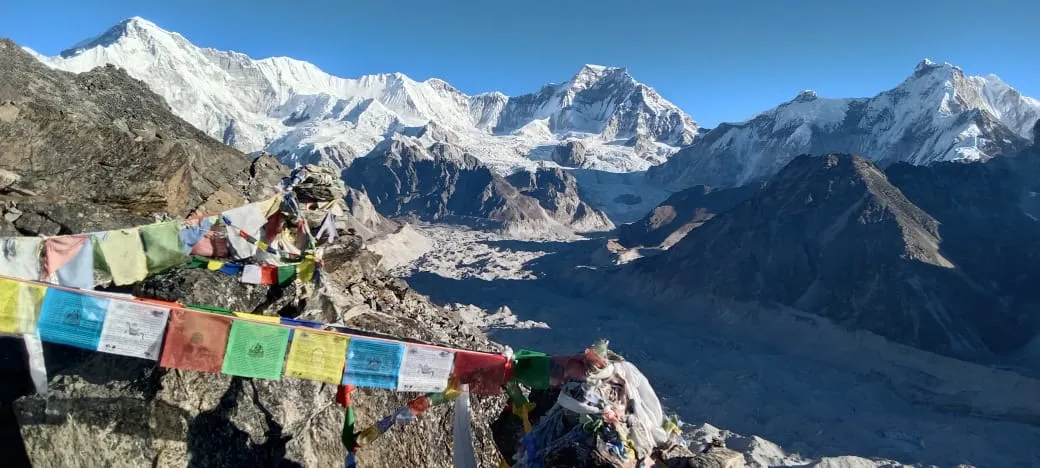
From Namche, the trek takes you to Dole and then onto the serene Gokyo Lakes, a series of turquoise glacial lakes surrounded by towering peaks. A highlight of the trek is the ascent of Gokyo Ri, where you’ll be rewarded with panoramic views of Everest, Makalu, Cho Oyu, and other Himalayan giants.
Next, you cross the Cho La Pass on your way to Everest Base Camp, a place where dreams come true for mountaineers and trekkers alike. Standing at the foot of the world’s highest peak, you’ll feel a deep sense of accomplishment.
The final leg of the trek involves hiking to Kala Patthar, the best viewpoint for Everest, before retracing your steps back to Lukla. This trek is a true adventure, offering a mix of challenging terrain, majestic mountain views, and cultural experiences, making it one of the most sought-after trekking routes in Nepal.
GOKYO AND EVEREST BASE CAMP TREK 11 DAYS Day-by-day ITINERARY
Day 1 : Fly to Lukla (2,804 m) and Trek to Phakding (2,610 m) Duration: 4-5 hours.
Your journey begins with an exhilarating flight to Lukla, known for its dramatic mountain runway and breathtaking views of the Himalayas. After arriving in Lukla, the trek kicks off with a gentle descent towards Phakding. The trail winds through pine forests, along the Dudh Koshi River, offering spectacular views of surrounding peaks and the first glimpses of Sherpa villages. You will pass suspension bridges and small settlements, giving you a taste of the unique culture of the region. After approximately 4-5 hours of walking, you will arrive in Phakding, where you can relax and enjoy the tranquil surroundings.
Day 2 : Trek to Namche Bazaar (3,441 m) Duration: 7-8 hours.
Today, the trek continues through beautiful alpine forests and offers the first significant ascent to Namche Bazaar, the Sherpa capital of the Khumbu region. Along the way, you will cross several suspension bridges, including the famous one over the Dudh Koshi River. The climb is steady but can be challenging, with a few steep sections. As you approach Namche, the views of Everest, Lhotse, and Ama Dablam begin to unfold. Namche Bazaar is a vibrant town, full of shops, restaurants, and lodges, making it the perfect place for acclimatization. You’ll have the evening free to explore and enjoy the stunning views.
Day 3 : Trek to Dole (4,200 m) Duration: 5-6 hours.
From Namche, you begin the ascent towards Dole, passing through several small Sherpa villages along the way. The trail is less crowded compared to the previous day, and you’ll enjoy a more peaceful walk through rhododendron forests. As you climb higher, the landscape becomes more rugged and open, with views of snow-capped peaks like Thamserku and Kantega. After about 5-6 hours of trekking, you will reach Dole, a small settlement perched on a ridge with panoramic views of the surrounding mountains. Here, you’ll rest and acclimatize to the higher altitude.
Day 4 : Trek to Gokyo (4,790 m) Duration: 5-6 hours.
Today’s trek takes you to the picturesque Gokyo, a small village nestled beside the beautiful Gokyo Lakes. The path follows a steady ascent, passing through alpine meadows and crossing small streams. Along the way, you will witness stunning views of the surrounding peaks, including Cho Oyu and Lhotse. After reaching Gokyo, you will be greeted by the crystal-clear waters of the Gokyo Lakes, framed by the towering Himalayan mountains. Gokyo is a serene and beautiful place, offering some of the most breathtaking views in the Everest region.
Day 5 : Trek to Gokyo Ri (5,483 m) and Back to Gokyo via Thangnak (4,500 m) Duration: 6-7 hours.
Today’s adventure involves a challenging climb up to Gokyo Ri, a peak offering one of the best panoramic views of the Everest region. The ascent to Gokyo Ri is steep but rewarding, with stunning views of Everest, Makalu, Cho Oyu, and the surrounding glaciers. After enjoying the incredible vistas from the summit, you will descend back to Gokyo for a short rest. In the afternoon, you will continue your trek towards Thangnak, a small settlement nestled on the way to Cho La Pass. The day’s trek takes about 6-7 hours, with plenty of time to soak in the scenic surroundings.
Day 6 : Cross Cho La Pass (5,368 m) and Trek to Dzongla (4,830 m) Duration: 6-9 hours.
Today is one of the most physically demanding days of the trek, as you will cross the Cho La Pass, one of the highest points of the trek at 5,368 meters. The path to the pass can be challenging, with icy and rocky sections, requiring careful navigation. However, once at the top, you will be rewarded with incredible views of Everest, Lhotse, and Nuptse. After crossing the pass, the descent to Dzongla begins. Dzongla is a small village located in a scenic valley, offering stunning views of the surrounding peaks. The trek today lasts between 6-9 hours, depending on the pace.
Day 7 : Trek to Everest Base Camp (5,365 m) and Then Back to Gorak Shep (5,180 m) Duration: 9-10 hours.
Today, the trek takes you to the legendary Everest Base Camp, the ultimate destination for trekkers. The trek begins with a steady climb from Dzongla, passing through Lobuche and following the Khumbu Glacier. As you near Base Camp, the anticipation builds as you approach the iconic site where climbers prepare for their summit bids. Standing at Everest Base Camp at an altitude of 5,365 meters, you’ll have an overwhelming sense of achievement. After taking in the views and capturing the moment, you’ll trek back to Gorak Shep for the night, making it a long but rewarding day of around 9-10 hours.
Day 8 : Hike Up to Kala Patthar (5,555 m) and Trek Down to Pheriche (4,300 m) Duration: 6-7 hours.
Early in the morning, you’ll hike up to Kala Patthar, a small peak famous for its panoramic views of Mount Everest and the surrounding peaks. The early morning light casts a golden glow on the mountains, making it the best time for photography. After spending some time at the summit, you will descend to Gorak Shep for breakfast, then continue your trek down to Pheriche. The descent is easier on the body, allowing you to enjoy the changing landscapes as you retrace your steps back through the villages and valleys, arriving in Pheriche in the afternoon after around 6-7 hours of trekking.
Day 9 : Trek to Namche Bazaar (3,441 m) Duration: 6-7 hours.
Today marks the beginning of your descent as you retrace your steps back towards Namche Bazaar. The trail descends through the alpine forest and past small villages, gradually leading you back to the familiar sights of Namche. The walk is mostly downhill, making it less strenuous compared to the previous days of ascent. As you approach Namche Bazaar, you’ll once again be surrounded by stunning views of the Himalayas, including Everest and Lhotse. Upon arriving in Namche, you can enjoy a relaxed evening in the bustling town, soaking in the last bits of the Everest region.
Day 10 : Trek to Lukla (2,804 m) Duration: 6-7 hours.
On your final day of trekking, you’ll make your way back to Lukla. The trail follows the Dudh Koshi River, crossing several suspension bridges and passing through lush forests. After a few hours of trekking, you will begin to notice the altitude drop, which makes walking much easier. Upon reaching Lukla, you’ll have some time to rest, reflect on the unforgettable adventure you’ve experienced, and prepare for your flight back to Kathmandu the following day. The trek today will take around 6-7 hours, depending on the pace of your group.
Day 11 : Morning Flight from Lukla to Kathmandu Duration: 30-minute flight.
After a final breakfast in Lukla, you’ll board a morning flight back to Kathmandu. The short but scenic flight offers a last opportunity to admire the towering peaks of the Himalayas from the air. Upon arrival in Kathmandu, you’ll be transferred to your hotel, where you can relax and reflect on the incredible journey you’ve just completed. Your adventure in the Everest region comes to a close, but the memories of this unforgettable trek will last a lifetime.
GOKYO AND EVEREST BASE CAMP TREK 11 DAYS INCLUDES & EXCLUDES
What's Included in Your Trekking Package:
- Airport Transfers: Domestic airport pick-up and drop-off by private car/jeep.
- Meals: Three meals a day (breakfast, lunch, and dinner) throughout the trek.
- Fresh Fruit: Fresh fruit provided every evening after dinner.
- Accommodation: Stay in trekking lodges (Tea Houses) during the trek.
- Permits: All necessary paperwork including Sagarmatha National Park Entry Permit and Khumbu Pasang Lhamu Rural Municipality fees.
- Flights: Kathmandu-Lukla-Kathmandu (Ramechhap-Lukla-Ramechhap) flights with private airport transfer and domestic airport taxes.
- Guides and Staff:
- A highly experienced, English-speaking, government-licensed guide, covering their salary, food, drinks, accommodation, transport, and insurance.
- Strong, helpful Sherpa porters (one porter per two trekkers), with their salary, food, accommodation, and insurance, along with proper safety and walking equipment.
- Assistant guide for groups of 8 or more.
- Medical Support: Comprehensive medical supplies (first aid kit) and arrangements for emergency helicopter services (paid by your travel insurance).
- Equipment: Use of a sleeping bag, down jacket, duffel bag, and walking poles (to be returned at the end of the trek).
- T-Shirt: A Sherpa Expedition and Trekking T-shirt.
- Government Taxes & Official Fees: All applicable government taxes and official expenses.
- Trip Achievement Certificate: Certificate awarded upon successful completion of the trek.
- Health Monitoring: Oxygen meter to monitor your pulse, oxygen saturation, and heart rate twice daily, ensuring your health and well-being during the trek.
What's Not Included in Your Trekking Package:
- Meals in Kathmandu: Lunch and dinner while you are in Kathmandu.
- Hotel Accommodation in Kathmandu: Costs for hotel stay in Kathmandu before and after the trek.
- Nepal Entry Visa: The visa fee for Nepal, which is easy to obtain on arrival at Tribhuvan International Airport in Kathmandu:
- $30 USD for a 15-day visa
- $50 USD for a 30-day visa
- $125 USD for a 90-day visa
- Personal Travel and Medical Insurance: Travel and medical insurance for the duration of your trip (highly recommended for coverage).
- International Airfare: Your international flights to and from Nepal.
- Personal Expenses: Any personal purchases such as souvenirs, snacks, or items not specified in the package.
- Beverages: Alcoholic and non-alcoholic drinks, including soup, tea, coffee, hot chocolate, cocoa, mineral water, and any extra food or drinks you choose to purchase along the trek and in the tea houses.
- Desserts and Sweets: Items like chocolate, cake, pie, pudding, and other sweet treats.
- Hot Showers and Battery Charging: Charges for hot showers and battery charging at the tea houses along the trek.
- Tips: Tipping for the guide, porter, and driver (tipping is expected in Nepal).
- Excess Baggage: Any baggage weight exceeding the 10 kg limit for the Lukla flight.
Note: If you return early from the trek due to sickness or other issues, the fees for flights, hotels, mountain rooms, food, etc., are nonrefundable. You will need to bear any additional expenses for hotel stays, food, etc., in Kathmandu on your own.
GOKYO AND EVEREST BASE CAMP TREK 11 DAYS PACKING LIST
The following information will give you some idea about what you need to bring for the trek. It is important you do not forget the essential items, as this will determine your comfort and safety on the trek. Equally important is that you do not burden yourself with unnecessary equipment on the trek.
- Sleeping Bag (Sherpa Teams will provide but need to return after completing the trip)
- Duffel Bag (Sherpa Teams will provide but need to return after completing the trip)
- Fleece jacket or pullover
- Waterproof windbreaker or windcheater
- Thermal underclothes
- Rain poncho
- Down jacket (Sherpa Teams will provide but need to return after completing the trip)
- Fleece or wool trousers
- Sun hat or scarf
- Trekking pants (two pairs)
- Mittens or woolen gloves
- Hiking socks (several pairs)
- Moisture-wicking shirts, including t-shirts
- Trekking shoes or boots with spare laces
- Flip-flops or sandals for relaxing in the evenings
- Underwear (several pairs)
- Swimsuit or swimming costume
- Sunglasses
- Headlamp or flashlight/torch
- Sleeping bag (Sherpa Teams can provide this for you)
- Trekking poles (if desired)
- Hiking backpack with a capacity of at least 40 liters
- Small lock for your backpack
- Reusable water bottles (at least two liters)
- Water purification tablets or filtration device
- Wash towel
- Basic first aid kit
Toiletries (tissues, toilet paper, moisturizer, lip balm, sunscreen, sanitary pads, hand sanitizer, nail clippers, a small mirror, toothbrush, toothpaste, glasses, contacts, etc.)
GOOD TO KNOW ABOUT GOKYO AND EVEREST BASE CAMP TREK 11 DAYS
Best Time to Trek
The ideal time to embark on the Gokyo and Everest Base Camp Trek is during the pre-monsoon (spring) season, from March to May, and the post-monsoon (autumn) season, from September to November. During these months, the weather is generally stable, offering clear skies, crisp air, and mild temperatures. The spring season provides a great chance to see the rhododendron forests in full bloom, while autumn offers crisp views of the snow-capped peaks. It's important to avoid the monsoon season (June to August) due to heavy rainfall, which can make trekking conditions slippery and dangerous.
Physical Fitness Requirements
The Gokyo and Everest Base Camp Trek is a physically demanding journey, requiring good fitness levels and stamina. While previous trekking experience is beneficial, it's not mandatory, but you should be prepared for long hours of hiking at high altitudes. The trail includes steep ascents, rugged paths, and significant altitude gains, so cardiovascular endurance and leg strength are essential. It's recommended to train with cardio exercises, such as hiking with a weighted pack, and strength training before your trek. Additionally, acclimatization days are built into the itinerary to help you adjust to the altitude and avoid altitude sickness.
Altitude and Acclimatization
Altitude is one of the main challenges of the Gokyo and Everest Base Camp Trek. The trek reaches elevations of over 5,500 meters (18,000 feet), where the air is thinner, and the risk of altitude sickness increases. To prevent this, the trek incorporates acclimatization days in Namche Bazaar, Dole, and Gokyo, allowing your body time to adjust to the altitude. It's important to stay hydrated, avoid overexertion, and listen to your body. Symptoms of altitude sickness, such as headaches, dizziness, and nausea, should be taken seriously, and if they persist, descending to a lower altitude is essential.
Packing Essentials
When preparing for the Gokyo and Everest Base Camp Trek, packing the right gear is crucial for comfort and safety. Essential items include warm clothing such as fleece jackets, thermal layers, and a high-quality down jacket, as temperatures can drop below freezing at higher elevations. Sturdy trekking boots, a good-quality sleeping bag, and a daypack are also necessary. Additionally, carry essentials like sunscreen, lip balm, sunglasses, a water purification system, a first-aid kit, and personal hygiene items. Trekking poles, a headlamp, and extra batteries will make the trek smoother, especially when navigating early morning or late-night treks.
ROUTE MAP OF GOKYO AND EVEREST BASE CAMP TREK 11 DAYS
Gallery of GOKYO AND EVEREST BASE CAMP TREK 11 DAYS


GOKYO AND EVEREST BASE CAMP TREK 11 DAYS Departures
Every departure listed below is 100% Guaranteed — once you book, your trip will run as scheduled regardless of group size.
Select a departure month
Fill out the form below and a Travel Expert will reach out to create your perfect tour.
FAQS Related to GOKYO AND EVEREST BASE CAMP TREK 11 DAYS
Others
What is the difficulty level of the Gokyo and Everest Base Camp Trek?
The Gokyo and Everest Base Camp Trek is considered moderate to challenging. While it does not require technical climbing skills, the trek involves long days of walking, steep ascents, and high altitudes. Proper physical preparation, stamina, and acclimatization are crucial for success.
How high does the trek reach?
The trek reaches a maximum altitude of 5,555 meters (18,192 feet) at Kala Patthar, which offers the best view of Mount Everest. The highest point of the trek, Everest Base Camp, sits at 5,365 meters (17,598 feet).
Do I need to be an experienced trekker for this trek?
No, you don’t need to be an experienced trekker, but you should be in good physical condition. The trek involves long hours of walking at high altitudes, so prior trekking experience and physical fitness are beneficial.
What is the best time to do the trek?
The best times to trek are during the pre-monsoon (spring) months of March to May and the post-monsoon (autumn) months of September to November. These seasons offer the best weather conditions with clear skies and mild temperatures.
Will there be rest days for acclimatization?
Yes, there are built-in rest days for acclimatization, particularly in Namche Bazaar, Dole, and Gokyo. These days allow your body to adjust to the increasing altitude and reduce the risk of altitude sickness.
What type of accommodation can I expect?
Accommodation on the trek mainly consists of teahouses or lodges. These are simple, yet comfortable, guesthouses run by locals. Rooms are basic, typically with two single beds, but the atmosphere is cozy, and meals are hearty, with traditional Nepalese dishes.
How much weight should my backpack carry?
Your daypack should weigh between 5 to 8 kg (11 to 18 lbs), containing only essential items for each day’s trek, such as water, snacks, a camera, and a jacket. Your main duffel bag will be carried by porters or yaks, and it should weigh no more than 15 kg (33 lbs).
Is it safe to trek in the Everest region?
Yes, trekking in the Everest region is generally safe, especially if you follow the guidance of your trekking guide. While the trails are well-trodden, the main concern is altitude sickness. Acclimatization, proper hydration, and taking rest days significantly reduce risks.
What do I need to bring for personal hygiene?
Basic hygiene items such as toothbrush, toothpaste, wet wipes, hand sanitizer, toilet paper, and a small towel are essential. Since water may be scarce at higher altitudes, using wet wipes and sanitizers for cleaning is a good option.
Can I charge my devices on the trek?
Charging is available at most teahouses, but there may be a small fee for using electricity, especially at higher altitudes. It’s recommended to bring power banks to ensure you can keep your devices charged for the entire trek.


Latest Traveller’s Reviews
Travel experiences of our clients who recently returned from their trips.
100%
Based On 4540 Reviews
Richard Odell
United Kingdom
June 12, 2026
Annapurna Circuit with Tilicho Lake
Katie D
N/A
December 20, 2025
Trip of a Lifetime
Benjamin Carter
Belgium
May 29, 2025
Fantastic Trek Led by Skilled Guide

Write Your Review
Average Customer Ratings
How The Travellers Have Rated This Package
4530
10
0
0
0
People Considering This Package Right Now Check availability