ANNAPURNA CIRCUIT WITH TILICHO LAKE TREKKING
Trip Overview
Annapurna Circuit with Tilicho Lake Trek: An Unforgettable Himalayan Adventure
The Annapurna Circuit with Tilicho Lake Trek presents a spectacular journey through Nepal’s majestic Himalayas, combining the famed Annapurna Circuit with a visit to the pristine Tilicho Lake. This trek is celebrated for its breathtaking scenery, diverse landscapes, and rich cultural experiences. Sherpa Expedition and Trekking offers a budget-friendly guide service that makes this remarkable adventure accessible without sacrificing quality or safety.
The Annapurna Circuit is renowned for its diverse terrain, which includes lush subtropical forests, alpine meadows, and high-altitude deserts. Adding Tilicho Lake—one of the highest lakes in the world—elevates this trek with its stunning blue waters, nestled amid rugged peaks. Trekkers are treated to unparalleled views of the Annapurna and Dhaulagiri mountain ranges, alongside a deep immersion into the cultures of the Gurung and Thakali communities.
Sherpa Expedition and Trekking’s budget-friendly guide service ensures trekkers can undertake this incredible journey at a reasonable cost. Their experienced guides, skilled in local geography, culture, and safety protocols, provide invaluable support throughout the trek. From navigating the trail to assisting with acclimatization and addressing any concerns, these guides are dedicated to ensuring a smooth and enjoyable experience.
The trek itinerary is thoughtfully crafted to balance the physical demands with necessary rest and acclimatization periods, essential for high-altitude trekking. Trekkers will stay in comfortable teahouses, providing a cozy retreat after each day’s journey. This approach minimizes unnecessary expenses while upholding a high standard of service and safety.
Sherpa Expedition and Trekking also offers comprehensive pre-trek support, including detailed briefings, gear recommendations, and logistical arrangements. This budget-friendly package allows adventurers to experience the stunning beauty and rich cultural tapestry of the Annapurna Circuit and Tilicho Lake, making it an ideal choice for those seeking both adventure and value.
ANNAPURNA CIRCUIT WITH TILICHO LAKE TREKKING Day-by-day ITINERARY
Day 1 : Drive from Kathmandu to Syange (1,130m) via Besishahar (760m) – Duration: 7-8 Hours.
The journey begins with a scenic drive from Kathmandu to Syange, passing through the bustling town of Besishahar. The route, a blend of winding mountain roads and picturesque landscapes, offers glimpses of rural Nepal and the lush scenery of the lower Annapurna region. After approximately 7 to 8 hours, you will reach Syange, a small village where you will spend the night. The drive provides an opportunity to acclimate to the mountainous terrain and prepares you for the trek ahead.
Day 2 : Trek from Syange to Dharapani (1,860m) – Duration: 5-6 Hours.
Your trekking adventure starts with a journey from Syange to Dharapani. This day's trek, lasting 5 to 6 hours, involves ascending through terraced fields and lush forests, gradually leading you into the Manang District. The trail follows the Marsyangdi River, offering magnificent views of the surrounding peaks and the traditional villages that dot the landscape. Dharapani is a charming village where you’ll experience the hospitality of the local Gurung people and rest for the night.
Day 3 : Trek from Dharapani to Chame (2,650m) – Duration: 5-6 Hours.
On the third day, you'll trek from Dharapani to Chame, the administrative center of the Manang District. The trek takes 5 to 6 hours and includes a steady ascent through pine forests and along the banks of the Marsyangdi River. As you climb higher, the views of the Annapurna and Lamjung Himal ranges become more dramatic. Chame, situated at an altitude of 2,650 meters, offers splendid views of the surrounding peaks and provides a comfortable place to rest and acclimatize.
Day 4 : Trek from Chame to Pisang (3,300m) – Duration: 5-6 Hours.
Today's trek takes you from Chame to Pisang, a journey of 5 to 6 hours. The trail ascends through a variety of terrains, including forests, meadows, and rocky paths. As you approach Pisang, the landscape transforms into a more arid, high-altitude environment, with expansive views of the Annapurna and Pisang Peaks. Pisang, perched at 3,300 meters, offers a fascinating mix of traditional Tibetan-style architecture and stunning natural scenery.
Day 5 : Trek from Pisang to Manang (3,500m) – Duration: 6-7 Hours.
The trek from Pisang to Manang is a longer day, lasting 6 to 7 hours. This part of the journey takes you through a diverse landscape of pine forests, high-altitude pastures, and rugged terrain. As you ascend towards Manang, you’ll cross several ancient monasteries and encounter the dramatic shift in vegetation as you reach the semi-arid region. Manang, situated at 3,500 meters, is a vibrant village that serves as a key acclimatization stop before heading to higher altitudes.
Day 6 : Exploration and Acclimatization Day at Manang.
Day 6 is dedicated to acclimatization and exploration in Manang. It’s essential to spend a day here to adjust to the altitude and prepare for the upcoming higher elevation treks. You can explore the village, visit local monasteries, and enjoy panoramic views of the surrounding peaks. Optional day hikes to nearby locations, such as the Gangapurna Glacier or the Bhojo Gompa, can help with acclimatization and offer further insights into the local culture and environment.
Day 7 : Trek from Manang to Tilicho Base Camp (4,150m) – Duration: 5-6 Hours.
The trek from Manang to Tilicho Base Camp involves a demanding 5 to 6-hour hike. The route ascends through a barren landscape with sweeping views of the surrounding mountains. As you approach Tilicho Base Camp, the terrain becomes increasingly rugged and alpine. At 4,150 meters, the base camp provides a crucial stop before the trek to Tilicho Lake, allowing for rest and preparation for the higher altitude.
Day 8 : Hike to Tilicho Lake (4,920m) & Return to Base Camp, then Trek to Shree Kharka – Duration: 7-8 Hours.
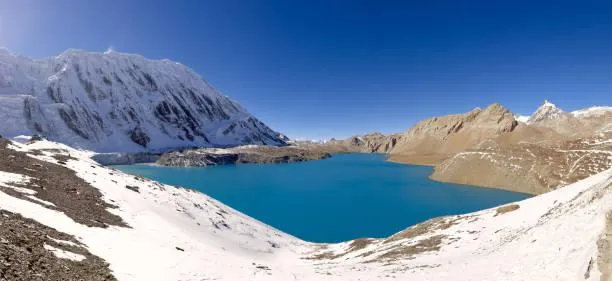
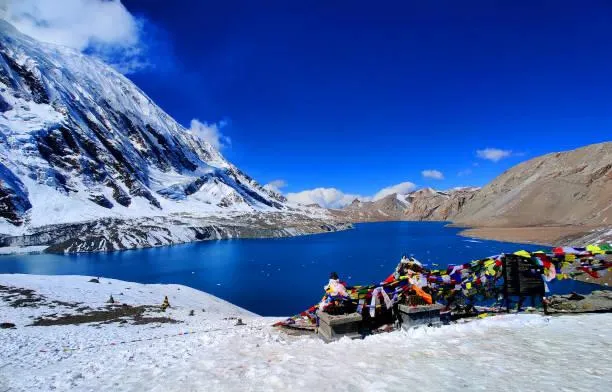
Today’s journey includes a strenuous hike to Tilicho Lake at 4,920 meters, followed by a return to Tilicho Base Camp and continuing to Shree Kharka. The hike to Tilicho Lake, which takes about 4 to 5 hours, rewards you with stunning views of the lake’s serene blue waters framed by towering peaks. After returning to base camp, you’ll trek for another 3 to 4 hours to reach Shree Kharka, a small village offering a rest stop before continuing your trek.
Day 9 : Trek from Shree Kharka to Yak Kharka (4,040m) – Duration: 5-6 Hours.
The trek from Shree Kharka to Yak Kharka is a 5 to 6-hour journey through high-altitude pastures and rocky terrain. As you ascend, the landscape opens up to reveal expansive views of the surrounding peaks and valleys. Yak Kharka, located at 4,040 meters, serves as a crucial acclimatization point and provides a chance to rest before tackling the higher altitudes of Thorong Phedi.
Day 10 : Trek from Yak Kharka to Thorong Phedi (4,500m) – Duration: 3-4 Hours.
Today’s trek from Yak Kharka to Thorong Phedi is relatively short, taking about 3 to 4 hours. The route involves a gradual ascent through rugged terrain with stunning views of the surrounding peaks. Thorong Phedi, situated at 4,500 meters, is the final base camp before crossing the Thorong La Pass. The afternoon is spent preparing for the high-altitude crossing and resting for the demanding day ahead.
Day 11 : Cross Thorong La Pass (5,416m) then Trek to Muktinath (3,400m) – Duration: 8-9 Hours.
Day 11 is the most challenging of the trek, involving an early morning departure to cross Thorong La Pass at 5,416 meters. The crossing, which takes approximately 6 to 7 hours, involves navigating a snowy and rugged path. After reaching the pass, you’ll descend to Muktinath, a sacred pilgrimage site for both Hindus and Buddhists. The entire journey from Thorong Phedi to Muktinath takes around 8 to 9 hours, and you’ll be rewarded with incredible views and a sense of accomplishment.
Day 12 : Drive from Muktinath to Tatopani (1,300m) – Duration: 5-6 Hours.
After a spiritually enriching day at Muktinath, you’ll drive to Tatopani, known for its natural hot springs. The drive, lasting about 5 to 6 hours, descends through varied landscapes, including lush forests and terraced fields. Tatopani, situated at a lower altitude of 1,300 meters, offers a relaxing opportunity to soak in the hot springs and rejuvenate after the strenuous trek.
Day 13 : Trek from Tatopani to Ghorepani (2,870m) – Duration: 7-8 Hours.
The trek from Tatopani to Ghorepani is a long day, taking 7 to 8 hours. The trail ascends through dense forests and charming villages, offering panoramic views of the Annapurna and Dhaulagiri ranges. Ghorepani, located at 2,870 meters, is a popular stop known for its spectacular sunrise views from Poon Hill, which will be explored the following morning.
Day 14 : Hike to Poon Hill (3,210m), Trek to Nayapul (1,000m) and Drive to Pokhara (850m) – Duration: 7-8 Hours.
Day 14 starts with an early morning hike to Poon Hill at 3,210 meters, where you’ll witness a breathtaking sunrise over the Annapurna and Dhaulagiri ranges. After soaking in the views, you’ll trek down to Nayapul, which takes around 4 to 5 hours. From Nayapul, a drive of approximately 1 to 2 hours will take you to Pokhara, where you can relax and explore the lakeside city.
Day 15 : Drive from Pokhara to Kathmandu (1,400m) – Duration: 6-7 Hours.
The final day involves a drive back from Pokhara to Kathmandu, taking about 6 to 7 hours. The scenic drive retraces your route, providing a final chance to enjoy the picturesque landscapes of Nepal’s countryside. Upon arrival in Kathmandu, you’ll have time to reflect on your adventure and enjoy the vibrant city before concluding your trek.
ANNAPURNA CIRCUIT WITH TILICHO LAKE TREKKING INCLUDES & EXCLUDES
Cost Includes
- Annapurna Conservation Area Project (ACAP) entry permits and Trekkers Information Management System (TIMS) cards
- Experienced English-speaking, government licensed and ministry of tourism trained trekking guide with meals, accommodation, salary and insurance
- Strong experienced Sherpa helpers [porters] with meals, accommodation, salary, and insurance
- Arrangement of emergency helicopter service (paid by your Travel Insurance Company).
- Use of sleeping bag, down jacket, duffel bag and walking poles (if you don’t have your own, to be returned after trip completed).
- Comprehensive first aid medical kit carried by the guide / American medical association approved Oximeter
- Sherpa Expedition and Trekking T-shirt
- Trip achievement certificate after successful trip completion.
- Oxygen meter to check your pulse and oxygen saturation and heart rate twice daily (Very useful to check Altitude Mountain Sickness(AMS) symptoms) which will ensure your health during the trek.
- Assistant guide for groups of 8 or more people.
Cost Excludes
- Airport pick-up and drop services
- Hotel accommodation in Kathmandu and Pokhara
- All Transportation during the trek
- All Meals during the trek
- Trekking lodge teahouse accommodation during the trek
- Nepal entry visa fee (easy to obtain the visa on arrival at Tribhuvan International Airport – Kathmandu). $30 USD for 15-day, $50 USD for 30 Days, and $125 USD for 90 Days visa.
- Personal travel and medical insurance.
- International airfare.
- Your personal expenses.
- All the alcoholic and nonalcoholic, soup, tea, coffee, hot chocolate, cocoa, mineral water, extra food, cold and hot drinks on trek ( i.e. those you choose to purchase along the way and during evenings in the tea houses)
- All desserts & sweet things like chocolate, cake, pie, pudding.
- Hot shower and battery charging at the tea houses.
- Tips for the guide, porter, and driver (tipping is expected)
- NOTE: If you return earlier from the trek due to sickness or any problem, the money you paid for the flight, hotel, mountain room, food, etc. is nonrefundable, and you will need to bear the expenses for the hotel, food, etc. in Kathmandu yourself.
ANNAPURNA CIRCUIT WITH TILICHO LAKE TREKKING PACKING LIST
The following information will give you some idea about what you need to bring for the trek. It is important you do not forget the essential items, as this will determine your comfort and safety on the trek. Equally important is that you do not burden yourself with unnecessary equipment on the trek.
- Sleeping Bag (Sherpa Teams will provide but need to return after completing the trip)
- Duffel Bag (Sherpa Teams will provide but need to return after completing the trip)
- Fleece jacket or pullover
- Waterproof windbreaker or windcheater
- Thermal underclothes
- Rain poncho
- Down jacket (Sherpa Teams will provide but need to return after completing the trip)
- Fleece or wool trousers
- Sun hat or scarf
- Trekking pants (two pairs)
- Mittens or woolen gloves
- Hiking socks (several pairs)
- Moisture-wicking shirts, including t-shirts
- Trekking shoes or boots with spare laces
- Flip-flops or sandals for relaxing in the evenings
- Underwear (several pairs)
- Swimsuit or swimming costume
- Sunglasses
- Headlamp or flashlight/torch
- Sleeping bag (Sherpa Teams can provide this for you)
- Trekking poles (if desired)
- Hiking backpack with a capacity of at least 40 liters
- Small lock for your backpack
- Reusable water bottles (at least two liters)
- Water purification tablets or filtration device
- Wash towel
- Basic first aid kit
Toiletries (tissues, toilet paper, moisturizer, lip balm, sunscreen, sanitary pads, hand sanitizer, nail clippers, a small mirror, toothbrush, toothpaste, glasses, contacts, etc.)
GOOD TO KNOW ABOUT ANNAPURNA CIRCUIT WITH TILICHO LAKE TREKKING
1. Stunning Scenery
The Annapurna Circuit with Tilicho Lake Trek offers some of the most breathtaking scenery in the Himalayas. You'll traverse diverse landscapes, from lush subtropical forests and terraced fields to high-altitude deserts and alpine meadows. The highlight is Tilicho Lake, one of the highest lakes in the world, set against a backdrop of dramatic peaks.
2. Varied Terrain
The trek encompasses a wide range of terrain. You'll experience everything from the warm, verdant lower altitudes to the stark, high-altitude desert environment near Tilicho Lake. This variety provides an ever-changing panorama of natural beauty.
3. Cultural Immersion
Along the trek, you'll have the opportunity to engage with local communities such as the Gurung and Thakali people. Their rich cultural traditions and unique lifestyles offer an authentic glimpse into Nepalese culture. Traditional villages, monasteries, and local customs enhance the cultural experience of the trek.
4. High Altitude Challenges
The trek reaches significant altitudes, with Tilicho Lake located at approximately 4,919 meters (16,138 feet). Proper acclimatization is crucial to avoid altitude sickness. The trek is designed with gradual elevation gains and acclimatization days to help mitigate altitude-related issues.
5. Ideal Trekking Season
The best times to undertake the Annapurna Circuit with Tilicho Lake Trek are during the pre-monsoon spring (March to May) and post-monsoon autumn (September to November). These seasons offer clear skies, stable weather conditions, and mild temperatures, providing the best trekking experience.
6. Accommodation Options
Accommodation along the trek is primarily in teahouses and lodges. These provide basic but comfortable amenities, including meals, a bed, and sometimes hot showers. The quality of lodges improves in lower altitudes, with simpler accommodations higher up.
7. Permits Required
To trek the Annapurna Circuit with Tilicho Lake, you need two permits: the Annapurna Conservation Area Permit (ACAP) and the TIMS (Trekkers' Information Management System) card. Both are necessary for trekking in the Annapurna region and can be obtained in Kathmandu or through a trekking agency.
8. Physical Fitness
The trek is considered moderately challenging. Good physical fitness is essential, as it involves several days of walking with varied terrain and altitude. Preparing with regular cardiovascular and strength training exercises can enhance your trekking experience.
9. Local Guides and Porters
Hiring local guides and porters is highly recommended. Guides offer valuable insights into local culture, assist with navigation, and help ensure safety, while porters can carry your heavy gear, allowing you to trek more comfortably.
10. Sustainable Trekking Practices
Engaging in sustainable trekking practices helps preserve the environment and support local communities. This includes minimizing waste, using reusable water bottles, respecting local customs, and supporting eco-friendly lodges and businesses.
ROUTE MAP OF ANNAPURNA CIRCUIT WITH TILICHO LAKE TREKKING
Gallery of ANNAPURNA CIRCUIT WITH TILICHO LAKE TREKKING

ANNAPURNA CIRCUIT WITH TILICHO LAKE TREKKING Departures
Every departure listed below is 100% Guaranteed — once you book, your trip will run as scheduled regardless of group size.
Select a departure month
Fill out the form below and a Travel Expert will reach out to create your perfect tour.
FAQS Related to ANNAPURNA CIRCUIT WITH TILICHO LAKE TREKKING
Others
What is the Annapurna Circuit with Tilicho Lake Trek?
The Annapurna Circuit with Tilicho Lake Trek is a renowned trekking route in Nepal that combines the classic Annapurna Circuit with a detour to Tilicho Lake, one of the highest lakes in the world. The trek offers diverse landscapes, stunning mountain views, and a rich cultural experience. It takes you through lush valleys, high-altitude deserts, and traditional villages, culminating at Tilicho Lake, set against the Annapurna and Dhaulagiri mountain ranges.
What is the best time to do the Annapurna Circuit with Tilicho Lake Trek?
The best times to trek are during the pre-monsoon spring (March to May) and post-monsoon autumn (September to November). These periods provide stable weather, clear skies, and mild temperatures, making trekking conditions ideal. Monsoon season (June to August) brings heavy rains, while winter (December to February) can be too cold and snowy for trekking.
What permits are required for the trek?
To trek the Annapurna Circuit with Tilicho Lake, you need two permits: the Annapurna Conservation Area Permit (ACAP) and the TIMS (Trekkers' Information Management System) card. Both permits are required for trekking in the Annapurna region and can be obtained in Kathmandu or through a trekking agency.
What is the difficulty level of the trek?
The trek is considered moderately challenging. It involves several days of trekking with significant altitude gains, especially near Tilicho Lake, which is situated at approximately 4,919 meters (16,138 feet). Proper acclimatization, physical fitness, and preparation are essential to handle the trek's demands.
How long does the Annapurna Circuit with Tilicho Lake Trek take?
The trek typically takes around 14 to 18 days to complete, depending on the pace and itinerary. This includes travel time to and from the trailhead, trekking days, acclimatization, and rest days. The exact duration can vary based on individual trekking plans and conditions.
What kind of accommodation can I expect during the trek?
Accommodation is generally in teahouses and lodges along the trek. These provide basic but comfortable amenities, including meals, a bed, and sometimes hot showers. The standard of accommodation improves in lower altitudes and becomes more basic higher up. It’s advisable to check lodge conditions before reaching higher altitudes.
What should I pack for the trek?
Essential items include a good quality trekking backpack, trekking boots, warm clothing (layers are recommended), rain gear, a sleeping bag, a water bottle, sunscreen, and a hat. Additionally, bring personal medications, a first-aid kit, trekking poles, and snacks. Proper gear is crucial for dealing with varying weather and altitude conditions.
How can I prevent altitude sickness?
To prevent altitude sickness, it is crucial to acclimatize properly. This involves ascending gradually, taking rest days, and not increasing your sleeping altitude by more than 300-500 meters (1,000-1,600 feet) per day. Staying hydrated, eating well, and listening to your body are also important. If symptoms of altitude sickness occur, descending to a lower altitude is essential.
Are there any health risks associated with the trek?
Besides altitude sickness, other health risks include gastrointestinal issues, dehydration, and injuries from trekking. It’s important to carry a basic first-aid kit and have travel insurance that covers trekking-related incidents. Staying hydrated, avoiding overexertion, and following safety advice from guides can help mitigate these risks.
Can I trek independently or do I need a guide and porter?
While it is possible to trek independently, hiring a guide and porter is highly recommended. A guide provides valuable insights into local culture, assists with navigation, and ensures safety, while a porter carries your heavy gear, making the trek more manageable. Their support enhances the trekking experience and helps in navigating the challenging parts of the route.


Latest Traveller’s Reviews
Travel experiences of our clients who recently returned from their trips.
100%
Based On 4540 Reviews
Richard Odell
United Kingdom
June 12, 2026
Annapurna Circuit with Tilicho Lake
Katie D
N/A
December 20, 2025
Trip of a Lifetime
Benjamin Carter
Belgium
May 29, 2025
Fantastic Trek Led by Skilled Guide

Write Your Review
Average Customer Ratings
How The Travellers Have Rated This Package
4530
10
0
0
0
People Considering This Package Right Now Check availability