ANNAPURNA CIRCUIT WITH TILICHO LAKE TREK 20 DAYS


ANNAPURNA CIRCUIT WITH TILICHO LAKE TREK 20 DAYS
The 20 Days Annapurna Circuit with Tilicho Lake Trek offers a comprehensive and immersive trekking experience through the stunning Annapurna region of Nepal. The trek begins with your arrival in Kathmandu, where you will be transferred to your hotel. The next day, you will drive to Jagat by local bus, passing through lush valleys and beautiful landscapes. From there, your trek begins, taking you first to Dharapani, Chame, Pisang, and eventually Manang, where you’ll spend a rest day for acclimatization to prepare your body for higher altitudes.
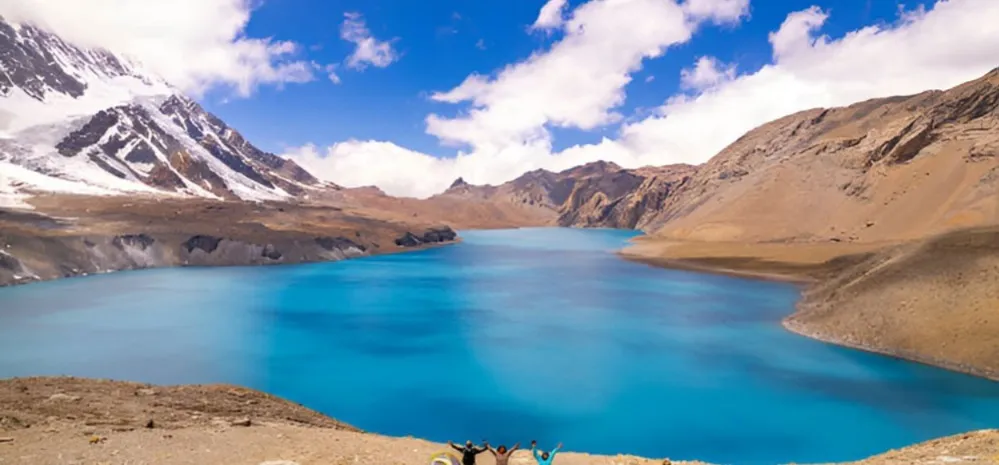
Continuing the journey, you will trek to Shree Kharka and then up to Tilicho Base Camp, where you will take a side trip to the world’s highest lake, Tilicho Lake (4,949m). After visiting this breathtaking lake, you will descend to Shree Kharka and trek onward to Yak Kharka and Thorong Phedi, setting up for the challenging Thorong La Pass (5,416m) crossing. The pass is one of the highest points of the trek, and the views from the top are truly remarkable. After crossing Thorong La, you will descend to Muktinath, where you can visit the famous Muktinath Temple, a revered site for both Hindus and Buddhists.
From Muktinath, you will continue to Marpha, a traditional village, and then drive to Tatopani where you can relax in natural hot springs to soothe your muscles. The next day, you will trek to Ghorepani, followed by a sunrise hike up to Poon Hill for one of the best panoramic views of the Himalayas. The trek continues to Tadapani and Ghandruk, two charming villages. Finally, you will drive to Pokhara and then back to Kathmandu for your departure. This 20-day trek is an unforgettable adventure through diverse landscapes, ancient villages, and some of the highest peaks in the world.
ITINERARY
Day 1 : Arrival in Kathmandu and Transfer to Hotel.
Upon your arrival at Tribhuvan International Airport in Kathmandu, you will be greeted by a representative from the trekking agency. You will then be transferred to your hotel for an overnight stay. Use this day to rest and prepare for the adventure ahead. You can also explore the city or visit the famous Pashupatinath Temple or Swayambhunath Stupa if time permits.
Day 2 : Drive from Kathmandu to Syange/Jagat (1,130m) via Besishahar – Duration: 8-9 hours.
After breakfast, you will begin your scenic drive towards Syange (or Jagat) via Besishahar. This drive takes about 8-9 hours through the winding roads and beautiful rural landscapes of Nepal. Along the way, you will enjoy views of the countryside and majestic mountains. Once you reach Syange or Jagat, you will stay in a teahouse for the night.
Day 3 : Trek from Syange/Jagat to Dharapani (1,860m) – Duration: 5-6 hours.
Today marks the beginning of your trek. You will start your day with a hike through lush forests, crossing suspension bridges and passing traditional villages. The path will gradually ascend as you reach Dharapani at 1,860m. Enjoy the scenic beauty of the Annapurna region as you settle into a teahouse for the night.
Day 4 : Trek from Dharapani to Chame (2,650m) – Duration: 5-6 hours.
On this day, your trek continues as you make your way to Chame, the administrative center of the Manang District. The trail passes through forests, small villages, and offers panoramic views of peaks like Lamjung Himal and Annapurna II. Upon reaching Chame, you’ll have time to relax and soak in the beautiful surroundings.
Day 5 : Trek from Chame to Pisang (3,300m) – Duration: 5-6 hours.
Today, you will continue your trek to Pisang, a small village known for its stunning views of the Pisang Peak and Manang Valley. The trail ascends through pine forests and offers spectacular views of the surrounding peaks. Pisang is a good place to stop and rest while acclimatizing to the increasing altitude.
Day 6 : Trek from Pisang to Manang (3,500m) via Ngawal – Duration: 6-7 hours.
Today’s trek takes you to Manang, passing through Ngawal, a traditional village. The route is more challenging, with a gradual ascent that offers incredible views of the Annapurna massif. Manang is a larger village with modern amenities, and it’s a great place to rest for acclimatization.
Day 7 : Exploration and Acclimatization Day at Manang.
In order to allow your body to adjust to the altitude, this day will be spent resting and acclimatizing in Manang. You can take a short hike around the area to aid the acclimatization process and explore the beautiful village. Enjoy the views of the Gangapurna and Annapurna ranges while relaxing.
Day 8 : Trek from Manang to Siri Kharka (4,060m) – Duration: 4-5 hours.
Today, you will continue your trek towards Siri Kharka. The trail moves through alpine forests, with impressive views of the surrounding mountains. The ascent is steady and will take around 4-5 hours. As you reach Siri Kharka, you will be surrounded by high-altitude landscapes, preparing for your next steps towards Tilicho Lake.
Day 9 : Trek from Siri Kharka to Tilicho Base Camp (4,140m) – Duration: 5-6 hours.
The trek to Tilicho Base Camp takes you through rocky terrain and narrow paths. The altitude is higher, so the hike may be more strenuous. Upon reaching the base camp, you will be greeted with stunning views of Tilicho Peak and the surrounding mountains.
Day 10 : Visit Tilicho Lake (4,949m) and Return to Siri Kharka – Duration: 5-6 hours.
Today, you will visit Tilicho Lake, one of the highest lakes in the world, located at 4,949m. The hike to the lake is a bit more demanding due to the high altitude, but the reward is the spectacular view of the crystal-clear lake surrounded by towering peaks. After spending time at the lake, you will retrace your steps back to Siri Kharka.
Day 11 : Trek from Siri Kharka to Yak Kharka (4,040m) – Duration: 4-5 hours.
The trek from Siri Kharka to Yak Kharka is a relatively short but significant ascent. The landscape becomes more barren as you gain altitude, and you’ll pass through small villages and grazing lands for yaks. Once you arrive at Yak Kharka, enjoy the peaceful surroundings.
Day 12 : Trek from Yak Kharka to Phedi or High Camp (4,600m) – Duration: 4-5 hours.
The trail climbs steadily to Phedi or High Camp. The hike is a bit more strenuous due to the altitude, but the views of Thorong Peak and the surrounding mountains make the effort worthwhile. High Camp offers a perfect resting spot before your big day of crossing Thorong La Pass.
Day 13 : Cross Thorong La Pass (5,416m) and Trek to Muktinath (3,400m) – Duration: 8-9 hours.
Today is the toughest day of the trek. You will start early in the morning to cross the Thorong La Pass, which stands at 5,416 meters. After summiting the pass, you will descend to Muktinath, a sacred Hindu and Buddhist site. The descent can be challenging, but the sense of achievement upon crossing the pass and reaching Muktinath is overwhelming.
Day 14 : Trek from Muktinath to Marpha (2,700m) via Jomsom – Duration: 5-6 hours.
After visiting the Muktinath Temple, you will trek to Jomsom, known for its apple orchards. From there, the path leads to Marpha, a charming village famous for its traditional stone houses and apple products. You’ll have time to relax and enjoy the beauty of this traditional village.
Day 15 : Drive from Marpha to Tatopani (1,300m) – Duration: 5-6 hours.
Today, you will take a local bus from Marpha to Tatopani, famous for its natural hot springs. After the long drive, you can relax and soak in the rejuvenating hot springs, helping to ease the muscle soreness from your trek.
Day 16 : Trek from Tatopani to Ghorepani (2,870m) – Duration: 7-8 hours.
From Tatopani, the trail ascends through lush forests and traditional villages as you make your way to Ghorepani. The journey is long, but the stunning views of Dhaulagiri and Annapurna mountains provide ample motivation.
Day 17 : Hike to Poon Hill (3,210m), Trek to Tadapani (2,630m) – Duration: 7-9 hours.
An early start allows you to hike to Poon Hill for an incredible sunrise view over the Annapurna Range, Machapuchare (Fish Tail Peak), and Dhaulagiri. After the sunrise, you will trek down to Tadapani, passing through beautiful rhododendron forests and scenic trails.
Day 18 : Trek to Ghandruk then Drive to Pokhara – Duration: 7-8 hours.
From Tadapani, you’ll trek down to Ghandruk, a picturesque village known for its Gurung culture. After visiting the village, you will drive to Pokhara for an overnight stay. You can relax and explore the peaceful Phewa Lake and Sarangkot.
Day 19 : Drive from Pokhara to Kathmandu – Duration: 6-7 hours.
You will take a scenic drive back to Kathmandu, where you will have time to relax, shop, or visit last-minute attractions before your departure.
Day 20 : Transfer to the International Airport for Your Final Departure.
On the last day of your journey, you will be transferred to Tribhuvan International Airport for your final departure, concluding your incredible 20-day Annapurna Circuit with Tilicho Lake trek.
SERVICES
Cost Included In Your Package
- Airport pick-up and drop services on a private vehicle.
- 2 night’s hotel accommodation in Kathmandu with breakfast
- Kathmandu - Besisahar transfers on a local bus, Pokhara - Kathmandu transportation on a Tourist bus
- One night hotel accommodation in Pokhara with breakfast
- Marpha To Tatopani transportation on a Local Bus
- Ghandruk to Pokhara transportation by local bus
- Besisahar to Syange transfer on a Local sharing Jeep
- 3 Meals a Day [Breakfast, Lunch, and Dinner] during the trek
- Accommodation on beautiful cozy tea houses as per the itinerary
- Annapurna Conservation Area Project (ACAP) entry permits and Trekkers Information Management System (TIMS) cards
- Experienced English-speaking, government licensed and ministry of tourism trained trekking guide with meals, accommodation, salary and insurance
- Strong experienced Sherpa helpers [porters] with meals, accommodation, salary, and insurance
- Arrangement of emergency helicopter service (paid by your Travel Insurance Company).
- Use of sleeping bag, down jacket, duffel bag and walking poles (if you don’t have your own, to be returned after trip completed).
- Comprehensive first aid medical kit carried by the guide / American medical association approved Oximeter
- Sherpa Expedition and Trekking T-shirt
- Trip achievement certificate after successful trip completion.
- Oxygen meter to check your pulse and oxygen saturation and heart rate twice daily (Very useful to check Altitude Mountain Sickness(AMS) symptoms) which will ensure your health during the trek.
- Assistant guide for groups of 8 or more people.
Costs Exclude
- Meals whilst you are in Kathmandu & Pokhara - lunch, and dinner.
- Nepal entry visa fee (easy to obtain the visa on arrival at Tribhuvan International Airport – Kathmandu). $30 USD for 15-day, $50 USD for 30 Days, and $125 USD for 90 Days visa.
- Personal travel and medical insurance.
- International airfare.
- Your personal expenses.
- All the alcoholic and nonalcoholic, soup, tea, coffee, hot chocolate, cocoa, mineral water, extra food, cold and hot drinks on trek ( i.e. those you choose to purchase along the way and during evenings in the tea houses)
- All desserts & sweet things like chocolate, cake, pie, pudding.
- Hot shower and battery charging at the tea houses.
- Tips for the guide, porter, and driver (tipping is expected)
- NOTE: If you return earlier from the trek due to sickness or any problem, the money you paid for the flight, hotel, mountain room, food, etc. is nonrefundable, and you will need to bear the expenses for the hotel, food, etc. in Kathmandu yourself.
EQUIPMENTS
The following information will give you some idea about what you need to bring for the trek. It is important you do not forget the essential items, as this will determine your comfort and safety on the trek. Equally important is that you do not burden yourself with unnecessary equipment on the trek.
- Sleeping Bag (Sherpa Teams will provide but need to return after completing the trip)
- Duffel Bag (Sherpa Teams will provide but need to return after completing the trip)
- Fleece jacket or pullover
- Waterproof windbreaker or windcheater
- Thermal underclothes
- Rain poncho
- Down jacket (Sherpa Teams will provide but need to return after completing the trip)
- Fleece or wool trousers
- Sun hat or scarf
- Trekking pants (two pairs)
- Mittens or woolen gloves
- Hiking socks (several pairs)
- Moisture-wicking shirts, including t-shirts
- Trekking shoes or boots with spare laces
- Flip-flops or sandals for relaxing in the evenings
- Underwear (several pairs)
- Swimsuit or swimming costume
- Sunglasses
- Headlamp or flashlight/torch
- Sleeping bag (Sherpa Teams can provide this for you)
- Trekking poles (if desired)
- Hiking backpack with a capacity of at least 40 liters
- Small lock for your backpack
- Reusable water bottles (at least two liters)
- Water purification tablets or filtration device
- Wash towel
- Basic first aid kit
Toiletries (tissues, toilet paper, moisturizer, lip balm, sunscreen, sanitary pads, hand sanitizer, nail clippers, a small mirror, toothbrush, toothpaste, glasses, contacts, etc.)
GOOD TO KNOW
Good to Know 🌍
Before embarking on the 20 Days Annapurna Circuit with Tilicho Lake Trek, there are a few essential things to keep in mind to ensure a smooth and enjoyable journey:
1. Fitness & Preparation 🏃♂️
This trek requires a moderate to high level of physical fitness. While the trek is not technically difficult, it involves long hours of walking at high altitudes. It’s advisable to start training a few months before the trek with regular cardio workouts like hiking, running, or cycling. Building stamina and strengthening your legs will help you with the uphill and downhill trails.
2. Altitude Acclimatization 🌄
Altitude sickness can be a concern, especially when trekking above 3,000 meters. Spend time acclimatizing during the rest days, particularly in Manang, where you will take a day off to adjust to the altitude before continuing higher. Drinking plenty of water, eating well, and taking it slow are key to avoiding altitude sickness.
3. Trekking Gear 🥾
Good quality trekking gear is essential. Make sure you pack comfortable hiking boots, a lightweight sleeping bag, and layers of clothing for varying temperatures. A windproof jacket, thermal layers, and a sturdy daypack will be invaluable during the trek.
4. Weather Conditions 🌤️
The weather in the Annapurna region can change quickly. Even in summer, temperatures can drop drastically at higher altitudes. Be prepared for hot days in the lower regions and chilly nights in the higher parts of the trek. It’s best to trek between September to November or March to May to avoid extreme weather conditions.
5. Local Culture 🕊️
The Annapurna Circuit takes you through diverse ethnic villages, including the Gurungs, Magars, and Thakalis, each with its unique culture and traditions. Be respectful and aware of local customs. Always ask before taking photos of people or their property, and remember to show gratitude when visiting temples or monasteries.
6. Food and Water 💧
Most tea houses along the route offer basic meals, with a menu ranging from dal bhat (rice and lentils) to pasta and soups. While safe drinking water is available at teahouses, it’s advisable to carry water purification tablets or a filter system for extra precaution.
7. Guide & Porter Services 👣
While the trail is well-established and signposted, hiring a guide and porter is highly recommended for safety and convenience. Guides can share cultural insights and help navigate tricky areas, while porters will lighten your load, allowing you to enjoy the trek at a relaxed pace.
8. Travel Insurance 📋
Ensure you have comprehensive travel insurance that covers trekking at high altitudes (up to 5,416 meters) and emergency evacuation in case of health issues or injuries. Many trekking agencies will require you to show proof of insurance before starting the trek.
9. Permits & Fees 🏞️
You will need two permits for the Annapurna Circuit Trek: the Annapurna Conservation Area Permit (ACAP) and the Trekkers' Information Management System (TIMS) card. These permits can be obtained at the Nepal Tourism Office or through your trekking agency.
10. Environmental Responsibility 🌱
Keep the trails clean by carrying out your trash and respecting the natural environment. The Annapurna region is a protected area, and it’s important to follow Leave No Trace principles to preserve the beauty of the Himalayas for future trekkers.
MAP
PHOTOS/Videos

Departures
Select a departure month
Fill out the form below and a Travel Expert will reach out to create your perfect tour.
FAQS
What is the best time to do the Annapurna Circuit with Tilicho Lake Trek?
The best time to trek the Annapurna Circuit with Tilicho Lake is during spring (March to May) and autumn (September to November). These seasons offer clear skies, pleasant weather, and optimal conditions for trekking. Avoid monsoon season (June to August) as heavy rainfall can make trails slippery and challenging.
How difficult is the Annapurna Circuit with Tilicho Lake Trek?
The trek is considered moderate to challenging due to long days of trekking at high altitudes. The crossing of the Thorong La Pass (5,416m) is particularly demanding. It’s essential to have good physical fitness and be prepared for altitude changes.
Do I need a guide for the trek?
While the route is well-marked, hiring a guide is highly recommended, especially for safety and cultural insights. A guide will help you navigate, ensure you are trekking at a safe pace, and assist with any unforeseen challenges. You can also hire a porter to carry your luggage.
How high is Tilicho Lake?
Tilicho Lake is located at an elevation of 4,949 meters (16,138 feet), making it one of the highest lakes in the world. Visiting the lake is one of the highlights of the trek, offering breathtaking views and a memorable experience.
Do I need special permits for this trek?
Yes, you need two essential permits for the Annapurna Circuit:
- Annapurna Conservation Area Permit (ACAP)
- Trekkers' Information Management System (TIMS) card
These can be obtained in Kathmandu or through your trekking agency.
Is altitude sickness a concern on this trek?
Yes, altitude sickness can occur at altitudes above 3,000 meters. To prevent it, you must acclimatize properly and take rest days, particularly at Manang, before continuing to higher altitudes. Drink plenty of water and listen to your body.
What type of accommodation is available along the trail?
Accommodation is provided in teahouses along the route. These basic lodges offer rooms with beds, blankets, and meals. The rooms are simple, but they provide a warm, welcoming environment after a long day of trekking.
What kind of food can I expect on the trek?
In teahouses, you’ll find a variety of local and international food options, including dal bhat (lentil soup with rice), noodles, soups, and pasta. While food is generally safe, it's recommended to stick to cooked dishes and avoid raw vegetables to prevent stomach issues.
Can I do this trek without prior trekking experience?
While prior trekking experience isn’t mandatory, having a basic level of physical fitness is essential. If you’re new to trekking, it’s a good idea to train before the trip to ensure you are comfortable with the trek’s duration and altitude.
Is travel insurance required for this trek?
Yes, travel insurance is required, especially one that covers high-altitude trekking (up to 5,416 meters) and emergency evacuation. Make sure your policy includes medical coverage and the possibility of helicopter rescue in case of an emergency.
Latest Traveller’s Reviews
Travel experiences of our clients who recently returned from their trips.
100%
Based On 4539 Reviews
Katie D
N/A
December 20, 2025
Trip of a Lifetime
Benjamin Carter
Belgium
May 29, 2025
Fantastic Trek Led by Skilled Guide
Sofia Oliveira
Portugal
April 21, 2025
Unforgettable Views

Write Your Review
Average Customer Ratings
How The Travellers Have Rated This Package
4529
10
0
0
0
People Considering This Package Right Now Check availability