Annapurna Circuit With Tilicho Lake Trek 11 Days
Trip Overview
This 11 Days Annapurna Circuit with Tilicho lake trek takes the path through chame, Pisang, Manang to the highest altitude lake in the world Tilicho Lake at 4919 meters Chame through the lush subtropical countryside, over moraine, through alpine pine forests, along arid cliffs, and over the Thorung La pass (5416 meters, this short trek is bit challenging but steeped in Hindu myth and surrounded by Annapurna mountains.
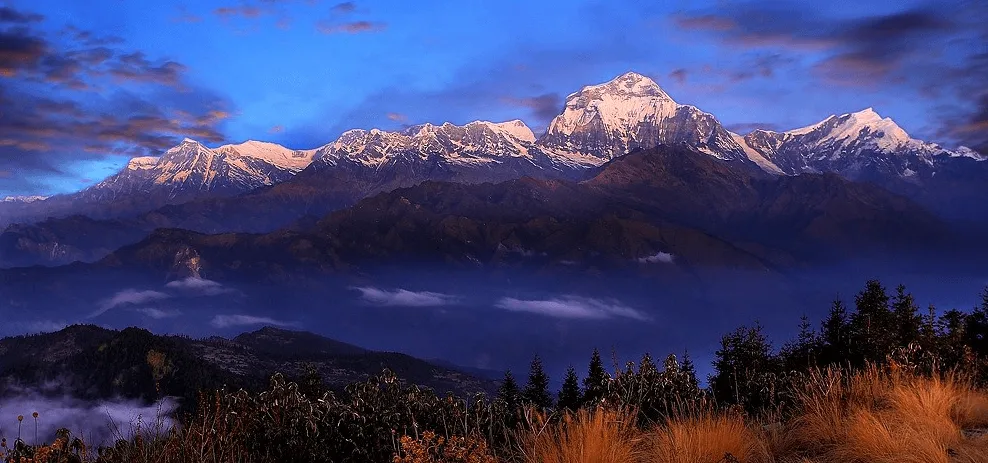
Pisang Peak, Annapurna II, Annapurna III, Annapurna Iv, Tilicho Peak, Nilgiri, Khangsar, and Muktinath are some of the mountains on show around this trek sometimes even being reflected in the cold, clear turquoise waters Tilicho Lake. And of course, views of the Annapurna accompany the hikers throughout his beautiful 11 days trek.
The Tilicho lake (4919m) was formed by the glacial melt off the northern slopes of the Annapurna Mountain and is of historical and religious significance as it is thought to be mentioned in the Hindu religious popular book, the Ramayana.
During this trek there are Buddhist tibetan villages to be crossed to reach the Tilicho lake, taking their culture and religion from nearby Tibet. After we explore the Tilicho lake and Base Camp, the path leads out of the Marsyangdi river Valley, through yak pastures, and over the Thorong La Pass (5,416 Meters).
Crossing this challenging high pass, and is done at around 4 am before the afternoon around 12 winds make it more challenging. The magnificent views of Mt Gundang, Syagang, Mount Thorong Peak, and Mt Khatungkan. Once we cross the pass, there are more beautiful villages (Lower Mustang: Muktinath Phedi, Muktinath, Kagbeni with its Hindu temple at Muktinath, water spouts, and eternal flame; Kagbeni with its Buddhist monastery, strange human-like clay effigies, and Jomsom, a Busy city, and transportation hub of Mustang alley, with its airport, bus and jeep stands.
11 Days Annapurna Circuit With Tilicho Lake trek encompasses the best of Annapurna circuit trekking – its mountains, landscapes, and local culture – with the high passes,Dipeest gorge, immensely cold glacier lake, and its mythology.
NOTE: Sherpa Expedition Teams will have up-to-date information on conditions that will affect your planned trek. Your safety and comfort will always be our priority.
Annapurna Circuit With Tilicho Lake Trek 11 Days Day-by-day ITINERARY
Day 1 : Arrival at Kathmandu and transfer to Hotel 1,350 meters.
Sherpa Expedition Teams staff will be there to greet you at Tribhuvan International Airport and take you to your hotel, followed by a briefing covering information, do’s, and don’ts of your trek. Your safety and comfort are paramount.
Day 2 : Drive from Kathmandu to Chame (2,710 m/8,890 ft) Duration: 8-10 hours.
Today we head by bus to Besisahar 6-7 hours and jeep to Jagat and then to the bustling town of Dharapani (1860m). We then continue on to Chame that sits on the banks of the Marsyangdi River. There are some fantastic views of Annapurna II (7,937m), Lamjung Himal (6,932m), Manaslu (8,154m), and Peak 29 (7,833m).
Day 3 : Trek to Pisang (3,115 m/10,200 ft) Duration: 4-5 hours.
After leaving Chame we head to the village of Telekhu and on the trail have some magnificent views of the Annapurna Ranges and Mt. Pisang (6091m). Further along the trail, we have to re-cross a suspension bridge to the south side of the Marsyangdi River and then ascend and pass through a pine forest and into the upper reaches of the Manang Valley before coming to Pisang.
Day 4 : Trek to Manang (3540 m/11,300ft) Duration: 6-7 hours.
Pisang is the beginning of our trek into the upper Manang area. Today we follow a trail to Braga; a Tibetan village with its unique architecture and houses constructed one upon the other. One of Manang’s main attractions is its Gompa (Buddhist temple), being the biggest in the Manang region. Manang is also very popular with trekkers who stay here in order to acclimatize before heading higher.
Day 5 : Acclimatization day at Manang.
Medical professionals recommend that before heading to higher elevations that trekkers spend some time acclimatizing. They also recommend staying active. Today we will climb up to Khangsar (3756m) as a way to further help us acclimatize. Overnight stay at Manang. Breakfast, lunch & dinner included.
Day 6 : Trek from Manang to Tilicho Base Camp (4150m). Duration: 5-6 hours.
Leaving Manang we pass the village of Khangsar, an unusual village with its unique houses (stone) and culture. The trail follows the ridge before it reaches Khangsar (3734m). The village offers a rare view of the obscure Kang Guru Peak (6981m).
Day 7 : Hike to Tilicho Lake (4919m) & return to base camp & trek to Shree Kharka; Duration:7-8 hours.
Today we climb higher toward Tilicho Lake, around 5 to 6-hour trek, located at the base of Tilicho Peak (7134m). Along the trail, you may see yaks and deer grazing. The changing light causes the color of the lake to change through many shades of blue. After some time admiring the lake and surrounding peaks and snapping some photos we will return to Sri Kharka. It covers an area of 4.8 sqkm. Guesthouse accommodation. Breakfast, lunch & dinner included.
Day 8 : Trek from Siri Kharka to Thorong Phedi (4500m) Duration: 7-8 hours.
Today we begin our trek descending to Khangsar Village today passing through Tare Gumba (3870m) known for its monastery. We follow the Thorong Khola Valley until we reach the abandoned village of Old Khangsar before reaching our destination Yak Kharka then after 3 hour walk to reach Thorong Phedi. Guesthouse accommodation. Breakfast, lunch & dinner included.
Day 9 : Trek from Thorong Pedi via Thorong La Pass (5,416m) to Muktinath (3,802m) Duration: 7-9 hours.
Today is most likely the toughest day of the trek, hiking for around 7-8 hours. The higher altitude contributes to the degree of difficulty, and sometimes strong winds in these upper regions. Along the trail we may pass sheep, yaks and merchants transporting their goods. Once we reach Thorong La Pass we will be rewarded with breath-taking views of Annapurna, Gangapurna and eye-catching peak of Khatungkang (6484m). Leaving the pass we descend around 1600 metres and the brilliant Dhaulagiri (Dhavali giri, meaning “White Mountain”) is the highest mountain that is entirely in Nepal. The trail is more undulating and relatively easy before we reach Muktinath where we stay the night after a 10 hour trek. Breakfast, lunch & dinner included.
Day 10 : Drive to Pokhara (850m/2788 ft) Duration:8-9 hours.
From Muktinath, we head to the town of Jomsom, Tatopani, and Beni Bazaar on our way to Pokhara. Pokhara is well known for its Phewa Tal (lake) where we will stay at a hotel overnight. You may choose to wander the shops along ‘lakeside’ and sit at the edge of the lake and watch the sunset over the Annapurna ranges.
Day 11 : Drive back to Kathmandu (1,350 m/4,450 ft) Duration: 6-7 hours.
On the road back to Kathmandu we pass the Marsyangdi River and afterward the Trishuli River before coming to Kathmandu. If you begin thinking about further adventures in Nepal, then we are here to assist you.
Annapurna Circuit With Tilicho Lake Trek 11 Days INCLUDES & EXCLUDES
Cost Included In Your Package
- Airport picks up and transports by private Car/Jeep.
- Two-night standard twin sharing Hotel in Kathmandu with breakfast.
- One-night standard twin sharing Hotel in Pokhara with breakfast.
- Drive from Kathmandu to Bhulbhule by Bus, to Chame by sharing Jeep, and from Jomsom to Pokhara by Local bus.
- Pokhara to Kathmandu by Tourist Bus.
- Tea House/ Lodge accommodationduring the trek
- Three meals a day (Breakfast, lunch, and dinner) during the trek.
- Government License holder Sherpa Expedition and Trekking experienced and qualified trek leader (guide), assistant trekking guide, (8 or above trekkers: 1 assistant guide)
- Strong, helpful Sherpa porters with proper safety equipment and walking equipment, his salary, food, accommodation, and insurance (one porter for two people).
- Coverage of guides and porters meals, insurance, salary, lodging, transportation, and other necessary equipment.
- Annapurna Conservation Area Permit (ACAP) Fee.
- Trekkers Information Management System (TIMS) card fee.
- Use of sleeping bag, down jacket, duffel bag and walking poles (if you don’t have your own, to be returned after trip completed).
- All Government and Local Taxes.
- Assistance in arranging rescue operations in case of complicated health conditions (funded by travel insurance).
- Sherpa Expedition and Trekking appreciation of certificate after over the trek.
- Oxygen meter to check your pulse and oxygen saturation and heart rate twice daily (Very useful to check Altitude Mountain Sickness(AMS) symptoms) which will ensure your health during the trek.
Cost Excludes
- International Flight.
- Nepal entry visa fee (easy to obtain the visa on arrival at Tribhuvan International Airport – Kathmandu). $30 USD for 15-day, $50 USD for 30 Days, and $125 USD for 90 Days visa.
- Lunch and Dinner in Kathmandu & Pokhara.
- Extra night accommodation in Kathmandu and Pokhara due to early arrival, late departure, early return from trekking (because of any reason) prior to the plan scheduled itinerary.
- Personal expenses such as shopping, snacks, bar bills, tea coffee, hot water, bottle or boiled water, shower, Wi-Fi, laundry, telephone call, battery re-charge fee extra porters, etc.
- Personal clothing and gear.
- Travel insurance.
- Tips for guide and porters.
- Additional costs or delays caused by management out of control like landscape, bad weather conditions, in case of itinerary modification with a view to safety concern, illness, change of government policy, political instability raises strike, moment, etc.
Annapurna Circuit With Tilicho Lake Trek 11 Days PACKING LIST
The following information will give you some idea about what you need to bring for the trek. It is important you do not forget the essential items, as this will determine your comfort and safety on the trek. Equally important is that you do not burden yourself with unnecessary equipment on the trek.
- Sleeping Bag (Sherpa Teams will provide but need to return after completing the trip)
- Duffel Bag (Sherpa Teams will provide but need to return after completing the trip)
- Fleece jacket or pullover
- Waterproof windbreaker or windcheater
- Thermal underclothes
- Rain poncho
- Down jacket (Sherpa Teams will provide but need to return after completing the trip)
- Fleece or wool trousers
- Sun hat or scarf
- Trekking pants (two pairs)
- Mittens or woolen gloves
- Hiking socks (several pairs)
- Moisture-wicking shirts, including t-shirts
- Trekking shoes or boots with spare laces
- Flip-flops or sandals for relaxing in the evenings
- Underwear (several pairs)
- Swimsuit or swimming costume
- Sunglasses
- Headlamp or flashlight/torch
- Sleeping bag (Sherpa Teams can provide this for you)
- Trekking poles (if desired)
- Hiking backpack with a capacity of at least 40 liters
- Small lock for your backpack
- Reusable water bottles (at least two liters)
- Water purification tablets or filtration device
- Wash towel
- Basic first aid kit
Toiletries (tissues, toilet paper, moisturizer, lip balm, sunscreen, sanitary pads, hand sanitizer, nail clippers, a small mirror, toothbrush, toothpaste, glasses, contacts, etc.)
GOOD TO KNOW ABOUT Annapurna Circuit With Tilicho Lake Trek 11 Days
Accommodation
You will be accommodated in 3-star hotels in Kathmandu. During the trek, we will be staying at lodges/ teahouses. You may find comfort and better quality teahouses - having attached bathroom at lower levels- until you reach higher elevations, where the accommodation is more basic with bare necessities.
Meals during the trek
In Kathmandu, your hotel includes breakfast, whereas all meals (breakfast, lunch, and dinner) will be provided during the trek. A staple food of the Manang & Mustang regions is potatoes, oats, buckwheat, Sherpa stew, and Tibetan bread. Sherpa’s’ started farming potatoes when the first seeds were introduced to the region in the early 90s. There is a limited choice of food at higher elevations and except many potato dishes. Potatoes are high in carbohydrates – an excellent source of energy needed at high altitudes.
Transportation
We use a private car for sightseeing and for the airport to hotel pick and drop off. We use public transportation or local buses during the trek.
Physical fitness
This can be a challenging trek where you often have to walk 6-7 hours a day. You need past experience of hiking or trekking but if you have done any kind of trekking activities then it is always a plus! We have met people from all walks of life, shapes, and sizes who have completed the trek. The only difficult part is when altitude sickness strikes and the effect that it can have on your body. Before leaving for Nepal it is good if you can prepare yourself physically by increasing your stamina and oxygen intake.
Remember – The better prepared – the more enjoyable your trek!
ROUTE MAP OF Annapurna Circuit With Tilicho Lake Trek 11 Days
Gallery of Annapurna Circuit With Tilicho Lake Trek 11 Days

Annapurna Circuit With Tilicho Lake Trek 11 Days Departures
Every departure listed below is 100% Guaranteed — once you book, your trip will run as scheduled regardless of group size.
Select a departure month
Fill out the form below and a Travel Expert will reach out to create your perfect tour.
FAQS Related to Annapurna Circuit With Tilicho Lake Trek 11 Days
What is the Annapurna Circuit with Tilicho Lake Trek?
The Annapurna Circuit with Tilicho Lake Trek is a popular and challenging trek in the Annapurna region of Nepal. It combines the classic Annapurna Circuit Trek with a side trip to Tilicho Lake, one of the highest lakes in the world.
How long does the Annapurna Circuit with Tilicho Lake Trek take?
The Annapurna Circuit with Tilicho Lake Trek usually takes around 7 to 21 days, depending on your itinerary and pace. It is a long and demanding trek, covering a distance of approximately 230 kilometers.
What is the best time to do the Annapurna Circuit with Tilicho Lake Trek?
The best time to do the Annapurna Circuit with Tilicho Lake Trek is during the spring (March to May) and autumn (September to November) seasons. The weather is generally stable, with clear skies and mild temperatures, making it ideal for trekking.
Is the Annapurna Circuit with Tilicho Lake Trek difficult?
Yes, the Annapurna Circuit with Tilicho Lake Trek is considered a challenging trek, suitable for experienced trekkers. The trail involves long hours of walking, steep ascents and descents, high altitude, and potentially harsh weather conditions. Proper physical fitness and acclimatization are crucial for this trek.
Do I need a guide for the Annapurna Circuit with Tilicho Lake Trek?
Having a guide for the Annapurna Circuit with Tilicho Lake Trek is highly recommended, especially if you are not an experienced trekker or unfamiliar with the region. A guide can provide navigation assistance, help with accommodation and permits, and ensure your safety throughout the trek.
What permits do I need for the Annapurna Circuit with Tilicho Lake Trek?
To trek in the Annapurna region, you will need two permits: the Annapurna Conservation Area Permit (ACAP) and the Trekkers' Information Management System (TIMS) card. Additionally, if you plan to visit Tilicho Lake, you will need a separate permit called the Tilicho Lake Restricted Area Permit.
What is the accommodation like during the Annapurna Circuit with Tilicho Lake Trek?
Accommodation during the trek is available in teahouses or lodges along the trail. These teahouses provide basic facilities such as a bed, blankets, and meals. However, the facilities can vary, and it is advisable to carry a sleeping bag for added comfort.
Is altitude sickness a concern on the Annapurna Circuit with Tilicho Lake Trek?
Altitude sickness can be a concern on any trek in the Himalayas, including the Annapurna Circuit with Tilicho Lake Trek. The highest point of the trek is the Thorong La Pass at an altitude of 5,416 meters. It is crucial to acclimatize properly by ascending gradually and staying hydrated to minimize the risk of altitude sickness.
What should I pack for the Annapurna Circuit with Tilicho Lake Trek?
Some essential items to pack for the trek include trekking boots, warm clothing, a waterproof jacket, a hat, gloves, a sleeping bag, a backpack, sunscreen, a water bottle, and a first aid kit. It is also recommended to carry some snacks and water purification tablets.
Can I do the Annapurna Circuit with Tilicho Lake Trek solo?
Yes, it is possible to do the Annapurna Circuit with Tilicho Lake Trek solo. However, as mentioned earlier, having a guide is highly recommended for safety and navigation purposes. If you choose to trek solo, make sure you are well-prepared, physically fit, and have prior experience with high-altitude trekking.




Latest Traveller’s Reviews
Travel experiences of our clients who recently returned from their trips.
100%
Based On 32 Reviews
Fernando Duarte
Australia
August 20, 2024
Highly Recommended Trekking Company
Emilia Lazar
United States
August 7, 2024
Fantastic Trek
Isaiah
Norway
July 23, 2024
Smooth Trek

Write Your Review
Average Customer Ratings
How The Travellers Have Rated This Package
32
0
0
0
0
People Considering This Package Right Now Check availability