ANNAPURNA CIRCUIT TREK 12 DAYS FROM POKHARA
Trip Overview
The Annapurna Circuit Trek 12 Days from Pokhara provides a remarkable opportunity to experience Nepal’s diverse cultures, pristine landscapes, and the grandeur of the Himalayas. Designed by Sherpa Expedition and Trekking, this trek offers a fulfilling and challenging journey through the iconic Annapurna region.
Your adventure begins with a drive from Pokhara to Besisahar, followed by a shared jeep ride to Jagat. From there, the trek begins as you make your way to Dharapani, a scenic village tucked within the hills. The trail winds through lush forests and beautiful villages, giving you a glimpse of the unique lifestyle in the Himalayas. Continuing onwards, you will reach Chame, a village with stunning views of Pisang Peak and surrounding mountains.
On Day 3, you will trek to Upper Pisang, known for its breathtaking panoramic views of Annapurna II and Pisang Peak. The trail takes you through Ngawal Village, a charming traditional settlement with Tibetan influence, before reaching Manang, the largest village in the area. Here, you will take a rest day to help with acclimatization. During this rest day, you have the option to hike to the Ice Lake or Lama Cave, both of which are excellent for adjusting to the altitude while offering picturesque views of the surrounding landscapes.
After your rest day, the journey continues to Yak Kharka and Thorong Phedi, the base camp for crossing the iconic Thorong La Pass (5,416m). The pass is the highest point of the trek, and crossing it is an exhilarating experience, with magnificent views of snow-capped peaks and the expansive Himalayas. After descending from the pass, you will reach Muktinath, a sacred pilgrimage site that holds spiritual significance for both Hindus and Buddhists.
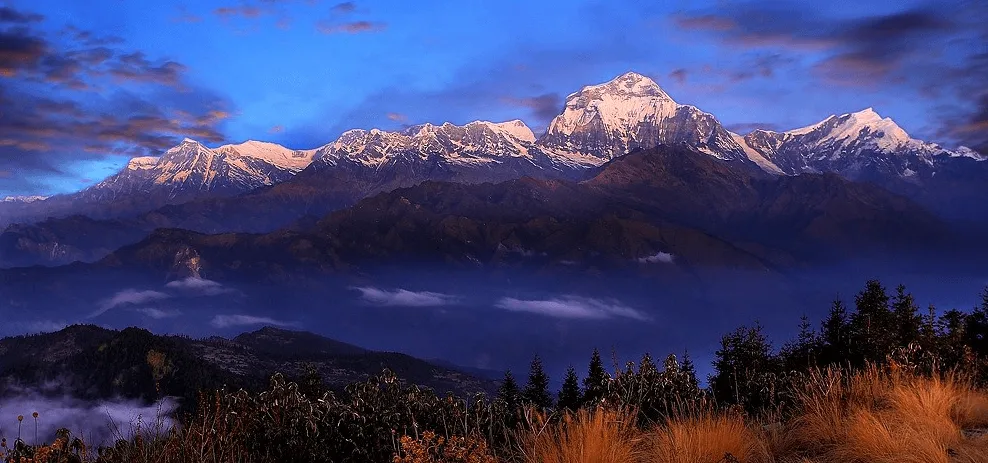
In the following days, the trek focuses on descending from the higher altitudes. You will drive to Tatopani, a village famous for its natural hot springs, where you can unwind and relax in the therapeutic waters. From there, you will trek to Ghorepani, a picturesque village located at the base of the Dhaulagiri mountain range. The next morning, you will take an early morning hike to Poon Hill, one of the most famous viewpoints in the Annapurna region, where you’ll be treated to an awe-inspiring sunrise over the surrounding peaks.
The trek concludes with a descent to Nayapul, followed by a drive back to Pokhara, marking the end of your incredible 12-day adventure.
This trek is a perfect blend of adventure, culture, and natural beauty, making it an unforgettable experience for those seeking an authentic and challenging trek in the Himalayas.
ANNAPURNA CIRCUIT TREK 12 DAYS FROM POKHARA Day-by-day ITINERARY
Day 1 : Drive from Pokhara to Jagat (1,300m) - Duration: 8-9 hours.
The adventure begins with a scenic drive from Pokhara to Jagat, passing through rural villages and spectacular landscapes. The long journey provides a first glimpse of the beauty of the Annapurna region as you move deeper into the Himalayas. After reaching Jagat, you'll rest for the night, preparing for the trek ahead.
Day 2 : Trek from Jagat to Dharapani (1,960m) - Duration: 8-9 hours.
On this day, the trek officially begins as you walk through lush forests and terraced fields, crossing rivers and passing through traditional villages. You'll reach Dharapani, a charming village with views of surrounding mountains, where you'll stay overnight.
Day 3 : Trek from Dharapani to Chame (2,760m) - Duration: 5-6 hours.
This day’s trek is moderately challenging, and you’ll gradually ascend to Chame. Along the way, you’ll encounter dense pine forests, cross suspension bridges, and get your first close-up views of Annapurna II. The village of Chame, known for its stunning scenery, is where you’ll rest for the night.
Day 4 : Trek from Chame to Upper Pisang (3,300m) - Duration: 5-6 hours.
The trek continues through beautiful forests, offering panoramic views of the mountains. Upper Pisang is a picturesque village located at the base of Pisang Peak. This area provides breathtaking views of Annapurna II, and you'll rest here to recover from the day's walk.
Day 5 : Trek from Pisang to Manang (3,500m) via Ngawal Village - Duration: 8-9 hours.
Today’s journey takes you through Ngawal village, with its charming Tibetan architecture. Afterward, you’ll trek on to Manang, where you’ll be immersed in spectacular Himalayan scenery. Manang is a bustling village and the ideal place to rest and adjust to the altitude.
Day 6 : Rest Day at Manang for Acclimatization.
A day of rest is essential to help your body acclimatize to the increasing altitude. You can explore the village, take short hikes to nearby viewpoints, or visit landmarks like the Ice Lake or Lama Cave to help with acclimatization.
Day 7 : Trek from Manang to Yak Kharka (4,200m) - Duration: 4-5 hours.
After acclimatization, you’ll continue the trek towards Yak Kharka, a small settlement at 4,200m. The trail gradually ascends, offering awe-inspiring views of Annapurna II, III, and Gangapurna. Yak Kharka is a peaceful place to rest and prepare for the high-altitude trek ahead.
Day 8 : Trek from Yak Kharka to Thorong Phedi (4,600m) - Duration: 3-4 hours.
This is a relatively short trek, but it involves ascending steep paths. Thorong Phedi is the base camp for the iconic Thorong La Pass, where trekkers often stop for rest before attempting the challenging pass. The stunning views of surrounding peaks make the trek rewarding.
Day 9 : Trek to Muktinath via Thorong La Pass (5,416m) - Duration: 7-8 hours.
This is the highlight of the trek, as you’ll cross the Thorong La Pass, one of the highest trekking passes in the world at 5,416 meters. The climb is demanding but the rewards are unforgettable. After crossing the pass, you’ll descend to Muktinath, a sacred pilgrimage site for both Hindus and Buddhists.
Day 10 : Drive from Muktinath to Tatopani (1,200m) - Duration: 6-7 hours.
After the challenging trek, you’ll take a local bus to Tatopani, known for its natural hot springs. The relaxing hot springs provide a perfect opportunity to rejuvenate after the strenuous trek through the high-altitude terrain.
Day 11 : Trek from Tatopani to Ghorepani (2,860m) - Duration: 7-8 hours.
The trek from Tatopani to Ghorepani involves a steep ascent. As you make your way uphill, the views of the surrounding mountains and valleys become more captivating. Ghorepani is a bustling village with spectacular views of the Dhaulagiri and Annapurna ranges.
Day 12 : Hike to Poon Hill (3,210m) & Trek to Nayapul & Drive to Pokhara (850m) - Duration: 7-9 hours.
On the final day of the trek, you’ll wake up early to hike to Poon Hill, one of the best viewpoints in the region for a stunning sunrise over the Himalayas. After taking in the breathtaking views, you’ll trek downhill to Nayapul and take a drive back to Pokhara, where your journey concludes.
ANNAPURNA CIRCUIT TREK 12 DAYS FROM POKHARA INCLUDES & EXCLUDES
Cost Included in Your Package
- Drive from Pokhara to Besisahar by local bus and Besisahar to Jagat by local shared Jeep.
- Drive from Muktinath to Tatopani by local bus & Nayapul to Pokhara by private car at the end of the trek.
- Tea House/Lodge accommodation during the trek.
- Three meals a day (Breakfast, Lunch, and Dinner) are provided throughout the trek.
- Experienced and qualified trek leader (guide) with a government license, and an assistant trekking guide for groups of 8 or more trekkers.
- Porter service: One porter for every two trekkers to help carry your luggage.
- Porters' coverage: Their salary, food, accommodation, insurance, and safety equipment.
- The Annapurna Conservation Area Permit (ACAP) fee is included.
- The Trekkers Information Management System (TIMS) card fee is covered.
- Use of trekking gear: Sleeping bag, down jacket, duffel bag, and walking poles (if you don't have your own), to be returned after the trek.
- Assistance with emergency rescue operations (funded by your travel insurance) in case of severe health conditions.
- Sherpa Expedition and Trekking appreciation certificate after completing the trek.
- Oxygen meter to check your pulse, oxygen saturation, and heart rate twice daily, ensuring your health and safety during the trek.
Cost Not Included in Your Package
- International Flight to and from Nepal.
- Nepal entry visa fee: Visas can be obtained easily on arrival at Tribhuvan International Airport, Kathmandu. The fees are as follows:
- $30 USD for a 15-day visa
- $50 USD for a 30-day visa
- $125 USD for a 90-day visa
- Accommodation and meals in Pokhara (other than those provided during the trek).
- Extra night accommodation in Kathmandu or Pokhara due to early arrival, late departure, or early return from trekking for any reason outside the scheduled itinerary.
- Personal expenses such as shopping, snacks, bar bills, tea, coffee, hot water, bottled or boiled water, shower fees, Wi-Fi, laundry, telephone calls, battery recharges, extra porters, etc.
- Personal clothing and gear not provided in the package.
- Travel insurance: It is strongly recommended to have insurance that covers trekking in high-altitude areas.
- Tips for your guide and porters, which is customary in Nepali culture.
- Additional costs or delays caused by circumstances beyond our control, such as landscape changes, bad weather, itinerary modifications for safety, illness, changes in government policy, political instability, strikes, or other unforeseen events.
- NOTE: If you return earlier from the trek due to sickness or any other reason, expenses for flights, hotels, meals, and other services are nonrefundable. You will be responsible for any additional costs incurred in Kathmandu or Pokhara.
ANNAPURNA CIRCUIT TREK 12 DAYS FROM POKHARA PACKING LIST
The following information will give you some idea about what you need to bring for the trek. It is important you do not forget the essential items, as this will determine your comfort and safety on the trek. Equally important is that you do not burden yourself with unnecessary equipment on the trek.
- Sleeping Bag (Sherpa Teams will provide but need to return after completing the trip)
- Duffel Bag (Sherpa Teams will provide but need to return after completing the trip)
- Fleece jacket or pullover
- Waterproof windbreaker or windcheater
- Thermal underclothes
- Rain poncho
- Down jacket (Sherpa Teams will provide but need to return after completing the trip)
- Fleece or wool trousers
- Sun hat or scarf
- Trekking pants (two pairs)
- Mittens or woolen gloves
- Hiking socks (several pairs)
- Moisture-wicking shirts, including t-shirts
- Trekking shoes or boots with spare laces
- Flip-flops or sandals for relaxing in the evenings
- Underwear (several pairs)
- Swimsuit or swimming costume
- Sunglasses
- Headlamp or flashlight/torch
- Sleeping bag (Sherpa Teams can provide this for you)
- Trekking poles (if desired)
- Hiking backpack with a capacity of at least 40 liters
- Small lock for your backpack
- Reusable water bottles (at least two liters)
- Water purification tablets or filtration device
- Wash towel
- Basic first aid kit
Toiletries (tissues, toilet paper, moisturizer, lip balm, sunscreen, sanitary pads, hand sanitizer, nail clippers, a small mirror, toothbrush, toothpaste, glasses, contacts, etc.)
GOOD TO KNOW ABOUT ANNAPURNA CIRCUIT TREK 12 DAYS FROM POKHARA
🚶♂️ Trekking Difficulty
The Annapurna Circuit Trek is considered a moderate to challenging trek. With a mix of moderate ascents and some high-altitude passes, trekkers must be physically fit and mentally prepared for the journey. While the route is well-established, the elevation and the crossing of Thorong La Pass at 5,416 meters require acclimatization. For most trekkers, the challenge lies in the gradual altitude gain and the variable terrain, including rocky paths, stone staircases, and forested trails.
🏞 Best Time to Trek
The best time to complete the Annapurna Circuit Trek is during the spring (March to May) and autumn (September to November) seasons. These months offer the most favorable weather, with clear skies, moderate temperatures, and stunning mountain views. The spring season brings colorful wildflowers, while the autumn offers crisp, fresh air, ideal for trekking. Winter (December to February) and monsoon (June to August) should be avoided, as heavy snow or rain can make the trail difficult and unsafe.
🌄 Altitude and Acclimatization
One of the key factors to consider while trekking the Annapurna Circuit is altitude. The trek reaches elevations up to 5,416 meters at Thorong La Pass, making acclimatization critical to avoid altitude sickness. Rest days, especially in places like Manang, help you adjust to the thinning air. Proper hydration, slow ascents, and recognizing symptoms of altitude sickness are essential for ensuring your safety and enjoyment.
🏡 Cultural Experience
The Annapurna Circuit is not only a journey through nature but also an exploration of the diverse cultures of Nepal. The route passes through villages inhabited by the Gurung, Tamang, and Tibetan people, offering trekkers a chance to experience traditional life, local hospitality, and Buddhist and Hindu religious practices. Muktinath is a significant religious site for both Hindus and Buddhists, and the Ngawal Village reflects Tibetan Buddhist traditions, offering a deep cultural immersion.
🥾 Physical Preparation
Preparing physically for the trek is essential for a successful journey. While it’s not an extreme trek, it’s important to be in good cardiovascular shape to handle the long days of walking on varying terrain. Prior to the trek, training should include cardio exercises (such as running or cycling), strength training (to support your legs and core), and hill walking with a backpack to simulate the trek. Practice hikes at higher elevations, if possible, will further enhance your preparation.
🧳 Packing List
Packing smartly is crucial for comfort and safety. Essential items for the Annapurna Circuit Trek include a good-quality sleeping bag, trekking poles, a rain jacket, layers of clothing for varying temperatures, water purification tablets, and sunscreen. Due to the challenging weather conditions, it’s recommended to pack high-quality gear that will protect against cold, wind, and rain, particularly as you approach higher altitudes.
💧 Water and Hydration
Proper hydration is vital during the trek, especially at high altitudes. Safe drinking water can be found in most teahouses along the trail, but it’s recommended to carry water purification tablets or a water filter to ensure the water is clean. It’s important to drink water regularly to avoid dehydration and altitude sickness. Refill your water bottles at teahouses or safe water stations, but avoid drinking directly from streams or rivers without treatment.
🍽 Food and Accommodation
Along the Annapurna Circuit, trekkers can find simple yet hearty meals at teahouses. Typical meals include dal bhat (rice with lentils), vegetable curries, noodles, and moments (dumplings). At higher altitudes, food options become more limited, but the basic meals are nutritious and provide the necessary energy for the trek. Accommodations are typically simple lodges or guesthouses, where rooms are basic, but clean and warm bedding is provided, offering a comfortable rest after a long day’s trek.
🏥 Health and Safety
Trekking in the Annapurna Circuit requires taking precautions to ensure your health and safety. Altitude sickness is a major risk, so it’s crucial to understand its symptoms, stay hydrated, and take rest days for acclimatization. Carry a first aid kit with essential medications, bandages, and blister treatment. It’s also advisable to have travel insurance that covers emergency evacuation and medical treatment. If trekking in a group, always follow the group leader’s advice regarding safety protocols.
🌍 Sustainability and Responsible Trekking
As the Annapurna Circuit Trek grows in popularity, it’s important to travel responsibly to preserve the natural beauty and culture of the region. This includes avoiding littering, respecting local customs, and reducing plastic use. Consider supporting local businesses by purchasing locally-made goods, and always stay in teahouses that prioritize environmental sustainability, such as those using solar energy or employing waste management practices. Being a responsible traveler helps protect the fragile environment and benefits the local communities.
ROUTE MAP OF ANNAPURNA CIRCUIT TREK 12 DAYS FROM POKHARA
Gallery of ANNAPURNA CIRCUIT TREK 12 DAYS FROM POKHARA

ANNAPURNA CIRCUIT TREK 12 DAYS FROM POKHARA Departures
Every departure listed below is 100% Guaranteed — once you book, your trip will run as scheduled regardless of group size.
Select a departure month
Fill out the form below and a Travel Expert will reach out to create your perfect tour.
FAQS Related to ANNAPURNA CIRCUIT TREK 12 DAYS FROM POKHARA
Others
What is the Annapurna Circuit Trek?
The Annapurna Circuit Trek is one of the most popular and scenic treks in Nepal. It takes trekkers through diverse landscapes, including subtropical forests, alpine meadows, and high-altitude deserts, and offers spectacular views of the Annapurna range, Machapuchare, and other Himalayan peaks.
How long is the Annapurna Circuit Trek?
The Annapurna Circuit Trek typically takes around 12 to 15 days, depending on the itinerary you choose. This duration includes travel days, acclimatization, and rest days to ensure a safe and enjoyable trek.
When is the best time to trek the Annapurna Circuit?
The best time to trek the Annapurna Circuit is during the spring (March to May) and autumn (September to November) seasons. These months offer clear skies, moderate temperatures, and the best trekking conditions. Avoid trekking during the monsoon season (June to August) or winter (December to February).
What is the highest point of the Annapurna Circuit?
The highest point of the Annapurna Circuit is Thorong La Pass, located at an altitude of 5,416 meters (17,769 feet). It is a challenging section of the trek and requires proper acclimatization to avoid altitude sickness.
Is the Annapurna Circuit Trek suitable for beginners?
While the Annapurna Circuit Trek is not considered extremely technical, it is recommended for trekkers with some previous hiking experience. The trek involves high altitudes, so trekkers should be in good physical condition and prepared for several days of long-distance hiking.
What are the accommodation facilities along the Annapurna Circuit?
Accommodation along the Annapurna Circuit is provided by teahouses or lodges. These basic guesthouses offer a bed, warm food, and a place to rest. Rooms typically have minimal facilities, but they provide the essentials, such as clean bedding, heating, and communal areas to socialize.
What type of food can I expect on the trek?
The food along the Annapurna Circuit is mainly traditional Nepali and Tibetan cuisine, including dal bhat (rice with lentils), vegetable curry, noodles, moments (dumplings), and bread. In higher altitudes, options may be more limited, but teahouses generally serve simple and nutritious meals.
Do I need a guide for the Annapurna Circuit Trek?
While it is possible to trek the Annapurna Circuit independently, hiring a guide or joining an organized group trek is recommended, especially for first-time trekkers. A guide will ensure safety, help with navigation, and enhance your experience by sharing knowledge about local culture and landmarks.
How can I prepare for the Annapurna Circuit Trek?
To prepare for the Annapurna Circuit Trek, you should focus on physical fitness. Cardiovascular exercises, strength training, and hiking with a backpack are essential. Training in high altitudes or simulated conditions will also help. Ensure you have the necessary gear and equipment, such as appropriate clothing, trekking boots, and a sleeping bag.
Is it safe to trek the Annapurna Circuit?
Yes, the Annapurna Circuit Trek is generally safe for trekkers, provided you take precautions. Proper acclimatization is critical to prevent altitude sickness. Trekking with a guide, following safety guidelines, and carrying a first aid kit will further ensure your safety. It's also important to have travel insurance that covers emergency evacuation.




Latest Traveller’s Reviews
Travel experiences of our clients who recently returned from their trips.
100%
Based On 4540 Reviews
Richard Odell
United Kingdom
June 12, 2026
Annapurna Circuit with Tilicho Lake
Katie D
N/A
December 20, 2025
Trip of a Lifetime
Benjamin Carter
Belgium
May 29, 2025
Fantastic Trek Led by Skilled Guide

Write Your Review
Average Customer Ratings
How The Travellers Have Rated This Package
4530
10
0
0
0
People Considering This Package Right Now Check availability