Expeditions


The World's Mountain Kingdom
Wedged dramatically between two of Asia's giants — India and China — Nepal defies its small size with staggering grandeur. In a country barely 800 kilometers wide, you can walk from subtropical jungles teeming with tigers and rhinos to the frozen crown of the Earth in just a few days. No other nation on the planet compresses such extremes into such a compact space.
This is the land that gave the world Mount Everest, the Buddha, and some of the most legendary trekking routes ever walked by human feet. Nepal doesn't just offer adventure — it redefines what adventure means.
Land & Geography
Nepal spans roughly 147,516 km² across South Asia, stretching 800 km east to west and barely 150 km north to south at its widest. Yet within that narrow band lies an almost impossible range of terrain. The flat, fertile Terai plains in the south give way to forested foothills, which rise dramatically into the mid-hills and valleys, and then explode skyward into the Great Himalayan Range — the youngest, tallest, and most awe-inspiring mountain system on Earth.
Nearly 75% of Nepal is mountainous, making it one of the most vertically dramatic nations in existence. The Himalayan arc alone stretches over 800 km across the northern border, sheltering eight of the world's fourteen peaks that rise above 8,000 meters — a concentration of altitude found absolutely nowhere else on Earth.
The Roof of the World
Nepal's mountains are not merely tall — they are mythological, spiritual, and scientifically extraordinary. The Himalayas began forming 75 million years ago when the Indian tectonic plate collided with the Eurasian plate, a slow-motion collision that continues to push these peaks higher every year.
Standing at the summit of this vertical world is Mount Everest at 8,848 meters — the absolute highest point on Earth. But Everest is only the beginning. Nepal is also home to Kanchenjunga, Lhotse, Makalu, Cho Oyu, Dhaulagiri, Manaslu, and Annapurna — all surpassing 8,000 meters. Since the government opened its peaks to climbers in 1949, over 423 summits have been made accessible to international mountaineers, drawing adventurers from every corner of the globe.
A Civilization of Ancient Depth
Nepal's history stretches back thousands of years, making its cultural heritage as impressive as its physical landscape.
The Kathmandu Valley — sitting at 1,400 meters elevation — has been the heart of Nepali civilization for millennia, home to a rich tapestry of Hindu and Buddhist traditions that coexist in extraordinary harmony. Ancient temples, medieval palace squares, and sacred stupas crowd every street corner, earning the valley seven UNESCO World Heritage Sites in a single urban area — one of the greatest concentrations on the planet.
Perhaps most significantly, Nepal is the birthplace of Siddhartha Gautama — the Buddha — born in Lumbini around 563 BCE. Today, Lumbini stands as one of the most sacred pilgrimage destinations in all of Asia, drawing millions of Buddhist devotees annually.
The Gorkha Kingdom unified Nepal in the 18th century, establishing a nation that was never colonized — one of only a handful of Asian nations that resisted foreign rule entirely. Nepal served as a vital buffer state between British India and Imperial China, a geopolitical role that gave it a fierce, independent identity still felt today.
In 2008, Nepal transitioned from the world's last Hindu monarchy into a Federal Democratic Republic, a historic transformation that reshaped its identity for the modern era. A new constitution followed in 2015, organizing the country into seven provinces.
People & Society
Nepal's population of over 30 million people is one of the most ethnically and linguistically diverse in Asia. Over 120 languages are spoken across the country, and more than 125 distinct ethnic groups call Nepal home — from the legendary Sherpas of the high Himalayas to the Newars of the Kathmandu Valley, the Tharus of the Terai, and dozens more.
The official language is Nepali, written in the Devanagari script. The currency is the Nepalese Rupee. Around 40% of the population is under 18 years old, reflecting a young, energetic nation rapidly finding its place in the modern world.
Literacy has climbed steadily, the primary school enrolment rate has reached 97%, and Nepal now boasts eleven universities across the country.
Economy & Livelihoods
Nepal's economy is sustained by three powerful pillars: agriculture, tourism, and remittances. The agricultural sector feeds the majority of the rural population, while tourism — centered on trekking, mountaineering, cultural heritage, and wildlife — pumps vital revenue into the national economy.
Remittances sent home by Nepali workers abroad remain a critical economic stabilizer, supporting millions of households. Thanks in large part to these inflows, extreme poverty has plummeted from 21.5% in 2011 to just 3% in 2023 — one of the sharpest poverty reductions in South Asian history.
GDP growth reached 3.9% in 2024, driven by improved agricultural output, surging hydropower development, and a strong recovery in tourist arrivals. Nepal's rapidly expanding hydroelectric sector is emerging as one of the country's greatest long-term economic engines, harnessing the power of its glacial rivers.
Wildlife & Natural Wonders
Beyond the mountains, Nepal shelters one of Asia's richest concentrations of wildlife. Chitwan National Park in the Terai is home to the endangered one-horned rhinoceros and the Bengal tiger, while Bardia National Park offers some of the continent's most pristine wilderness. The skies above Nepal host rare Himalayan bird species, and the rivers run with snow leopards haunting the high passes above.
Nepal has 10 UNESCO World Heritage Sites in total — an extraordinary number for a country of its size — spanning natural parks, ancient cities, and sacred religious sites.
Adventure Capital of the World
No country on Earth rivals Nepal as a destination for those who seek the extraordinary. Whether it is:
- Trekking the Annapurna Circuit or the Everest Base Camp trail
- Summiting one of the world's highest peaks
- White-water rafting on glacial Himalayan rivers
- Paragliding over the Pokhara Valley
- Exploring thousand-year-old temples and living heritage cities
Nepal delivers experiences that permanently change the people who have them. It is a place where nature is at its most overwhelming, culture is at its most ancient, and the human spirit is tested — and rewarded — at its absolute limit.
Nepal at a Glance — Quick Reference
| Capital | Kathmandu |
| Area | 147,516 km² |
| Population | 30+ million |
| Language | Nepali (120+ spoken) |
| Currency | Nepalese Rupee (NPR) |
| Government | Federal Democratic Republic |
| Highest Peak | Mt. Everest — 8,848 m |
| 8,000m Peaks | 8 (out of 14 worldwide) |
| Open Summits | 423 peaks |
| UNESCO Sites | 10 |
| GDP Growth | 3.9% (2024) |
| Poverty Rate | 3% (down from 21.5% in 2011) |
| Religions | Hinduism, Buddhism (coexisting) |
| Republic Since | 2008 |
"Nepal is not just a destination. It is a transformation — a place that strips away everything ordinary and leaves only what is essential, beautiful, and true."

GUERRILLA TREK
A region where Maoist revolutionaries called home! An interesting historical pilgrimage and a stunning natural wonderland combined into this region. This is a distinctly different trek that follo...

RUBY VALLEY TREK
The Ruby Valley trek is one of the best-kept trekking secrets in central Nepal! This hidden valley trail, an amazing view can be seen from 3,850 meters from Pangsang pass. Ruby Valley trek also offers...

BARUN VALLEY TREK
Spectacular scenery and diverse landscapes will leave you breathless. Cascading waterfalls, deep gorges, lush vegetation and arid rocky moonscape type terrain at higher altitudes are waiting for you....

SHERPANI COL TREKKING
The Makalu region to Khumbu region Traverse Trek includes three challenging high passes, two of them over 6,000m. It traverses the Himalayas range between Makalu and Everest. Sherpani Col trek combine...
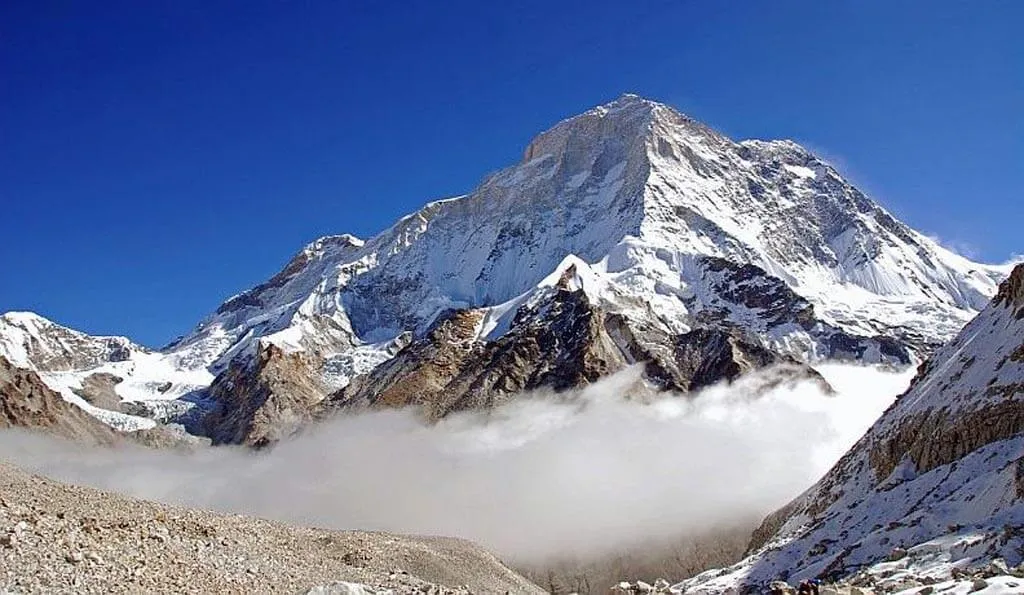
MAKALU BASE CAMP TREK
This is an amazing adventure to the foot of the world’s 5th highest mountain, Makalu (8481m). The Makalu Base Camp Trek is a 21-day adventure into a stunning region of the Himalayas with the climax of...

HUMLA LIMI VALLEY TREK - 18 DAYS
Follow the pilgrim’s trail across high alpine trails into the remote Limi Valley in the Humla region near the Tibetan border inhabited by Khas (Hindus) and Tibetans (Buddhists). Completely isolated fr...

LOWER DOLPO TREK
This is truly a spiritual journey to the heart of an 8th century Tibetan culture in a remote and secluded region of Nepal. This trek has everything, ranging from high altitude mountain passes and a pu...

UPPER DOLPO TREK
The 24 Days Upper Dolpo Trek takes you to stunning alpine regions far removed from the main tourist trails. If it is isolation, an unspoiled environment, and an authentic warm and kind people that app...

16 Days Kanchenjunga South Base camp Trek
The Kanchenjunga South Base Camp trek takes you to the Yalung Glacier and the south side of Mt. Kanchenjunga (8586m), the third-highest mountain in the world. Kanchenjunga is situated between Nepal an...

16 Days Kanchenjunga North Base camp Trek
Kanchenjunga North Base Camp Trek is a thrilling adventure that takes you to the base camp of the world's third highest peak, Kanchenjunga. Located in the eastern part of Nepal, this trek offers breat...

21 Days Kanchenjunga Circuit Trek
Here is an opportunity to discover why this 21 days Kanchenjunga circuit trek is famous! Untouched by time and tourism makes this great trek for those seeking solitude and exposure to the best that na...

KANCHENJUNGA CIRCUIT TREKKING
This 26-day trek is ideal for those wanting to head to a remote and mostly unexplored region. Kanchenjunga (8586m) is the world’s third-highest mountain and second highest in Nepal. This trek will tak...

LUMBA SUMBA PASS TREK
The feeling of being in a far-off and stunningly gorgeous region is what you will experience on this trek.The Lumba Sumba Trek is Nepal’s latest escape into the wilds of the Kanchenjunga Conservation...
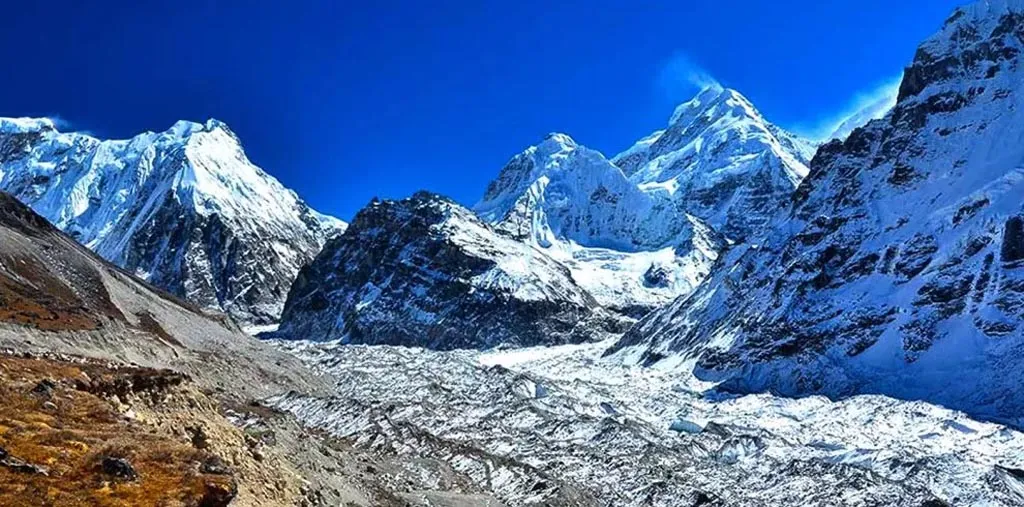
Kanchenjunga Base Camp Trek
This famous Kanchenjunga Base Camp trek takes you to both the north and south base camps of Mt. Kanchenjunga (8586m) the third world’s third-highest mountain. This 20 day Kanchenjunga Circuit Tre...

DHAULAGIRI BASE CAMP TREK
The Dhaulagiri Base Camp Trek is a thrilling adventure that takes you to the base camp of Mount Dhaulagiri, one of the world's highest peaks. Here is some detailed information about the trek:Duration:...

Dhaulagiri Circuit Trek
If you are looking for a more physically challenging adventure into the wild - then this may be just what you are looking for.The Dhaulagiri Circuit Trek is rated as “high-advanced” ascending to 5100...